
What 'Strict Budgeting' Actually Means
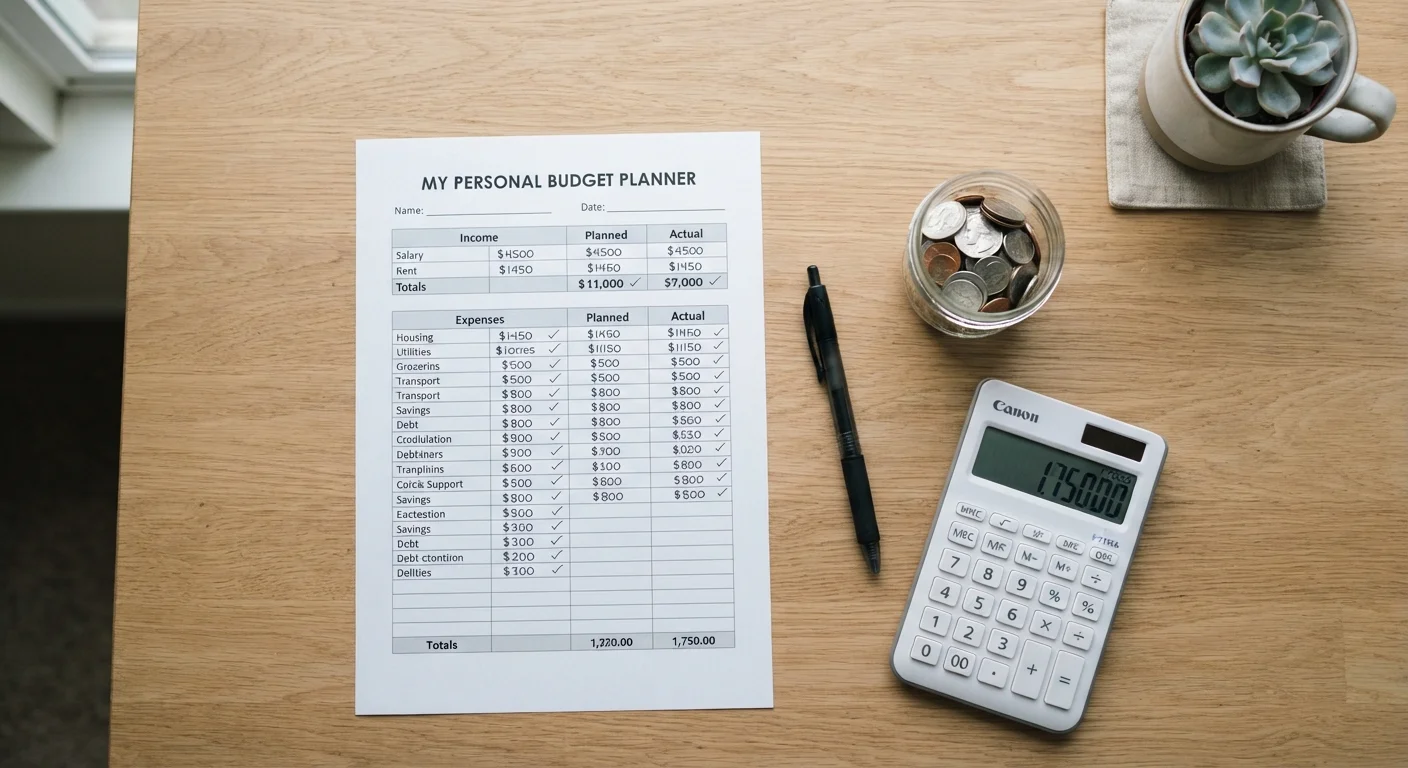
Strict budgeting means assigning every dollar of income to a specific category - housing, groceries, transportation, savings, and so on - and holding spending within those limits each month. It's sometimes called zero-based budgeting, where income minus expenses equals zero, leaving no unaccounted money. Unlike loose tracking, strict budgeting requires active decision-making about where each dollar goes before it's spent.
Done consistently, this approach can transform someone's financial trajectory. Done poorly - with limits so tight they ignore reality - it tends to break down fast. Understanding both sides helps you decide whether a stricter approach fits your situation, or whether a more flexible framework would serve you better.
Strict Doesn't Have to Mean Joyless
A common misconception is that strict budgeting means eliminating all discretionary spending. In practice, a well-structured budget explicitly includes categories for dining, entertainment, and personal spending - just with defined limits. The goal is intentionality, not deprivation. For a deeper look at what budgeting actually involves versus what people fear it means, see our piece on common budgeting myths.
The Real Advantages of Keeping a Tight Budget
The financial case for strict budgeting is solid. When spending has firm boundaries, it's harder to drift into chronic overspending - which is how many Americans find themselves with little to show at the end of a decent income month.
Accelerates debt repayment by limiting spending drift
When category limits are firm, surplus income can be directed consistently toward debt rather than absorbed by lifestyle creep. This focused allocation is one of the most effective levers for reducing high-interest balances.
Builds emergency savings faster and more reliably
Strict budgets treat savings as a fixed expense rather than what's left over. This distinction matters - people who save what remains tend to save far less than those who allocate savings first.
Creates clear visibility into spending patterns
Assigning spending to categories forces regular confrontation with where money actually goes, not where you think it goes. This awareness alone often reduces discretionary overspending.
Reduces financial anxiety through predictability
Knowing exactly what you can spend in each area - and that bills are covered - removes the low-level financial stress that comes from vague awareness of spending without any firm structure.
Supports shared financial goals in households
In joint households, a strict budget provides a shared framework that reduces conflict around spending decisions. Both partners operate from the same agreed-upon limits rather than unspoken assumptions.
Perhaps the most underappreciated benefit is clarity. Strict budgets surface patterns you might otherwise miss: the subscriptions quietly renewing, the dining spending that doubled over six months, the categories where income quietly leaks. Our monthly budget audit checklist can help you catch exactly these issues during regular reviews.
The Honest Disadvantages Worth Knowing
The case against overly strict budgeting isn't about avoiding responsibility - it's about recognising how human behaviour actually works. Financial plans that ignore psychological reality tend to fail, regardless of how sound they are on paper.
Budget fatigue makes long-term adherence difficult
Extremely tight limits leave little room for enjoyment, which can create a deprivation mindset. Over time, this often leads to binge spending - a cycle that undermines the budget's purpose entirely.
Irregular expenses routinely blow monthly category limits
A budget that doesn't pre-account for annual or semi-annual costs - car registration, home maintenance, seasonal expenses - will frequently fail, even when day-to-day spending is disciplined.
Rigid categories don't flex with life changes
A job change, medical event, or family shift can render a carefully built budget obsolete overnight. Without a built-in review process, people often abandon the budget rather than adapt it.
Can create an unhealthy relationship with spending
Extreme restriction sometimes leads people to view all discretionary spending as failure, which is psychologically unsustainable. Financial wellbeing includes the ability to spend on things that matter without guilt.
Difficult to maintain without consistent tracking effort
Strict budgets require regular logging and category checks to work. Without that ongoing effort, the budget exists only on paper - providing a false sense of control without actual oversight.
One of the most common budget-breakers is irregular expenses: car repairs, annual insurance premiums, medical copays, or school costs. These aren't surprises in the truest sense - they're predictable but easy to omit from a monthly plan. See our guide on irregular expenses that wreck monthly budgets for practical ways to fold these into your plan before they cause damage.
Making a Strict Budget Work Long-Term
The goal isn't to choose between discipline and flexibility - it's to find a structure that's firm enough to drive progress but forgiving enough to survive real life. A few principles help:
- Build in a buffer. Allocate a small monthly amount - even $25-$50 - as a genuine discretionary fund with no strings attached. This reduces the psychological pressure that leads to budget blowouts.
- Review monthly, adjust quarterly. Life changes. A budget that worked six months ago may no longer reflect your income or priorities. Treat it as a living document, not a fixed contract.
- Track spending method honestly. Some people do well with spreadsheets; others need an app or even a cash envelope system. The tracking method that you'll actually use consistently beats the theoretically perfect one you abandon.
If your income fluctuates, strict category limits become harder to maintain. Budgeting on irregular income requires a different approach - building around a baseline rather than a fixed monthly figure.
~33%
Americans with a written household budget
Surveys by the National Foundation for Credit Counseling have consistently found that roughly one-third of U.S. adults maintain a detailed monthly budget.
3-6 months
Recommended emergency fund coverage
Most mainstream personal finance guidance suggests holding three to six months of essential living expenses in accessible savings - a goal strict budgeting can help reach faster.
This article provides general financial information for educational purposes and does not constitute personalised financial advice. Consider consulting a qualified financial professional for guidance tailored to your situation.