What Makes These Two Oils Different
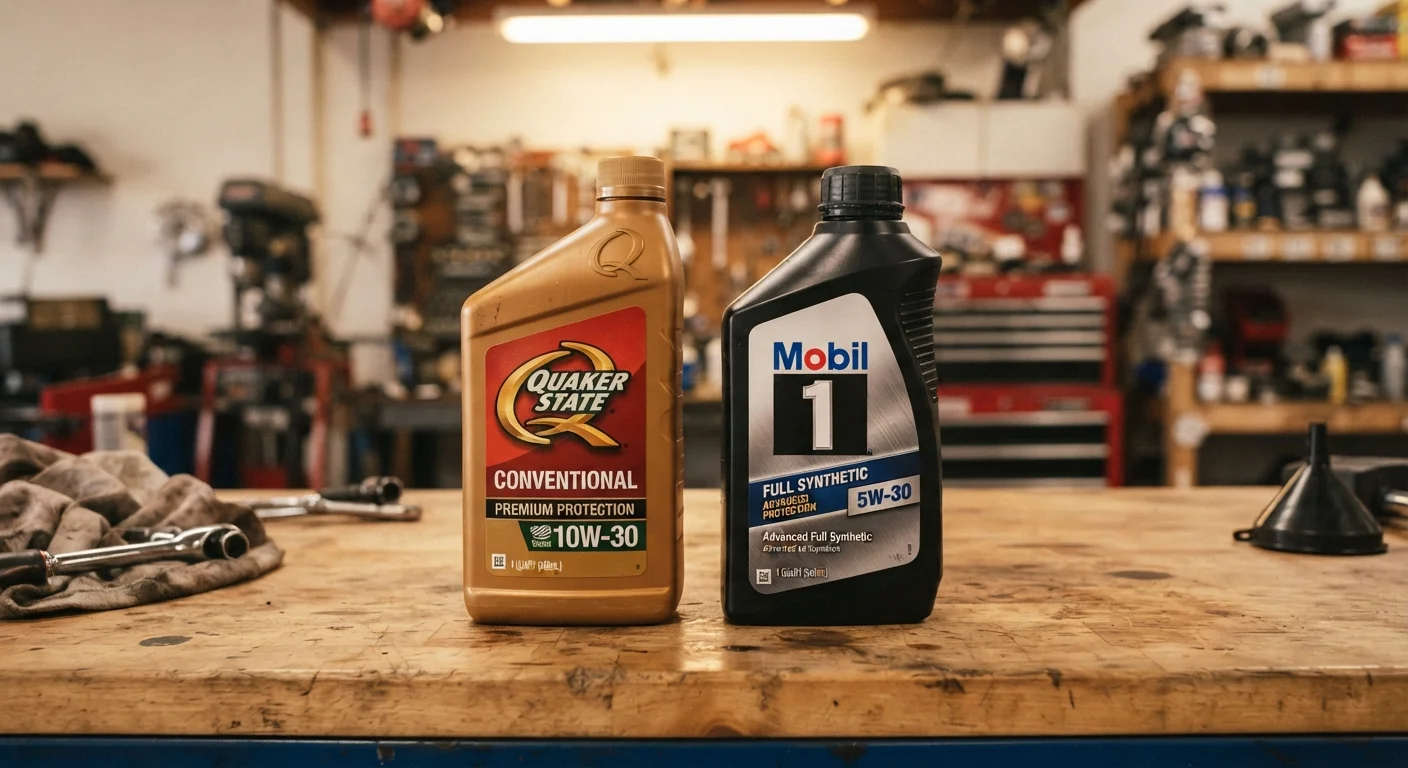
Motor oil - whether conventional or synthetic - serves the same core purpose: lubricating engine parts, reducing friction, and carrying heat and contaminants away from internal components. What separates them is origin and refinement.
Conventional oil is refined directly from crude petroleum. The refining process removes many impurities, but some molecular irregularities remain. These inconsistencies mean conventional oil can break down faster under high heat, cold starts, or prolonged use.
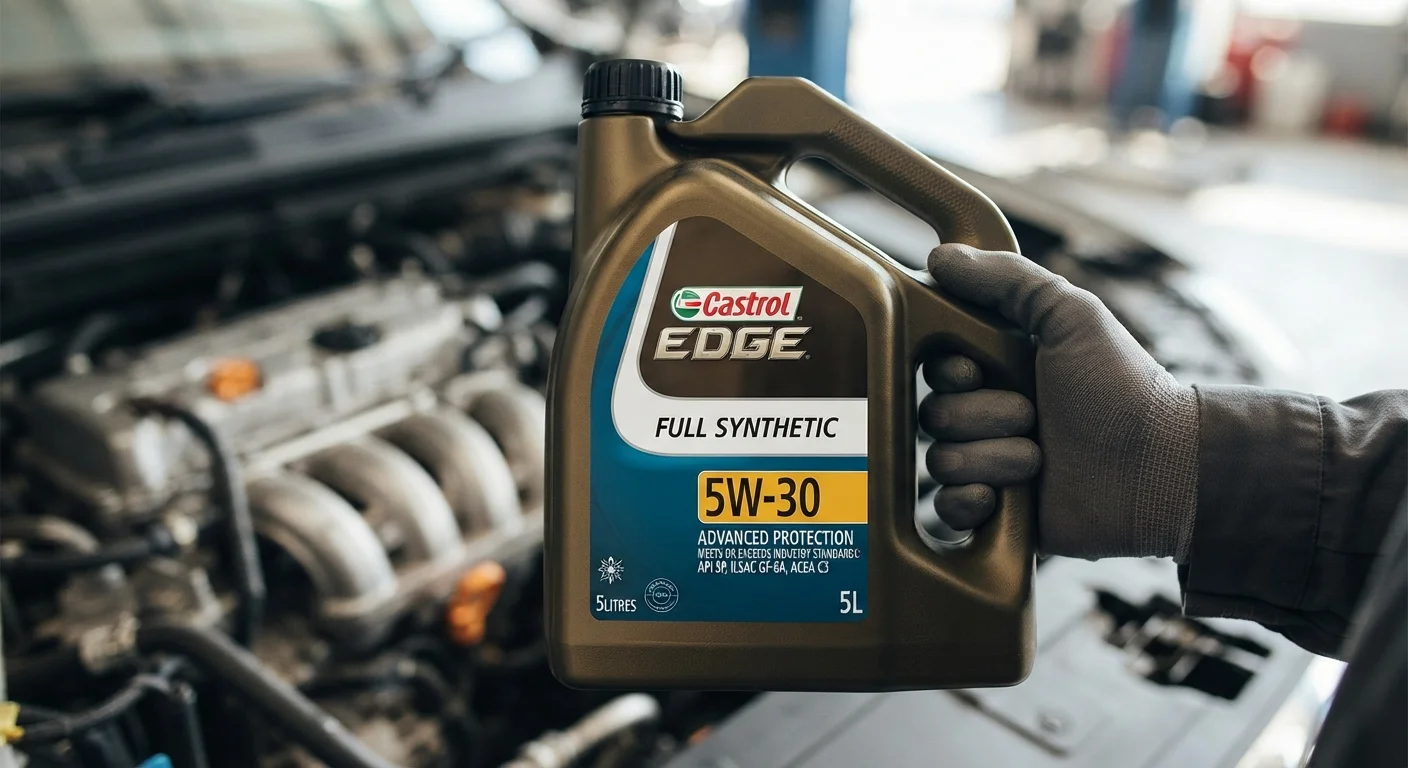
Synthetic oil is either fully engineered from chemical compounds or heavily refined and restructured from petroleum base stock. The result is a more uniform molecular structure that resists breakdown, flows better in cold temperatures, and maintains viscosity - the measure of how thick or thin an oil is - more consistently across a wide temperature range. For a plain-language explanation of viscosity grades like 5W-30 and 0W-20, see our guide to engine oil grades.
| Criterion | Conventional Oil | Synthetic Oil |
|---|---|---|
| Base material | Refined crude petroleum | Engineered or heavily refined base stock |
| Cold-weather flow | Slower at startup | Faster, more consistent flow |
| Heat resistance | Breaks down sooner under stress | Resists oxidation and thermal breakdown |
| Typical change interval | 3,000-5,000 miles | 7,500-15,000 miles (per manufacturer) |
| Cost per quart | Lower upfront cost | Higher upfront, fewer changes needed |
| Required for modern engines | Rarely specified for new vehicles | Required by many 2010s+ engine designs |
Performance, Protection, and Real-World Trade-offs
Synthetic oil genuinely outperforms conventional oil in measurable ways - particularly at startup, when most engine wear occurs. Because synthetic flows faster in cold conditions, it reaches critical components sooner. In high-heat environments or under towing and hauling stress, synthetic is also less prone to oxidizing or forming sludge.
That said, conventional oil is not ineffective. In a well-maintained older engine that operates under normal conditions, conventional oil changed on schedule provides adequate protection. The issue arises when drivers stretch change intervals or operate in demanding conditions - exactly where conventional oil's limitations become costly.
75,000+
Miles that trigger high-mileage oil consideration
Many oil manufacturers formulate high-mileage synthetic blends specifically for engines past this threshold, addressing seal wear and increased oil consumption.
3,000-15,000
Mile range between oil change intervals
The gap between conventional and synthetic change intervals reflects how dramatically oil formulation affects longevity under normal operating conditions.
One persistent myth worth addressing: the idea that once you switch to synthetic, you can never go back to conventional. This is not accurate. Switching between oil types is generally safe as long as you use the viscosity grade your manufacturer specifies. Our article on common car maintenance myths addresses this and other widely held misconceptions.
How to Know Which Oil Your Car Actually Needs
The single most reliable source for this answer is your vehicle's owner's manual. Manufacturers specify the oil type and viscosity grade based on actual engine design, tolerances, and warranty requirements - not marketing. If your manual calls for full synthetic, using conventional oil may technically void related warranty claims and can cause accelerated wear in engines designed for tighter clearances.
For drivers of newer vehicles - especially those with turbocharged engines, variable valve timing systems, or direct fuel injection - the manual almost always specifies synthetic. These engine technologies generate more heat, operate at tighter tolerances, and degrade oil faster than older designs.
If you're unsure how to locate or interpret your maintenance schedule, our guide on reading your owner's manual walks through exactly what to look for. And for a broader view of why oil changes fit into a larger maintenance picture, see routine maintenance every car owner should know.
Synthetic Blend: A Middle-Ground Option
Synthetic blend oils mix conventional base stock with synthetic compounds, offering improved performance over straight conventional oil at a lower cost than full synthetic. They're commonly recommended for trucks, SUVs, and vehicles under moderate towing loads. If your budget is a consideration but your engine would benefit from better protection, a synthetic blend may offer a reasonable compromise - though always verify it meets your manufacturer's specifications before switching.