
Why Pre-Trip Car Prep Is Worth the Effort
A multi-day road trip puts real stress on a vehicle - sustained highway speeds, temperature swings, extra load, and unfamiliar terrain all compound over hundreds of miles. The good news is that most trip-ending mechanical problems are predictable and preventable with a focused check the week before you leave.
This checklist is organized into what you can realistically do yourself and what's worth handing to a qualified mechanic. Neither category is filler - both matter. For a broader look at keeping your vehicle dependable year-round, see our guide on keeping a car running well for the long haul. And if you're still in the trip-planning phase, the Trip Planning Basics hub covers logistics from start to finish.
Tires
Fluids
Battery and Electrical
Mechanic-Level Checks
Emergency Kit Essentials
What to Hand Off to a Mechanic
Some items on any honest prep list fall outside safe DIY territory - not because the tasks are exotic, but because they require lift equipment, diagnostic tools, or trained eyes to do correctly. Schedule a pre-trip inspection at least five to seven days before departure so there's time to act on anything flagged.
Brake Problems Are Not a DIY Diagnosis
Brakes are the single most safety-critical system on your vehicle. If you notice any spongy pedal feel, grinding noise, or pulling to one side when braking, do not delay - have a qualified mechanic inspect the full brake system before the trip. Operating a vehicle with compromised brakes on a multi-day highway drive puts you, your passengers, and others at serious risk.
If your vehicle is approaching a scheduled service interval - oil change, transmission service, timing belt - a long trip is a poor time to push past it. Address those on schedule, not after the fact. You might also find our seasonal car maintenance checklist useful if you're driving into notably different climate conditions.
Tire pressure gauge
Accurately measures PSI in all tires so you inflate to the manufacturer's specification, not guesswork.
Coin (quarter or penny)
Quick field test for tread depth - a reliable low-cost check every driver can do.
Flashlight or headlamp
Lets you inspect brake components, fluid reservoirs, and tire sidewalls in low-light conditions.
Jump-start power bank
Provides a self-contained way to restart a dead battery without needing another vehicle nearby.
Portable tire inflator
Allows you to inflate a flat or low tire roadside without waiting for assistance.
Emergency Kit and On-Road Readiness
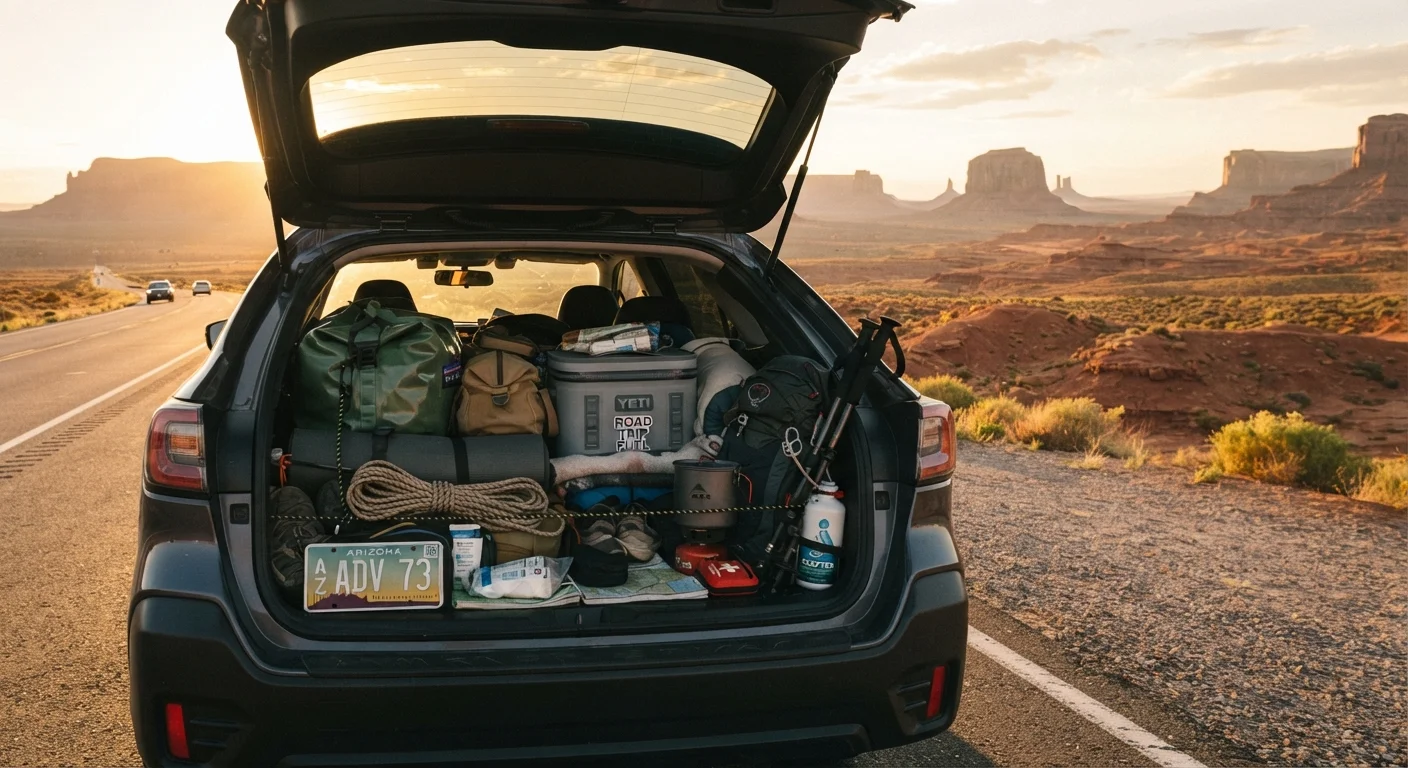
Even a mechanically sound car benefits from a modest emergency kit. Breakdowns don't always announce themselves in advance, and being prepared means a flat tire or dead battery becomes an inconvenience rather than a crisis. Keep the kit compact - packing smart applies to the trunk, too.
Don't Rely Solely on Dashboard Warning Lights
Warning lights alert you to problems that have already reached a threshold - they're not a substitute for proactive inspection. A tire can be dangerously underinflated, or brake pads can be near-worn, without triggering any indicator light. Run the physical checks on this list regardless of what the dashboard shows.
Before you leave, also confirm that your roadside assistance coverage (if you carry it) is active and that your insurance card and registration are in the vehicle. These details are easy to overlook - our article on overlooked pre-departure details covers exactly this kind of easy-to-miss admin. For a quick day-of walkthrough once you're ready to go, see before every long drive: a pre-trip safety walkthrough.