
How Each Type of Exercise Works in the Body
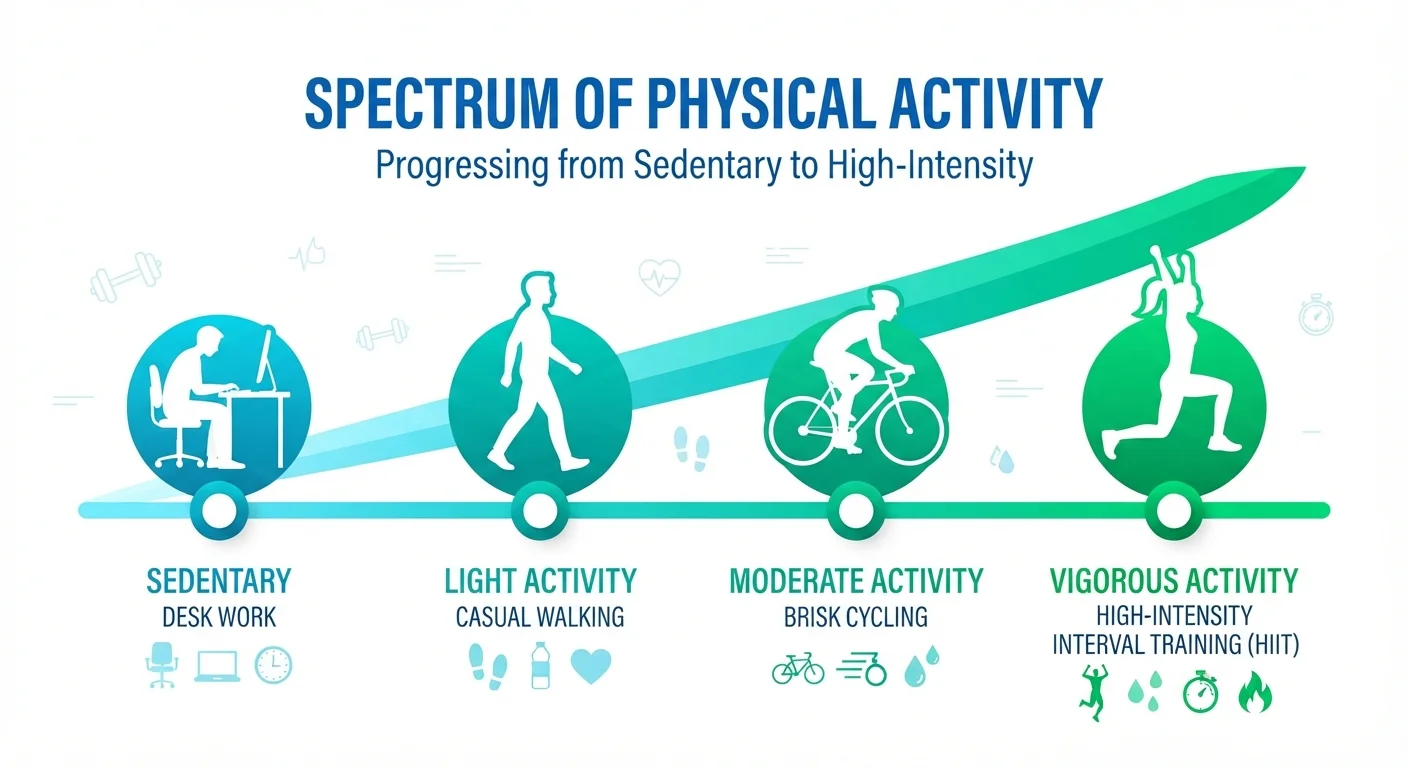
Cardiovascular exercise - activities like running, cycling, swimming, or brisk walking - challenges the heart, lungs, and circulatory system to deliver oxygen to working muscles over sustained periods. Over time, this adaptation lowers resting heart rate, increases stroke volume (the amount of blood the heart pumps per beat), and improves the efficiency of oxygen uptake, measured as VO₂ max. For a broader look at where cardio fits within the full spectrum of physical activity, see the spectrum from NEAT to HIIT.
Strength training - using resistance from weights, bands, or bodyweight - triggers a different set of adaptations. Mechanical stress on muscle fibers causes microscopic damage that the body repairs and reinforces, resulting in greater muscle size and contractile strength. Resistance exercise also signals bone-forming cells (osteoblasts) to increase bone density, a benefit that becomes especially meaningful with age.
| Criterion | Cardiovascular Exercise | Strength Training |
|---|---|---|
| Primary adaptation | Heart, lung, and vascular efficiency | Muscle size, strength, and bone density |
| Calorie burn during session | Generally higher per session | Moderate; elevated post-exercise |
| Effect on resting metabolism | Modest long-term effect | Raises resting metabolic rate |
| Bone density impact | Modest (weight-bearing forms only) | Significant, well-documented |
| Cardiovascular disease risk reduction | Strong, extensive evidence base | Significant, growing evidence base |
| Muscle mass preservation with age | Limited direct effect | Primary evidence-based strategy |
| Mental health benefits | Well-documented for anxiety and depression | Emerging positive evidence |
| Equipment needed | Often minimal (walking, running) | Varies; bodyweight options exist |
These are not competing pathways. They are complementary systems that together produce a more complete picture of physical health than either can alone.
Effects on Body Composition and Metabolism
Body composition - the ratio of fat mass to lean mass - responds to both training modes, but through different mechanisms. Cardio burns a meaningful number of calories during exercise, which can support fat loss when paired with appropriate nutrition. Strength training's contribution is longer-lasting: each pound of additional muscle tissue elevates the body's resting metabolic rate, meaning more calories are used even at rest.
~3 lbs
Average muscle gained in beginner resistance programs
Meta-analyses of resistance training studies suggest beginners typically gain 2-4 lbs of lean mass over 8-12 weeks of consistent training.
35%
Reduction in cardiovascular disease risk with regular aerobic exercise
A broad review of prospective cohort studies, summarized in the American Heart Association's activity guidelines, estimates roughly a 35% lower CVD risk in regularly active adults compared to sedentary peers.
150 min
Weekly moderate aerobic activity recommended for adults
The U.S. Physical Activity Guidelines for Americans set 150-300 minutes of moderate-intensity aerobic activity per week as the target for substantial health benefit.
Research consistently shows that combining both forms of exercise produces more favorable body composition outcomes than either alone. A 2012 study published in the Journal of Applied Physiology found that a combined aerobic and resistance program produced greater reductions in fat mass than either mode practiced independently. If you're weighing how often to train to optimize these effects, the tradeoffs of training every day offers useful context on recovery and frequency.
Longevity, Disease Risk, and the Evidence Base
Both training types are independently associated with reduced risk of chronic disease and premature mortality. Cardiovascular exercise has the longer research history: decades of epidemiological data link regular aerobic activity to lower rates of heart disease, type 2 diabetes, certain cancers, and all-cause mortality. The protective effect appears dose-dependent - more activity generally confers more benefit, up to a point.
Strength training's longevity data is newer but compelling. A 2022 analysis in the British Journal of Sports Medicine found that muscle-strengthening activity was associated with a statistically significant reduction in all-cause mortality, independent of aerobic exercise levels. Grip strength - a proxy for overall muscle strength - has also emerged as a reliable predictor of long-term functional independence and survival in older adults.
What the Guidelines Actually Say
The Physical Activity Guidelines for Americans recommend aerobic exercise and muscle-strengthening activity as separate, complementary goals - not interchangeable. Meeting one target does not substitute for the other. These guidelines are designed for generally healthy adults and are updated periodically based on emerging research; individuals with chronic conditions or physical limitations should discuss appropriate activity levels with their healthcare provider.
The U.S. Department of Health and Human Services Physical Activity Guidelines for Americans recommend that adults aim for at least 150-300 minutes of moderate-intensity aerobic activity per week, plus muscle-strengthening activities on two or more days per week. These are population-level public health targets, not personalized prescriptions - always consult a qualified healthcare provider before starting a new exercise program, especially if you have existing health conditions.
Choosing a Balance That Works for You
There is no universal formula for the ideal split between cardio and strength work. Individual factors - current fitness level, age, health status, available time, and personal preference - all shape what a sustainable, effective routine looks like. Someone training for a 5K will weight their program differently than someone focused on maintaining strength into their seventies.
If you're newer to structured resistance work, a plain-language glossary of resistance training terms can help demystify the terminology before you begin. Those curious about optimizing their aerobic sessions will find Zone 2 cardio explained a useful starting point for understanding heart-rate-based training.
The most evidence-consistent advice is straightforward: doing some of both, consistently, is more beneficial than optimizing one while neglecting the other. Movement that you actually sustain over time will always outperform the theoretically perfect program you abandon after three weeks.
This article is for general informational and educational purposes only and is not a substitute for professional medical advice, diagnosis, or treatment. Always consult a qualified healthcare provider before beginning or modifying any exercise program.