Why Equipment-Free Training Works
The assumption that effective strength and conditioning training requires a gym full of equipment is outdated. Decades of exercise science research confirm that bodyweight training can improve muscular endurance, functional strength, cardiovascular fitness, and mobility when structured consistently and progressively. The human body does not distinguish between resistance from a barbell and resistance from gravity acting on its own mass - what matters is tension, volume, and progressive challenge over time.
The real barrier to home fitness isn't the absence of equipment - it's the absence of structure. Without a designated space, a realistic schedule, and a method for tracking progress, even the best intentions fade within weeks. The steps in this guide address exactly that structure.
What you will need
New to exercise entirely? Our beginner's guide to starting a workout routine pairs well with this article as foundational context.
Setting Up for Success: Space, Tools, and Mindset
Before your first session, take a few minutes to gather what you'll use and establish the right expectations. Bodyweight training requires minimal gear, but a small amount of intentional setup pays dividends in consistency.
Exercise Mat
Provides cushioning and grip for floor exercises like push-ups, planks, and core work.
Timer or Interval App
Keeps work and rest periods structured so sessions stay efficient and progressive.
Workout Log (notebook or app)
Records sets, reps, and perceived effort to make progression visible over time.
Resistance Band
Adds load variety to bodyweight movements like rows and hip hinges without requiring weights.
Habit Stacking Boosts Consistency
Attach your workout to something you already do reliably - brewing morning coffee, finishing lunch, or ending the workday. Research on habit formation suggests that linking a new behavior to an established cue dramatically increases follow-through. This same principle applies to other routines, as explored in our guide to building a personal learning habit.
Clear and Designate Your Training Space
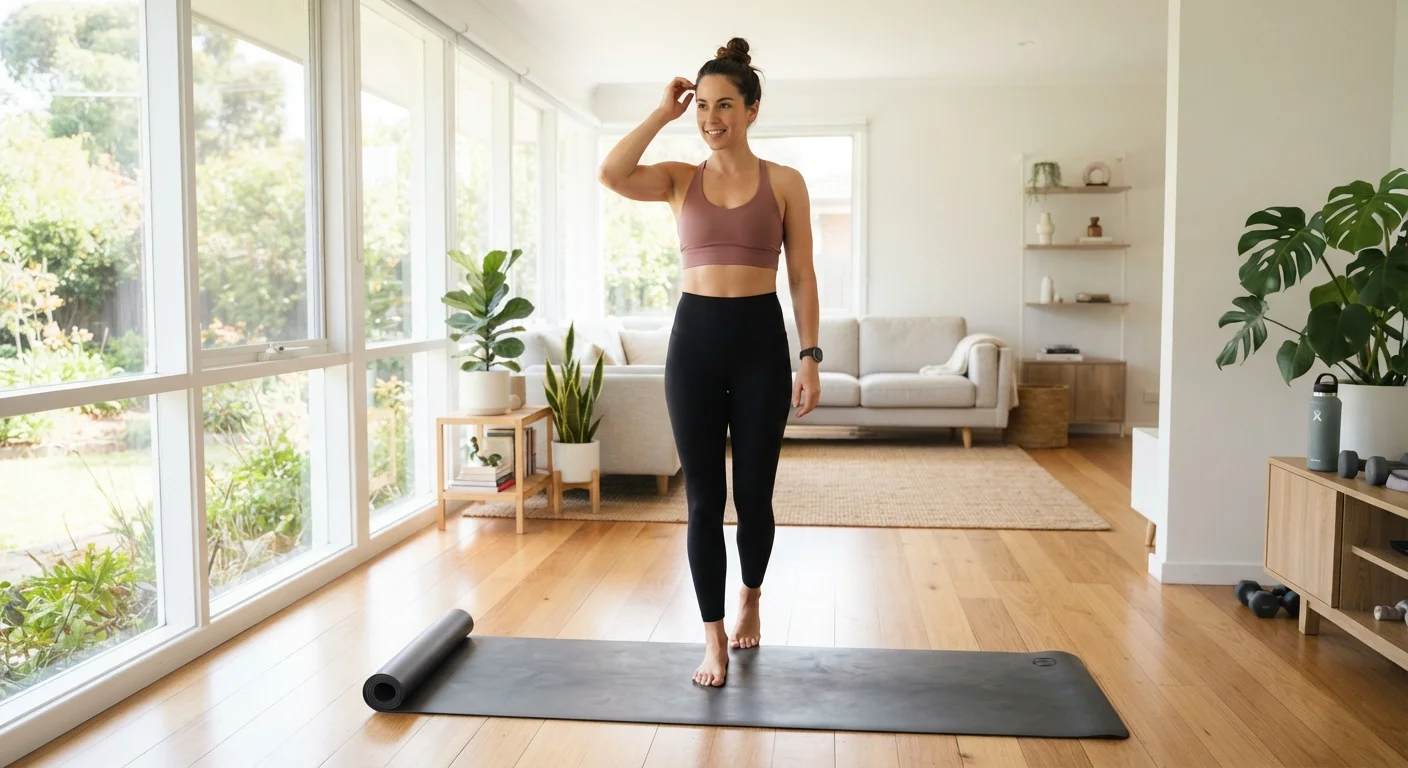
Choose a specific spot in your home - a bedroom corner, living room, or garage - and keep it consistently clear. Physical consistency reinforces mental association: when you enter that space, your brain begins to recognize it as a workout environment. You don't need much room. A 6×6 foot clearing is enough for the full range of foundational bodyweight movements.
If space is genuinely tight, smart home organization strategies can help you reclaim floor area without a full renovation.
Schedule Sessions Like Fixed Appointments
Decide on a frequency that fits your current life - not an ideal version of it. Three sessions per week on non-consecutive days is a well-supported starting point for beginners. Block the time on your calendar and treat it with the same commitment as a meeting. Consistency over intensity is the foundational principle of habit formation in exercise science.
If you're starting from scratch, this introduction to building a workout routine covers realistic frequency expectations in more depth.
Build a Simple, Balanced Exercise Menu
A well-structured bodyweight session covers six fundamental movement patterns: push (push-up variations), pull (rows using a table edge or doorframe), squat (bodyweight squat, split squat), hinge (glute bridge, single-leg deadlift), carry or core stability (plank, dead bug), and locomotion (step-ups, bear crawl). You don't need to include all six in every session - alternating focus keeps sessions fresh and recovery manageable.
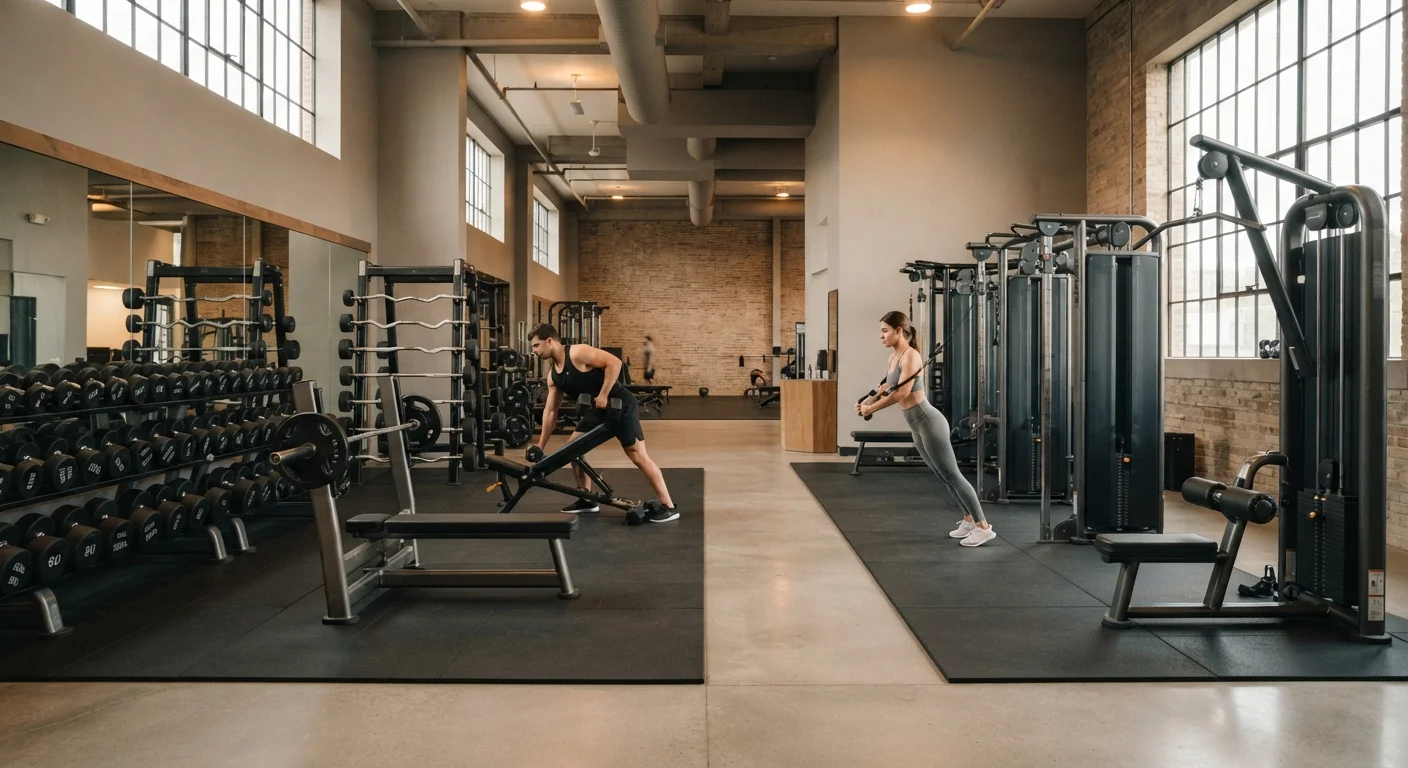
Unlike free weights or machines, bodyweight training requires no specialized equipment, making it the most accessible entry point for most people.
Apply Progressive Overload to Keep Adapting
Progressive overload - the gradual increase of challenge over time - is the mechanism behind all physical adaptation, regardless of whether you use weights or not. With bodyweight training, you can progress by increasing reps, reducing rest periods, slowing the tempo of each rep, or advancing to harder exercise variations (e.g., moving from a standard squat to a single-leg squat). Staying at the same difficulty level indefinitely will limit results.
Log Every Session, No Matter How Short
Record the date, exercises performed, sets, reps, and a brief note about how the session felt. Over weeks and months, this log becomes evidence of real progress - a powerful motivator when motivation naturally fluctuates. Even a 10-minute session logged is more valuable to habit formation than a skipped 45-minute one. Frequency and consistency build the neural pathways that make exercise feel automatic over time.
The same logic applies across self-improvement domains - fitness habits that hold up over decades explores how long-term exercisers sustain consistency through life's changes.
Know Your Starting Point
This guide is general fitness information, not personalized medical advice. If you have an existing health condition, injury, or have been sedentary for an extended period, consult a qualified healthcare professional before beginning a new exercise program. Pain during movement is a signal to stop - not push through.
Common early-stage mistakes - like rotating exercises too frequently or neglecting recovery - are well-documented. What beginners often get wrong in their first months of lifting addresses several of these, even though its context is weight training. The habit-formation principles translate directly.
Progression Without Pain
Muscle soreness 24-48 hours after a new workout is normal. Sharp joint pain, numbness, or discomfort that persists beyond a few days is not. If you experience any of these, discontinue the exercise and seek professional evaluation before continuing.
This article is for general informational and educational purposes only and does not constitute medical or professional fitness advice. Always consult a qualified healthcare professional before starting a new exercise program, particularly if you have any health conditions or concerns.