What You're Really Choosing Between
On the surface, this looks like a money question. Campsite fees often run anywhere from free (for dispersed camping on Bureau of Land Management land) to around $30-$50 per night at developed sites, while budget motels typically fall in the $60-$120 range depending on location and season. But framing it purely as a cost comparison misses most of what actually matters.
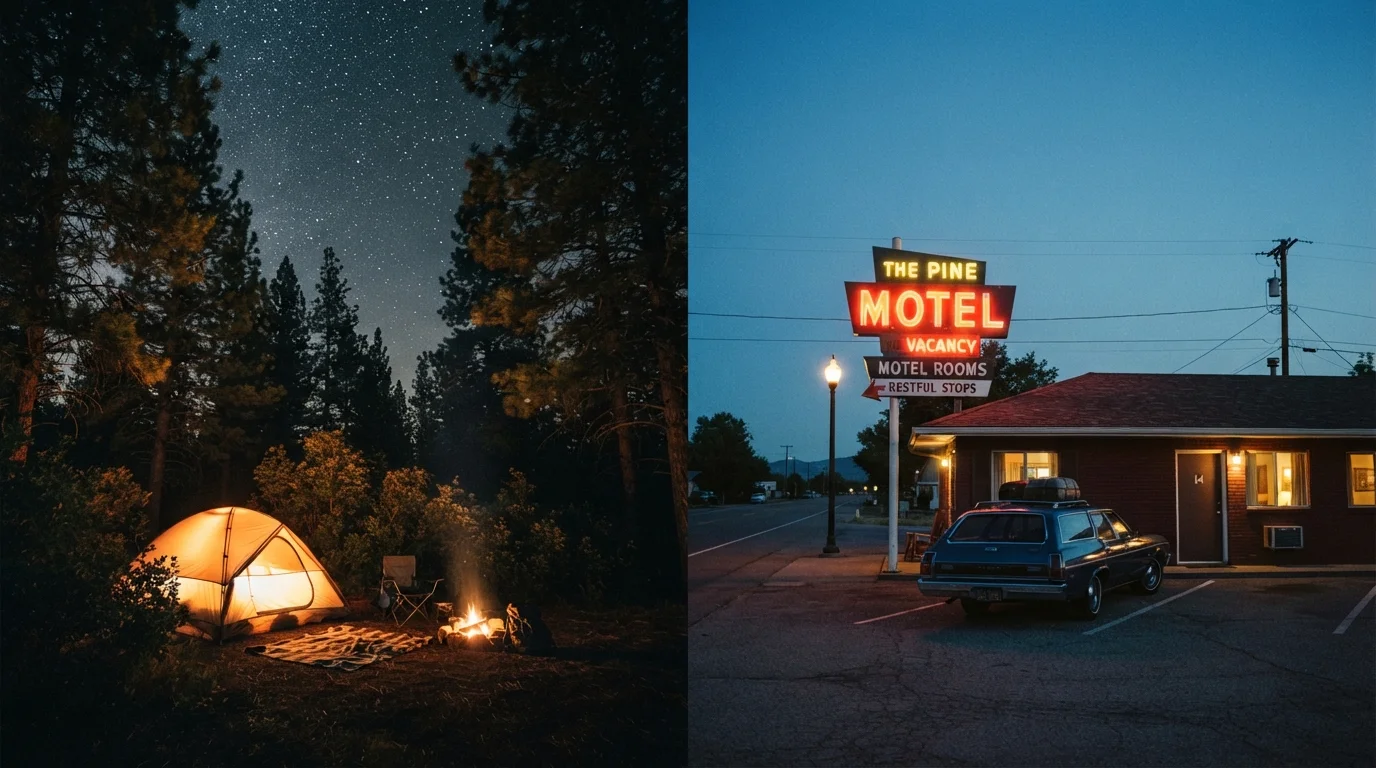
What you're really choosing is a travel identity for that leg of the trip. Camping asks you to slow down, to engage with the physical world around you - fire-building, cooking over a stove, listening to the night. A motel asks nothing of you except check-in, and that's sometimes exactly what you need. Both are legitimate, and smart road trippers often treat them as complementary tools rather than competing philosophies.
For a fuller picture of how overnight lodging fits into the total cost of a US road trip, see our full breakdown of road trip costs.
| Criterion | Camping | Motel Stay |
|---|---|---|
| Typical nightly cost | $0-$50 (site fees vary widely) | $60-$120+ depending on location |
| Setup effort | Moderate - tent, gear, fire setup | Minimal - check in and unpack |
| Weather dependency | High - rain, heat, or cold affects comfort | None - climate-controlled indoors |
| Booking complexity | Increasing - popular sites book far ahead | Moderate - last-minute options usually exist |
| Meal flexibility | High - cook your own, save more | Lower - reliant on nearby restaurants |
| Gear investment required | Yes - upfront cost for first-timers | None beyond luggage |
| Experience immersion | Very high - part of the landscape | Low - functional, not experiential |
| Accessibility for all travelers | Variable - terrain and facilities differ | Generally higher with ADA options |
The Hidden Costs and Logistics Worth Knowing
Camping appears cheap until you account for gear. A reliable tent, sleeping bag rated for the climate, sleeping pad, and a basic camp kitchen can represent a real upfront cost if you're starting from scratch. That investment pays off over multiple trips, but it shifts the calculus for a one-off road trip. Renting gear is possible in some markets, though it adds complexity.
Motel pricing, meanwhile, fluctuates dramatically. A room that costs $70 on a Tuesday in rural Nevada might jump to $140 on a Friday near a popular park entrance. Booking flexibility matters too - walk-in availability is increasingly unreliable near popular destinations in peak season.
~52M
Americans who camp at least once annually
According to the Outdoor Foundation's annual Outdoor Participation Trends report, camping consistently ranks among the most popular outdoor activities in the US.
6 months+
Advance booking lead for top campgrounds
Sites at highly visited national parks like Yosemite and Glacier routinely fill within hours of their reservation windows opening, sometimes more than six months before the target date.
~30-40%
Potential nightly savings vs. budget motel
General travel cost comparisons suggest developed campsite fees often run 30-40% less than comparable-region budget motel rates, though this varies significantly by destination and season.
Campsite reservations have also become a genuine planning challenge. Recreation.gov and many state systems open booking windows months in advance, and sites near popular parks can fill within minutes of availability opening. Spontaneous camping still exists - especially on dispersed BLM and national forest land - but it requires route research and familiarity with regulations.
Food logistics differ sharply between the two options. Camping encourages cooking your own meals, which pairs naturally with the strategies for eating well on the road that make a real difference to both budget and experience. A motel parking lot usually puts you within reach of restaurant strips, for better or worse.
How to Think Through the Decision for Your Trip
The most practical framework: match the overnight option to what the day actually demands. A 400-mile driving day followed by an early morning departure is a motel night. A two-night stay near a trailhead in the Rockies is a camping situation. Neither option has to win globally - they work best when deployed intentionally.
Consider your travel party carefully. Traveling alone creates different pressures and freedoms; solo campers need to weigh site safety and regulations, while solo motel stays can feel easier to plan. Solo vs. group road tripping carries its own set of trade-offs that intersect directly with where you sleep.
Dispersed Camping: The Overlooked Option
Many travelers don't realize that millions of acres of Bureau of Land Management and national forest land allow free dispersed camping - no reservation, no fee, no designated site. This opens up extraordinary flexibility for route planning, particularly across the West. Before camping dispersed, check the specific land management rules for your area, as fire restrictions, stay limits, and permitted zones vary. The BLM and US Forest Service websites are the authoritative sources for current regulations.
Finally, think about what you want to remember about the trip. Travelers who camp tend to describe their nights as part of the experience - the time the sky went fully dark over the desert, the sound of a creek outside the tent. Motel nights rarely generate those stories. If the journey is the point, camping amplifies it. If the destination is the point, a motel is an efficient vehicle to get you there rested. Most great road trips contain both.
For more ideas on stretching your travel dollar across every category, explore our Budget Travel Tips hub.