Why Money Management Starts With Awareness
Managing money isn't an innate skill - it's something most people learn through trial and error, often when the stakes are already high. If you've never had a clear picture of where your money goes each month, you're not alone. The good news is that financial literacy doesn't require a degree in economics or hours of study. It requires a handful of core concepts, a clear starting point, and the willingness to look honestly at your numbers.
This guide covers four fundamentals: cash flow, budgeting, saving, and debt. Think of it as scaffolding - not a complete financial plan, but the structure you need to build one. For decisions specific to your own circumstances, a qualified, licensed financial professional can offer guidance tailored to you.
Know Your Cash Flow First
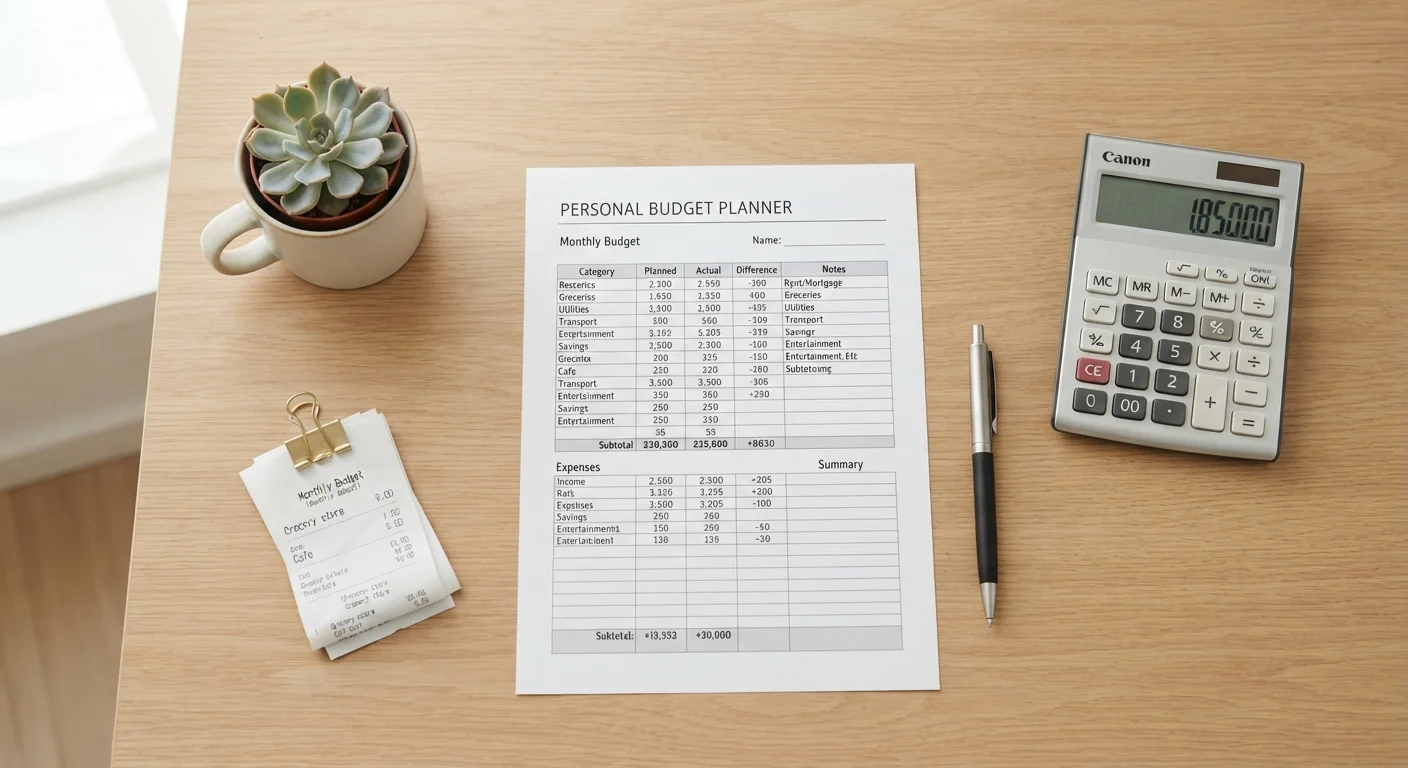
Before making any financial decisions, you need to understand your cash flow - how much money comes in and how much goes out each month.
Start by identifying your net income: what actually lands in your bank account after taxes and deductions are taken out, not your gross salary. Then list every regular expense you can identify - rent or mortgage, utilities, insurance, subscriptions, groceries, transportation, and any existing debt payments.
The gap between income and expenses tells you a great deal. If you're spending more than you earn, that gap needs to close before saving or debt reduction can meaningfully begin. If money is left over, that surplus is your starting resource - and knowing exactly how much it is prevents you from spending it without intention.
Net income
The amount of money you actually take home after taxes, insurance, and other deductions are removed from your paycheck. Use this number - not your gross salary - when building a budget.
Cash flow
The movement of money into and out of your finances each month. Positive cash flow means you earn more than you spend; negative cash flow means the opposite.
Budget
A written spending plan that assigns your income to specific categories before the month begins. It is a decision-making tool, not a punishment.
Emergency fund
A dedicated savings reserve set aside exclusively for unexpected expenses, such as a job loss or medical bill, so you can cover them without going into debt.
Discretionary spending
Money spent on non-essential purchases - things you want but don't strictly need, like dining out or streaming services. This is typically the most flexible part of any budget.
Gross income
Your total earnings before any deductions - taxes, retirement contributions, health insurance - are taken out. Gross income is always higher than what you actually receive and should not be used as the basis for your spending plan.
Building a Budget That Works
A budget is simply a plan for your money. It doesn't need to be elaborate - the simpler it is, the more likely you are to maintain it over time.
One widely used approach is the 50/30/20 framework: roughly 50% of your net income toward needs (housing, food, utilities), 30% toward wants (dining out, entertainment, hobbies), and 20% toward savings and debt repayment. These proportions aren't rigid rules - they're a useful lens for reflection. If rent alone exceeds 50% of your take-home pay, you'll need to adjust other categories or explore ways to increase income over time.
The Budgeting Basics hub goes deeper on tracking spending and refining a monthly plan. For unfamiliar terms along the way, this plain-language glossary of budget terms is worth bookmarking.
Track Before You Cut
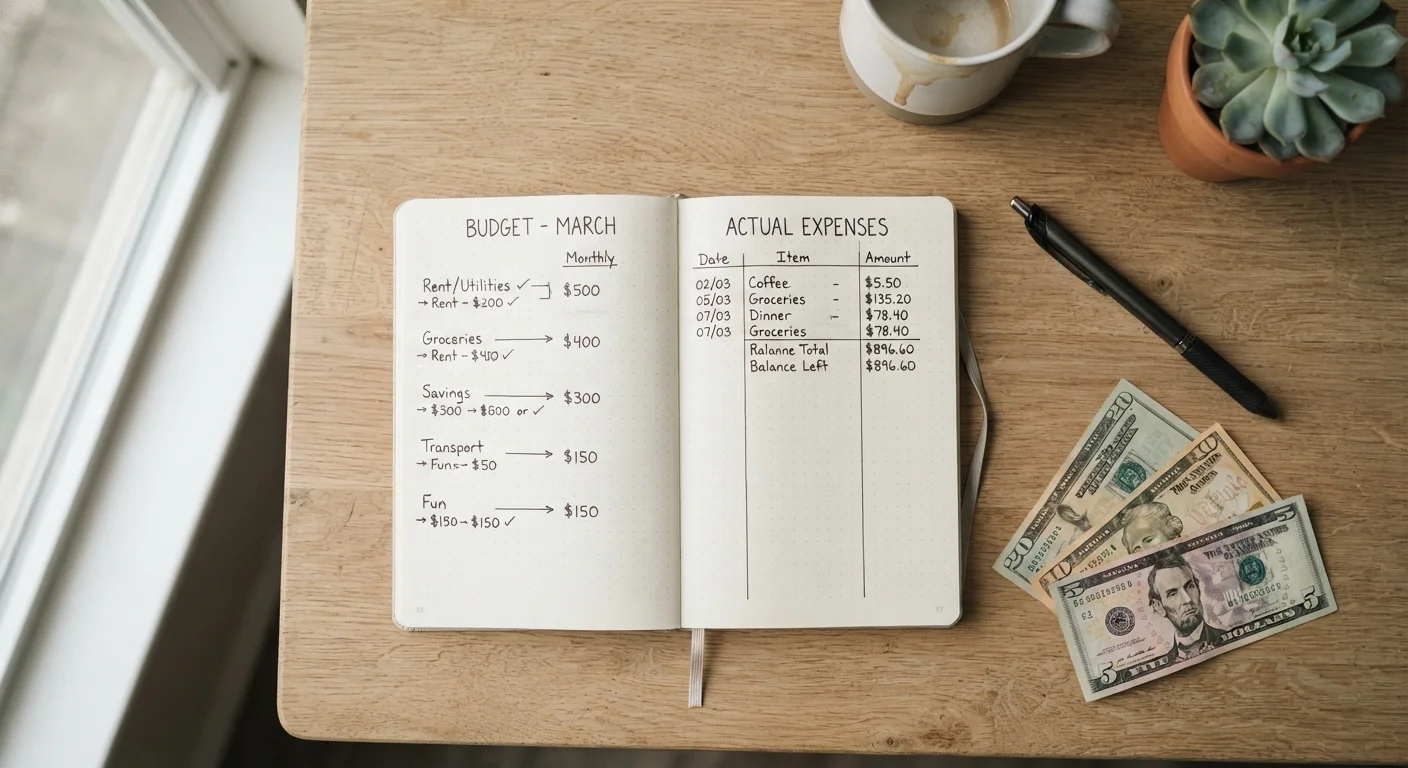
Before adjusting your spending, spend two to four weeks logging every purchase as it happens - not from memory. Most people are genuinely surprised by where money quietly disappears: forgotten subscriptions, small daily purchases that compound quickly. A clear picture of your actual habits is more useful than a budget built on assumptions about how you think you spend.
Saving and Paying Down Debt
Saving and debt repayment can feel like competing priorities - and for many Americans, they are. A practical starting point: build a small emergency fund before aggressively paying down balances. Even one to three months of essential expenses in reserve prevents a single unexpected bill - a car repair, a medical co-pay - from pushing you further into debt at the exact moment you're trying to climb out.
When addressing debt, not all balances are equal. High-interest debt, such as revolving credit card balances, costs you more with every passing month and generally deserves priority over lower-rate obligations. The Saving & Debt hub walks through practical strategies for building savings and reducing balances at the same time.
Building Habits That Last
The frameworks and formulas of money management are the easy part to absorb. The harder skill is returning to them consistently - especially when months get complicated.
Small, routine habits tend to outperform sporadic big efforts. Automating transfers to savings, reviewing your spending once a week, and doing a brief monthly budget check-in are low-friction actions with real long-term impact. Financial progress isn't linear, and an off month doesn't erase prior gains - it's just data to learn from.
Just as getting a handle on home organization starts with understanding what you actually have before deciding what to change, money management starts with knowing your numbers - then building steadily from there.
This article is for general informational and educational purposes only and does not constitute personalized financial, investment, tax, or legal advice. For guidance specific to your circumstances, consult a qualified, licensed financial professional.