Why Home Organization Feels So Hard at First
Standing in a cluttered room and deciding where to start is genuinely difficult - not because you lack skill or discipline, but because disorganization compounds itself. Items land wherever there's space, categories blur together, and the sheer volume of decisions required to sort everything can cause most people to simply walk away.
The good news: feeling overwhelmed is a normal starting point, not a personal failing. Organization is a learnable skill, not an innate talent. The homes that appear effortlessly tidy operate on systems that were deliberately built, often one small step at a time.
Start With What Bothers You Most
If you're unsure which zone to tackle first, choose the space that causes the most daily friction - the area you dread opening or the surface you always have to clear before you can use it. Solving your biggest daily irritant first delivers motivation to keep going, rather than starting with a space that feels 'safe' but doesn't improve your day much.
If you're also navigating a new home purchase, pairing organization habits with basic maintenance awareness helps from the start. The first-year homeowner maintenance guide covers seasonal tasks worth knowing alongside your organization efforts.
Key Concepts Every Beginner Should Know
Before you move a single item, familiarize yourself with the vocabulary and principles that make organization actually work.
Decluttering
The process of removing items you no longer need, use, or want from a space. It always happens before organizing.
Designated home
A specific, consistent place where a particular item always lives. When everything has a designated home, putting things away becomes automatic.
Zone
A defined area of your home grouped by activity or category - such as a cooking zone in the kitchen or a reading zone in the living room.
One-in, one-out rule
A habit of removing one existing item whenever a new item of the same type enters the home, preventing gradual accumulation.
Functional organization
Arranging items based on how you actually use them day-to-day, rather than purely for visual appearance.
Reset routine
A brief daily habit - usually five to ten minutes - of returning items to their designated homes to prevent gradual disorder from building up.
These concepts form a framework you can return to whenever a space starts slipping back into disorder. The most important insight for beginners: a system, however simple, will always outperform willpower alone.
Where to Actually Begin: Your First Moves
Resist the urge to tackle everything at once. Instead, follow this sequence:
- Choose one zone. Select a small, bounded space - a bathroom cabinet, a kitchen junk drawer, or a single closet shelf. Avoid starting with emotionally charged areas like childhood mementos.
- Empty it completely. Remove every item from the space and place it somewhere you can see it clearly.
- Sort into categories. Group similar items together - you'll immediately see duplicates, broken items, and things that don't belong.
- Declutter honestly. Ask: Does this item work? Do I actually use it? If not, donate, discard, or relocate it.
- Assign homes. Return only what belongs in this zone, placing frequently used items at the most accessible level or position.
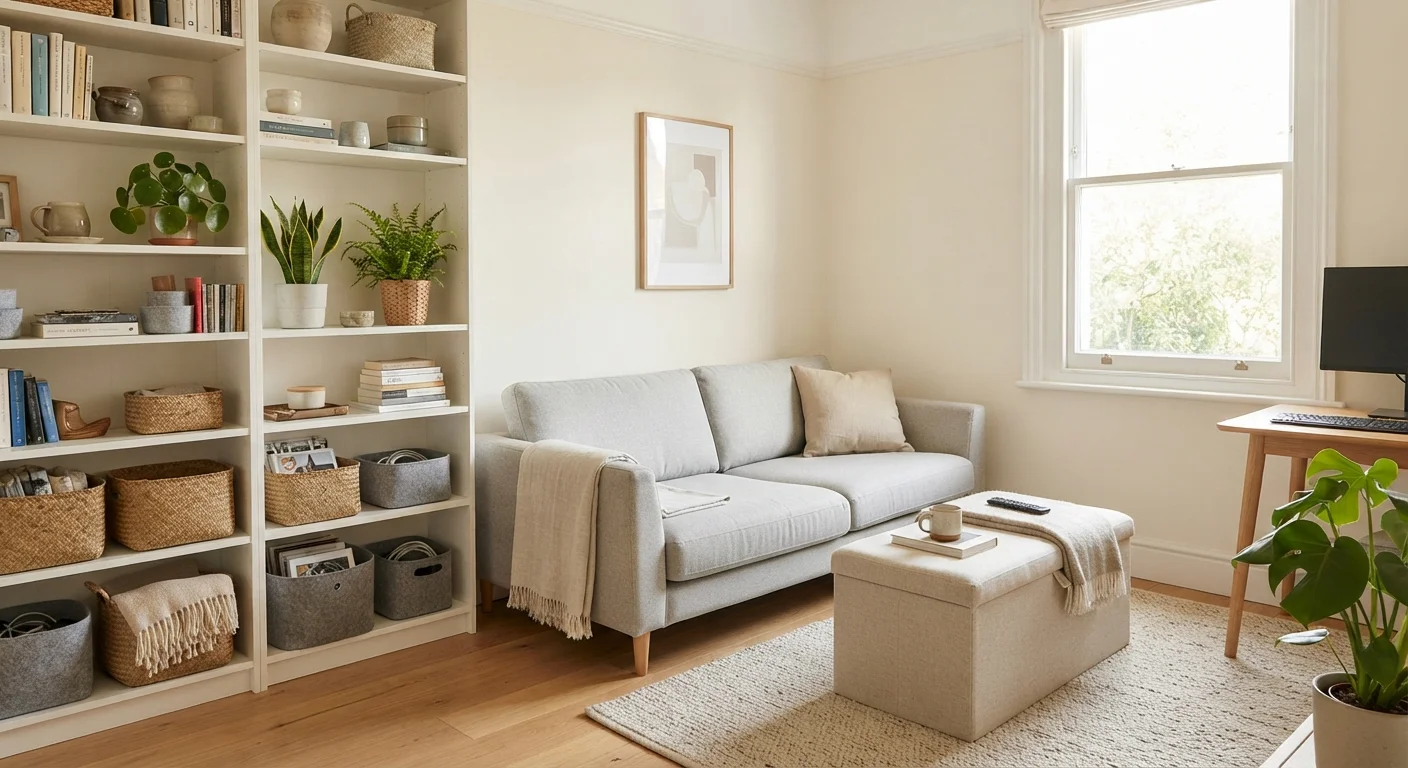
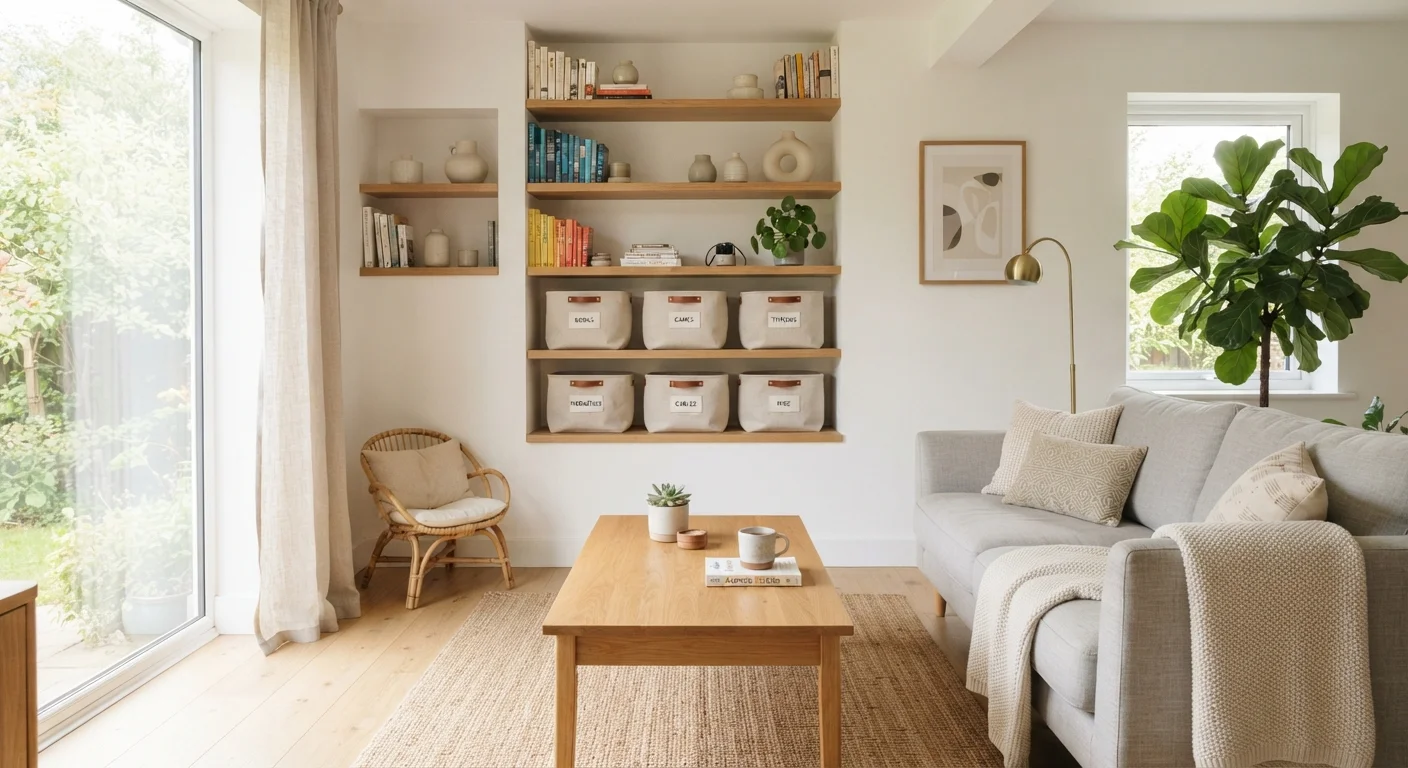
- Add containers only if needed. Once you know what remains, measure the space and select storage that fits the actual contents.
If your home is on the smaller side, many of these same principles apply with extra attention to vertical space and multi-functional furniture. Our small-space storage guide goes deeper on those strategies.
Organization Costs Less Than You Think
Many effective organization solutions require no purchases at all - repurposed shoeboxes, existing shelves, and simple labeling often do the job well. If you're working within a tight budget, the budgeting basics hub can help you plan any purchases as part of a broader household spending plan. Never let a lack of 'perfect' containers delay you from starting.
Building Habits That Stick
Organization systems only work if they're maintained. The secret isn't motivation - it's building small, repeatable habits that require minimal effort.
- The one-minute rule: If an item can be put away in under a minute, do it immediately rather than setting it down.
- Evening reset: Spend five to ten minutes each night returning items to their designated spots before bed.
- One-in, one-out: When a new item enters the home, consider whether an existing item should leave to make room.
- Regular reassessment: Every few months, revisit each zone briefly to check whether the system still fits how you actually live.
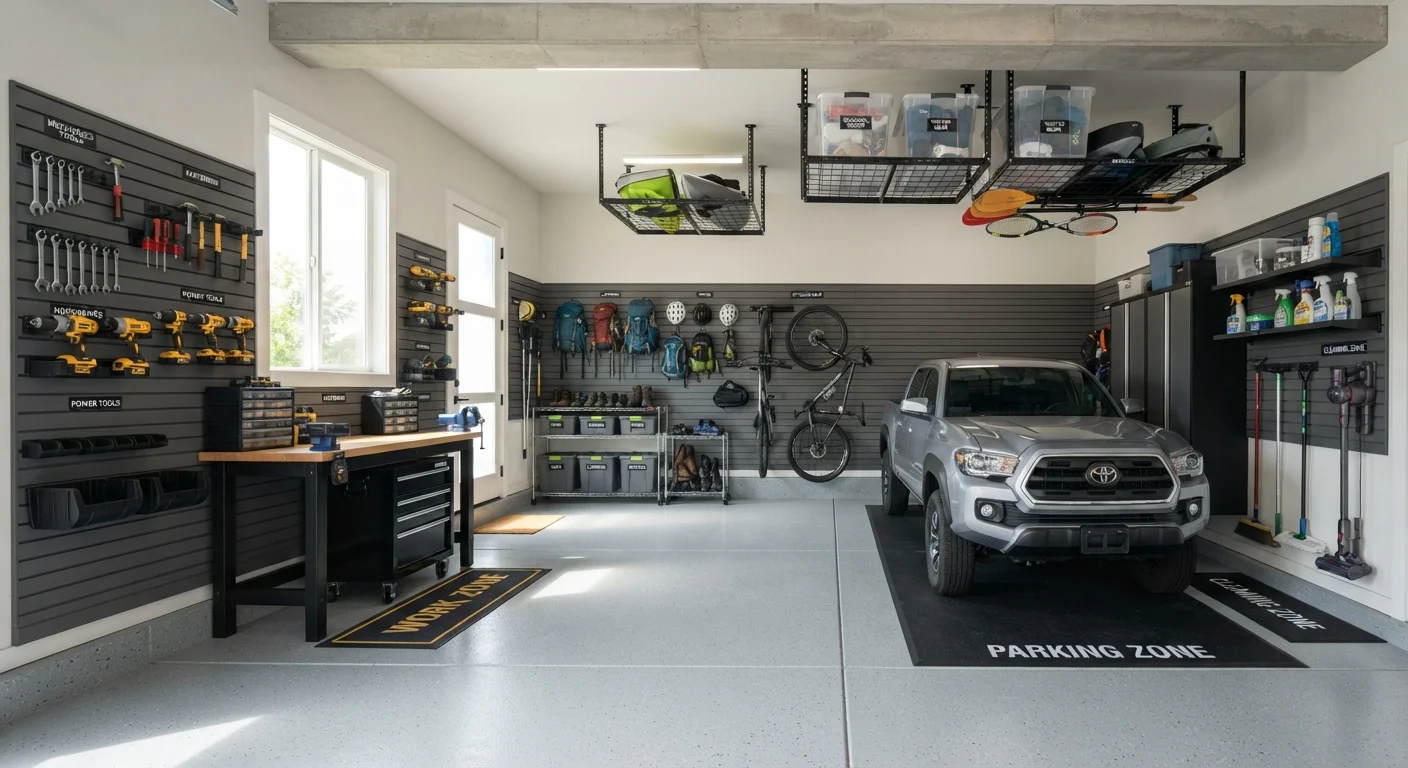
These habits don't require large blocks of time - they work precisely because they're small enough to do consistently. Just as with other lifestyle changes, consistency beats intensity. The garage organization reference guide is a useful next read once your indoor spaces feel settled, since garages often become the final clutter destination.
Common Beginner Mistakes to Avoid
Most people hit the same early stumbling blocks. Knowing them in advance saves real time and frustration.
Avoid These Common First-Timer Traps
The most frequent beginner error is shopping for storage solutions before finishing the declutter phase. It feels productive, but it almost always results in containers that are the wrong size or filled with items you should have discarded. Finish sorting and removing before you buy a single bin or basket.
- Buying storage before decluttering
- Filling new bins with things you don't need just relocates the problem. Always sort first.
- Trying to organize everything in a single weekend
- Exhaustion leads to shortcuts. Zone-by-zone progress is slower but more durable.
- Optimizing for appearance over function
- A visually tidy space that doesn't match how you actually live will quickly revert. Prioritize usability.
- No designated homes for frequently used items
- If keys, remotes, or chargers don't have a consistent spot, they will never reliably be in the right place.
- Expecting perfection
- A functional, reasonably tidy home is the goal - not a showroom. Aiming for perfection often leads to giving up entirely.
Home organization is ultimately about creating an environment that supports how you live. Start small, apply the core concepts, and build one habit at a time. Progress - not perfection - is the standard worth measuring yourself against.