
Why Interest Rate Terms Matter
Debt costs more than the amount you borrowed. The difference comes down to interest - and how lenders calculate, compound, and disclose it. Yet the vocabulary surrounding interest rates is routinely misunderstood, and that gap costs borrowers real money.
Whether you're carrying a credit card balance, repaying a student loan, or managing a mortgage, the same core concepts govern what you owe. Understanding them lets you compare options more accurately, spot unfavorable terms, and make repayment decisions with clearer expectations. For a broader foundation, see our plain-language personal finance glossary covering related money terms.
This Is General Information, Not Personal Advice
The concepts described here are educational in nature. Your actual loan costs depend on your specific terms, balance, payment history, and lender policies. For guidance tailored to your financial situation, consult a licensed financial professional.
Core Interest Rate Concepts Defined
The terms below appear across virtually every debt product Americans use. Recognizing what they mean - and how they interact - is the starting point for any informed repayment strategy.
Annual Percentage Rate (APR)
The yearly cost of borrowing expressed as a percentage, including both the interest rate and most mandatory fees. APR gives a more complete picture of loan cost than the interest rate alone.
Compound Interest
Interest calculated on both the principal balance and any previously accumulated interest. Over time, compounding can significantly increase the total amount owed on a debt.
Amortization
The process of paying off a debt through scheduled, regular payments over a set period. Early payments in an amortized loan are weighted heavily toward interest; later payments shift toward principal.
Principal
The original amount borrowed, not including interest or fees. Each payment reduces the principal, which in turn reduces the interest charged in subsequent billing cycles.
Fixed vs. Variable Rate
A fixed interest rate stays constant for the life of the loan. A variable rate fluctuates based on a benchmark index, meaning monthly payments can rise or fall over time.
Minimum Payment
The smallest amount a lender requires you to pay each billing cycle. Paying only the minimum on revolving debt can result in paying several times the original balance in interest over the long term.
Daily Periodic Rate
The interest rate applied to a balance each day, typically calculated by dividing the APR by 365. Credit card issuers commonly use this rate to calculate daily interest charges.
Debt-to-Income Ratio (DTI)
A measure of how much of your gross monthly income goes toward debt payments. Lenders use DTI to assess borrowing risk; a lower ratio generally indicates stronger financial health.
Two concepts deserve particular attention: APR vs. interest rate and compound vs. simple interest. A loan advertised at a low interest rate may carry a significantly higher APR once fees are added. And compound interest, especially at daily frequency, accelerates how quickly a balance grows when payments fall short.
At a Glance: Key Numbers to Know
The figures below provide context for common debt terms you're likely to encounter. They are general reference points - your actual terms will be specified in your loan agreement or credit card disclosure.
| Average credit card APR (variable) | Approximately 20-22% (Federal Reserve consumer credit data) |
| Compounding frequency on most credit cards | Daily (Consumer Financial Protection Bureau) |
| Standard mortgage amortization period | 15 or 30 years (Common U.S. lending practice) |
| Typical grace period before interest accrues | 21-25 days (credit cards) (CARD Act of 2009 minimum requirement) |
| DTI threshold many lenders prefer | Below 43% (Consumer Financial Protection Bureau mortgage guidelines) |
~$1,000+
Extra interest from minimum-only payments on a $3,000 balance
Illustrative calculation at a 20% APR over the repayment period when only minimum payments are made.
Daily
How often most credit card interest compounds
According to the Consumer Financial Protection Bureau, daily compounding is the standard method used by major U.S. card issuers.
43%
Maximum DTI for many qualified mortgage products
The CFPB identifies 43% DTI as a common threshold for qualified mortgage eligibility under federal guidelines.
One figure worth examining closely: the minimum payment trap. On a revolving balance, paying the minimum each month means the bulk of your payment covers interest, leaving principal nearly intact. Even a modest extra payment each month can substantially reduce total interest paid and shorten repayment time.
Putting It Into Practice
Understanding these terms enables smarter decisions on two fronts: managing existing debt and evaluating new borrowing.
When reviewing current debt, locate the APR on each account, note whether rates are fixed or variable, and check how frequently interest compounds. For revolving debt like credit cards, calculate how much of each minimum payment actually reduces your principal - most card statements now include this information.
When considering a new loan, compare APRs rather than advertised interest rates, ask whether the rate is fixed or indexed to a benchmark, and review amortization schedules to understand early-period interest exposure. Budget terms such as debt-to-income ratio also play a role - see common budget terms every American should know for context on how lenders view your overall financial picture.
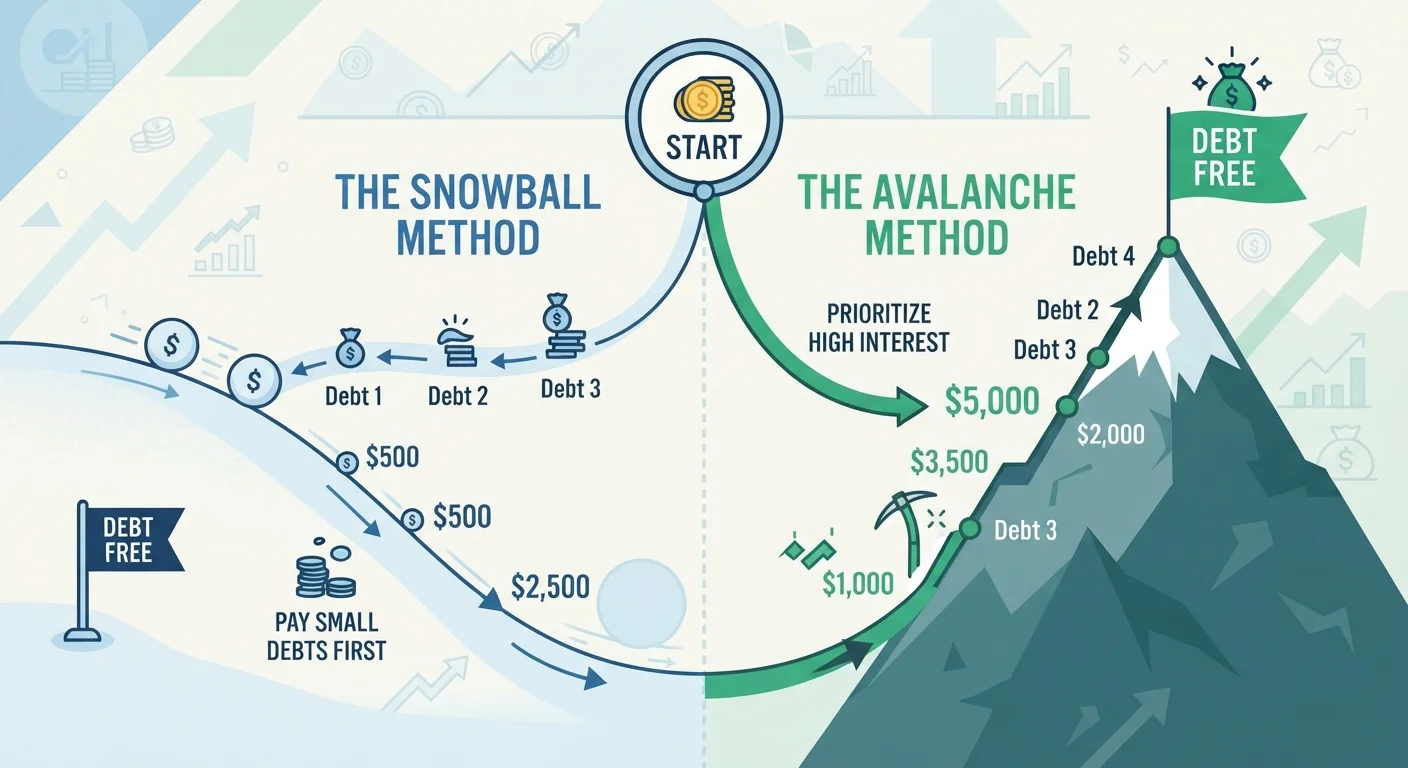
Once you have a clear view of rates and balances, the next step is choosing a structured payoff approach. The debt avalanche vs. debt snowball comparison explains how each method works and what each costs over time - a natural next step after mastering the terms covered here.
This article is for general informational and educational purposes only and does not constitute personalized financial, legal, or tax advice. Consult a qualified financial professional for guidance specific to your situation.