
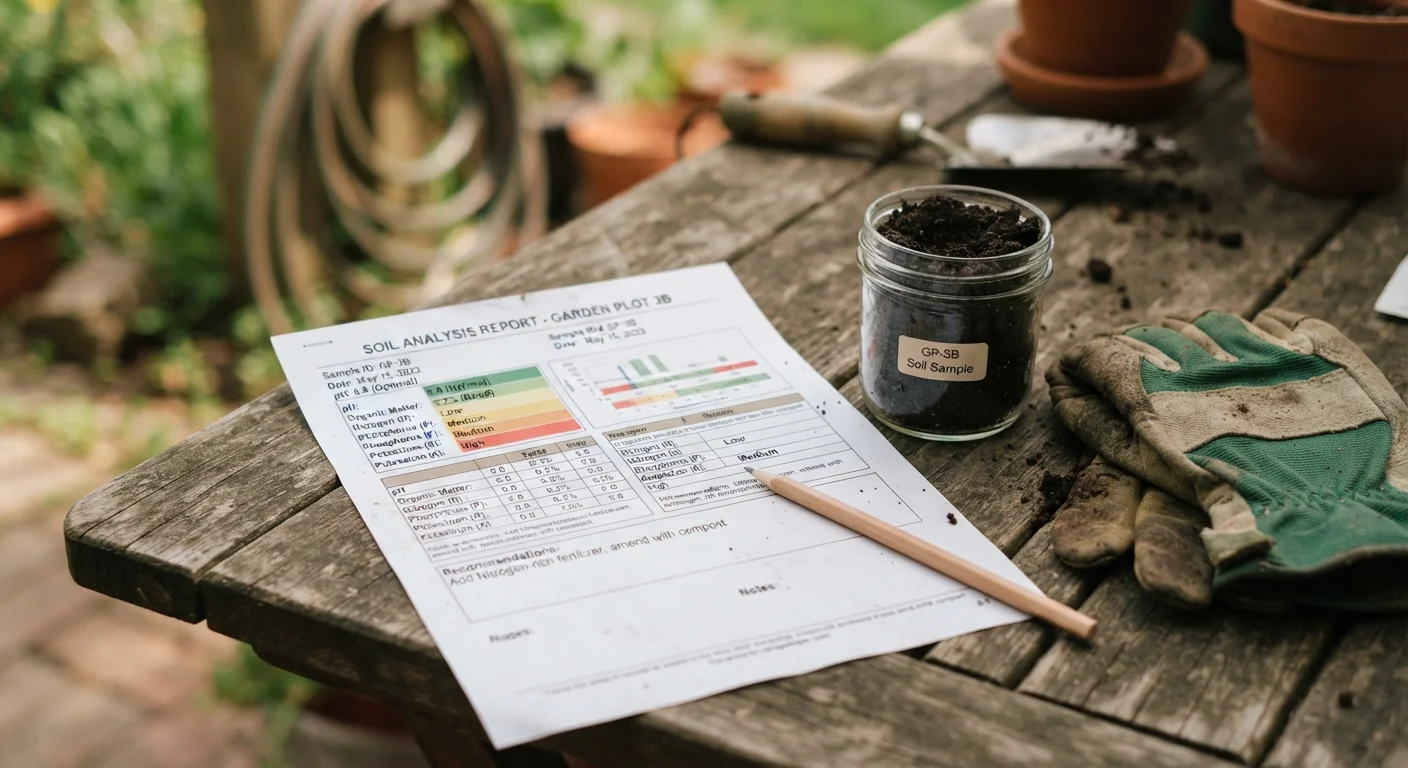
What a Soil Test Report Tells You
A soil test report is a snapshot of your garden's underground chemistry. Labs analyze a small sample of your soil and return a data sheet packed with abbreviations, numbers, and color-coded ratings. At first glance it can look intimidating, but each metric answers a specific, practical question about what your soil needs.
Most reports are organized into a few core categories: acidity (pH), nutrient levels, soil buffer capacity, and sometimes organic matter content. Understanding what each section means - and what to do about it - is the real goal of getting a test done in the first place.
| Ideal pH for most vegetables | 6.0-7.0 (University cooperative extension guidelines) |
| Ideal pH for blueberries | 4.5-5.5 (USDA Plant Guide) |
| Recommended organic matter range | 3-5% (General soil health guidelines) |
| Typical turnaround for a lab report | 1-3 weeks (Varies by state extension lab) |
| How often to retest garden soil | Every 2-3 years (Cooperative extension recommendations) |
Key Metrics Explained
Use the glossary below as a plain-language decoder for the abbreviations you'll find on most US soil test reports.
pH
A scale from 0-14 measuring soil acidity or alkalinity. A pH of 7 is neutral; below 7 is acidic, above 7 is alkaline. Most vegetables and lawn grasses prefer a range of 6.0-7.0.
Buffer pH
A secondary pH reading used to calculate how much lime is needed to raise soil pH. It reflects the soil's resistance to pH change; a lower buffer pH means more lime is required.
CEC (Cation Exchange Capacity)
A measure of how well your soil holds positively charged nutrients like calcium, potassium, and magnesium. Higher CEC means greater nutrient-holding ability; clay and organic-rich soils typically have higher CEC than sandy soils.
NPK
The three primary macronutrients: Nitrogen (N), Phosphorus (P), and Potassium (K). Reports express them in parts per million (ppm) or pounds per acre, and each plays a distinct role - N drives leafy growth, P supports roots and flowering, K aids overall plant resilience.
Organic Matter (%)
The percentage of your soil composed of decomposed plant and animal material. Organic matter improves water retention, nutrient availability, and beneficial microbial activity. Most garden soils aim for 3-5%.
Base Saturation
The percentage of the CEC occupied by key nutrient cations (calcium, magnesium, potassium, sodium). Balanced base saturation indicates a well-supplied soil; skewed ratios can indicate nutrient competition or deficiency.
ppm (Parts Per Million)
A common unit for reporting nutrient concentrations in soil. One ppm is equivalent to one milligram per kilogram of soil. It allows direct comparison of different nutrients on the same scale.
Micronutrients
Nutrients needed in small but critical amounts, including iron, zinc, manganese, copper, boron, and molybdenum. Many soil reports include a micronutrient panel, especially for vegetable gardens or fruit trees.
Reports often include a sufficiency rating alongside each nutrient value - words like Low, Adequate, High, or Excessive. These ratings matter more than the raw numbers, because they account for your soil type. A phosphorus reading of 25 ppm might be adequate in sandy soil but low in clay-heavy soil.
How to Act on Your Results
Once you understand the numbers, translation into action is straightforward:
- pH too low (acidic): Apply ground limestone. The report will often recommend a specific rate in pounds per 1,000 square feet. Work it into the top few inches of soil well before planting season, as pH adjustments take weeks to months.
- pH too high (alkaline): Elemental sulfur or acidifying fertilizers can gradually lower pH. Organic matter like peat also helps over time.
- Low macronutrients (N, P, K): Follow the fertilizer recommendation on the report - it's usually expressed as pounds of actual nutrient per 1,000 sq ft. Match the ratio to what's deficient rather than applying a general all-purpose blend.
- Low organic matter: Incorporate compost at a rate of 2-3 inches tilled into the top 6-8 inches. This improves nutrient retention, drainage, and microbial activity simultaneously.
- High or excessive nutrients: Avoid adding more of that nutrient. Excess phosphorus, for example, can lock out zinc and iron and create runoff concerns.
Where to Get Your Soil Tested
Most US state land-grant universities operate cooperative extension labs that accept soil samples for a modest fee - often under $20 for a standard panel. Your local county extension office can provide sample bags, submission instructions, and guidance on interpreting results specific to your region. Private labs are also available and may offer faster turnaround or specialized panels.
Re-testing every two to three years is a reasonable cadence for most home gardens. Vegetable beds and lawns under heavy fertilization may benefit from annual testing.