What the Rule Actually Says
The 'one in, one out' rule is straightforward in concept: every time a new item enters your home, one existing item must leave. A new jacket arrives - an old one goes to donation. A new kitchen gadget comes in - a redundant one exits. The idea is to create a ceiling on what you own so your space doesn't gradually fill past a comfortable threshold.
What the rule does not say is equally important. It doesn't prescribe how much you should own to begin with. It doesn't sort useful items from genuinely unwanted clutter. And it doesn't account for the very different nature of categories - replacing a worn-out towel is not the same decision as replacing a piece of furniture. Understanding those limits is the starting point for using this guideline honestly.
Myth
'One in, one out' is a complete decluttering system on its own.
Fact
It's a maintenance rule, not a decluttering method. It prevents accumulation but doesn't reduce existing clutter.
Decluttering and maintaining are two different tasks. 'One in, one out' assumes your baseline is already acceptable. If it isn't, you need a separate, more active pass through your belongings first - purging, donating, or discarding - before the maintenance rule has any meaningful effect.
Myth
The rule must apply to every single item in your home to be effective.
Fact
Applying it to specific, high-accumulation categories is more practical and equally effective.
Blanket rules across entire households create decision fatigue. Most people find lasting success by targeting the categories that grow fastest for them - clothing, books, hobby supplies, or kitchen equipment - rather than enforcing an all-or-nothing policy that's difficult to track or sustain.
Myth
If you follow the rule perfectly, your home will become clutter-free.
Fact
The rule only keeps volume stable; it cannot reduce clutter you already have.
Stability is not the same as reduction. A home with too much in it will stay at that level indefinitely if you swap one item for one item. Progress requires a temporary shift - removing more than comes in - until you reach a comfortable baseline, at which point the rule becomes genuinely useful.
Myth
Breaking the rule occasionally means the whole system has failed.
Fact
Occasional exceptions are normal and don't undermine a long-term habit.
All-or-nothing thinking is one of the most common reasons organizational habits collapse. Missing the rule during a holiday season, a major life event, or a bulk purchase doesn't erase the benefit of consistent application the rest of the time. Habits are built over patterns, not individual decisions. Treating a slip as informative rather than catastrophic keeps the practice sustainable.
When It Works - and When It Doesn't
The rule performs well as a maintenance strategy for people who have already done the heavier work of decluttering. If your closet is at a manageable level, committing to 'one in, one out' prevents slow accumulation from undoing that work. Research in consumer behavior consistently shows that people underestimate how much they acquire over time - small, seemingly inconsequential purchases compound into significant volume.
Where the rule struggles is when it's applied to a home that's already overcrowded. In that case, a one-to-one swap merely holds steady a volume that was already too high. You'd need a temporary 'one in, two out' or 'one in, three out' phase to actually reduce quantity before switching to pure maintenance mode.
Don't Use the Rule to Justify Impulse Purchases
A common misapplication is treating 'one in, one out' as automatic permission to buy something new as long as something else leaves. This framing flips the rule's purpose - it was designed to create friction around acquisition, not to rationalize it. If you're regularly searching for something to discard in order to justify a purchase, that's a signal to pause, not proceed.
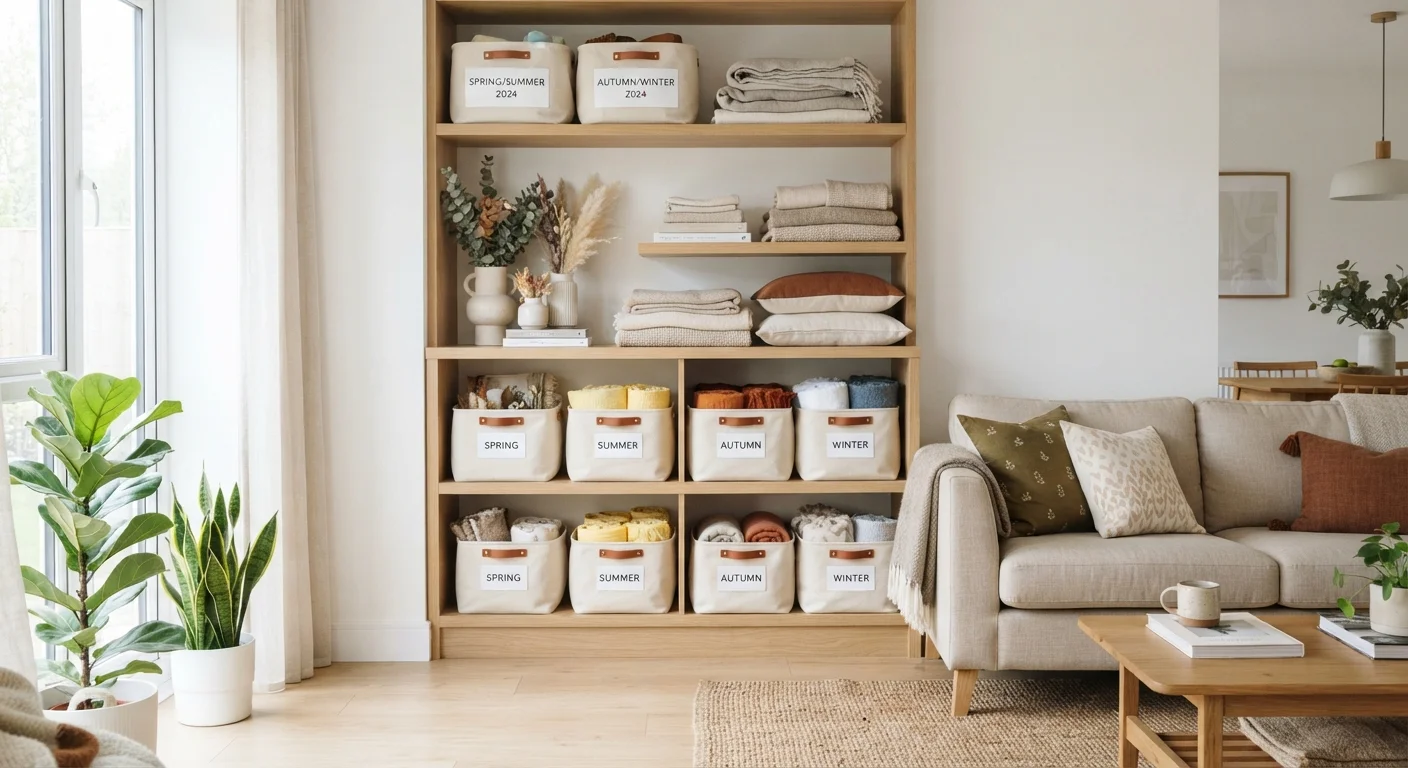
Category-specific application also tends to outperform blanket rules. Applying 'one in, one out' to books, clothing, or kitchen tools - where like-for-like comparisons are easy - gives you a concrete, actionable decision. Applying it globally across the entire household invites analysis paralysis. For seasonal items, consider pairing this habit with a broader review process; our seasonal decluttering guide covers how to align those efforts with the calendar.
80%
Of clutter comes from disorganization, not lack of space
Home organization research frequently finds that the majority of clutter accumulation stems from unclear systems rather than insufficient storage capacity.
1 in 10
US households rents off-site storage
According to the Self Storage Association, roughly one in ten American households rents a storage unit, suggesting many homes have outgrown their organizational systems.
Making It Stick Without Making It Stressful
The biggest practical obstacle isn't the rule itself - it's applying it at the right moment. The most effective time to decide what leaves is before the new item arrives, not afterward when excitement about the new purchase is highest and letting go feels harder.
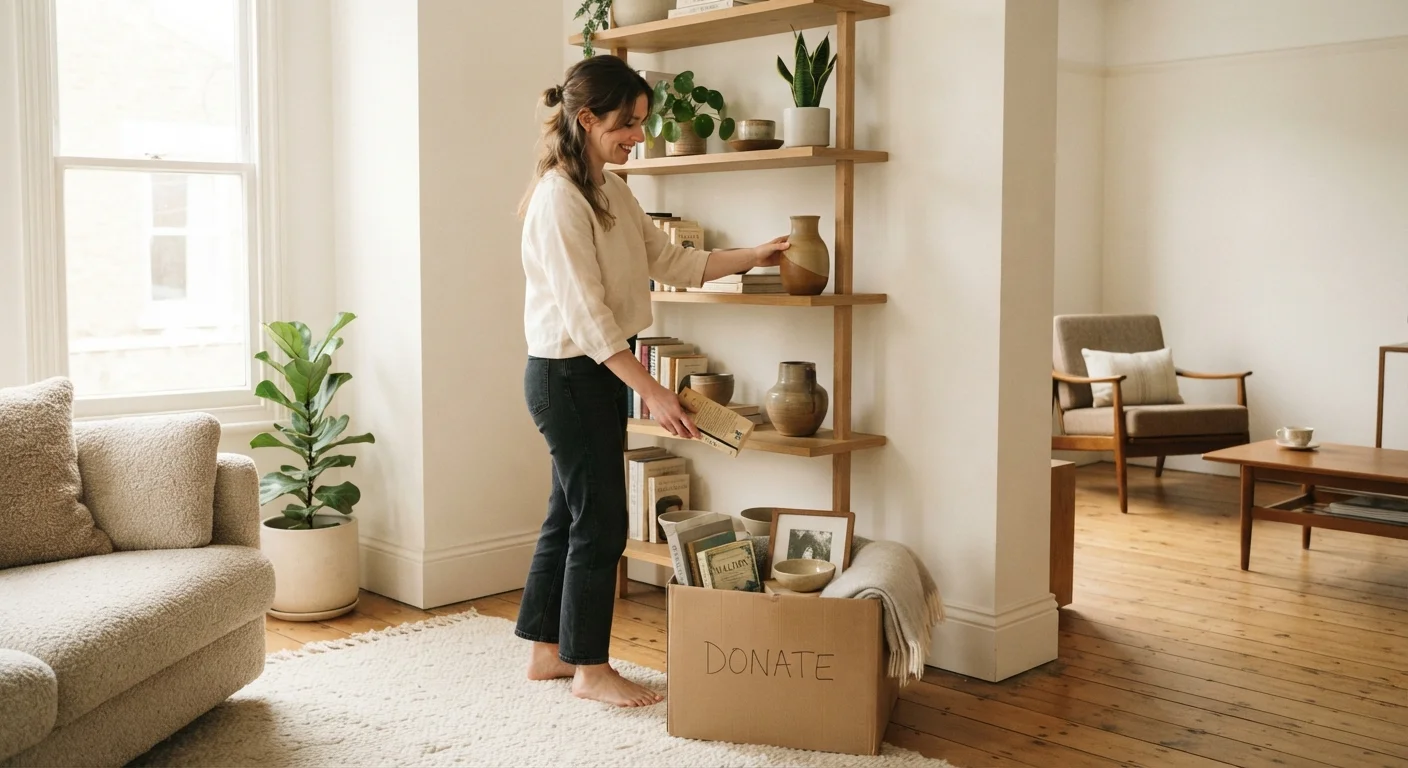
Keep a designated 'outbox' - a box or bag in a convenient spot where items earmarked to leave accumulate before a donation run. This removes the pressure of an immediate trip and makes the exit step feel low-friction. For households with multiple people, agreeing on which categories the rule applies to avoids conflict and makes compliance realistic rather than theoretical.
Finally, give yourself permission to adjust. If the rule causes consistent stress or guilt rather than calm, it may be too broadly applied. Narrowing its scope - or pausing it during life transitions like a move or a new baby - is not failure. A flexible habit maintained over years does more for your home than a rigid rule abandoned after weeks.
The Rule Is a Tool, Not a Moral Standard
Organizational rules work when they reduce stress and support how you actually live. If 'one in, one out' is producing guilt, conflict, or avoidance, it may need to be scoped differently rather than enforced more strictly. The goal is a calmer, more functional home - and that goal should always take priority over adherence to any single method.