
Why Study Myths Persist
Study habits are often passed down from teachers, parents, and peers rather than drawn from research. Because many ineffective strategies feel productive - rereading a chapter creates a sense of familiarity that can be mistaken for learning - they stick around even when evidence argues against them.
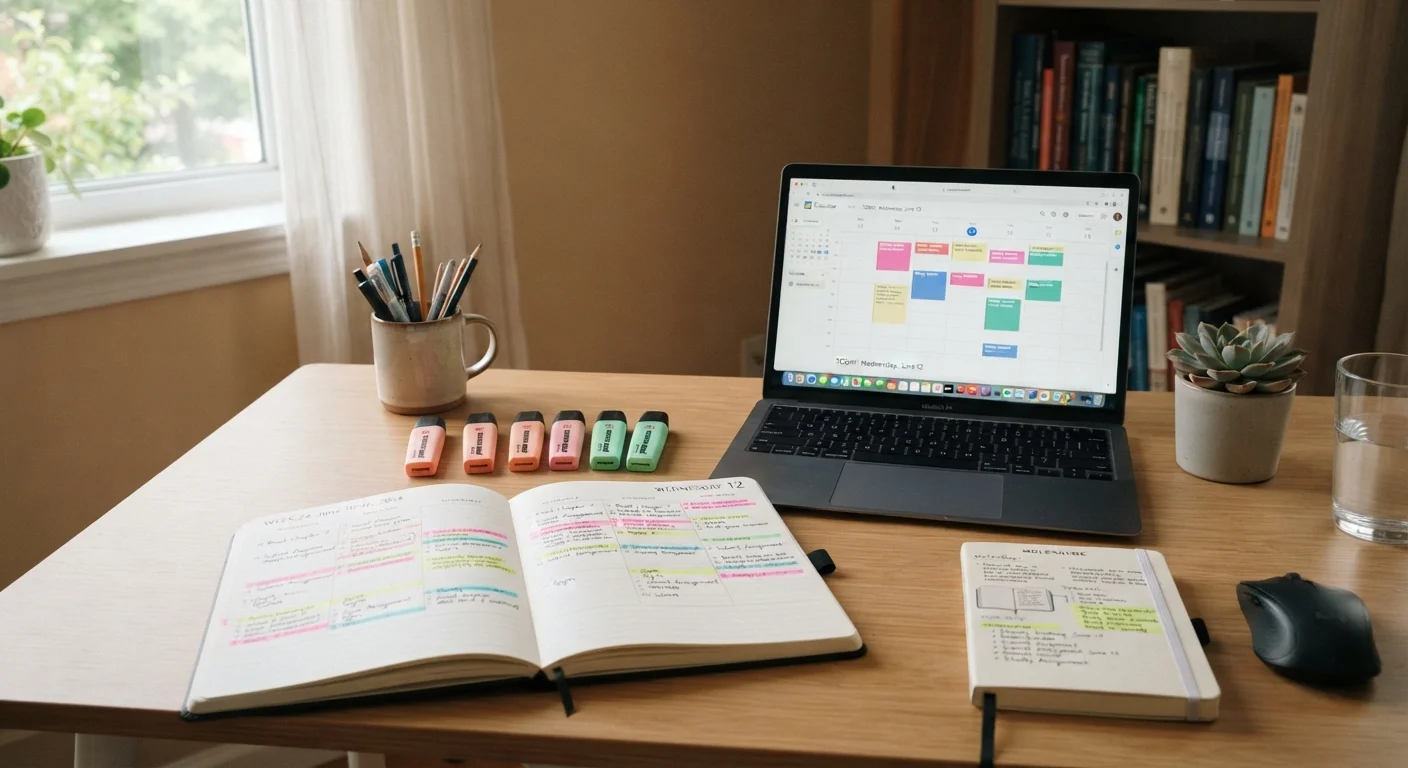
Understanding what the research actually says can help students at every level stop wasting time on techniques that underdeliver and redirect effort toward approaches that genuinely build knowledge. For a practical starting point, see our guide to building a study schedule that you'll actually stick to.
Myth
You learn best when instruction matches your learning style - visual, auditory, or kinesthetic.
Fact
Decades of research have not found consistent evidence that matching teaching methods to self-reported learning styles improves outcomes.
The learning styles hypothesis is intuitive and widely taught, but large reviews of the literature - including a frequently cited analysis by Pashler and colleagues - have found that the core prediction (matching instruction to style improves learning) is not reliably supported by controlled experiments. Most people do have preferences for how information is presented, but preference is not the same as effectiveness. Using varied formats and active engagement tends to benefit learners broadly, regardless of their preferred style.
Myth
Cramming the night before an exam is an effective study strategy.
Fact
Massed, last-minute study can support short-term recall but leads to rapid forgetting and is far less effective than distributed practice over time.
Cramming exploits the brain's ability to hold information briefly, which is why it can feel like it works - you pass the test and move on. But research on the spacing effect consistently shows that the same total study time distributed across multiple sessions produces substantially better long-term retention than a single marathon session. For information you need to retain beyond the exam, spaced repetition is a far more durable approach.
Myth
Highlighting and rereading your notes or textbook are reliable ways to learn material.
Fact
These passive review strategies produce a sense of familiarity but yield much weaker retention than active techniques like self-testing or elaborative interrogation.
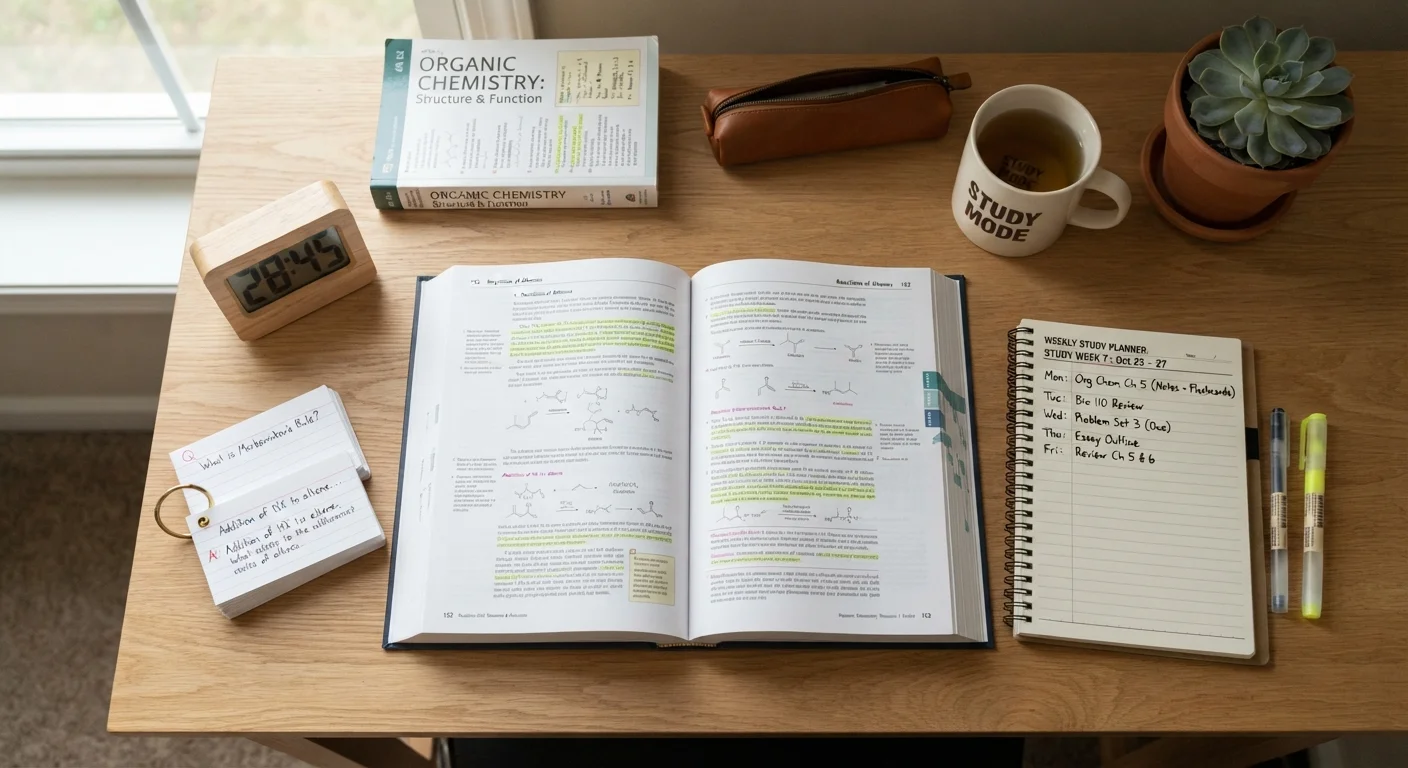
A widely referenced review by Dunlosky and colleagues evaluated ten common study techniques and rated highlighting and rereading as having low utility relative to the time they require. The problem is that re-exposure to text creates fluency - the material feels familiar - which students often misread as genuine understanding. Self-testing, by contrast, forces the brain to reconstruct information, which strengthens the memory trace more effectively. If you currently spend most of your study time with a highlighter, redirecting even a portion of that time toward practice questions or flashcards is likely to pay off.
Myth
Some people are naturally good at multitasking, so studying with music, TV, or social media open doesn't hurt them.
Fact
Research consistently shows that divided attention during learning reduces comprehension and retention for virtually all learners, including those who consider themselves skilled multitaskers.
Studies examining self-reported multitasking ability have found that people who believe they are good multitaskers often show worse performance on divided-attention tasks than those who rate themselves poorly. Cognitive load research suggests the brain does not truly perform two demanding tasks simultaneously - it switches rapidly between them, and each switch carries a cost. Background music with lyrics, notifications, and open social media tabs all compete for the attentional resources needed for meaningful encoding of new material.
Myth
The more time you spend studying, the more you will learn - so longer sessions are always better.
Fact
Study duration matters far less than study quality; long sessions without structure or active engagement often yield diminishing returns.
Research on cognitive fatigue shows that sustained mental effort without breaks reduces focus and the quality of encoding. Techniques like the Pomodoro method - structured intervals of focused work followed by short rests - are grounded in this principle. A focused 45-minute session using retrieval practice will typically outperform two hours of passive rereading. This is why a thoughtfully structured schedule often matters as much as raw hours logged.
What the Evidence Points Toward Instead
Replacing ineffective habits doesn't require dramatic changes - it mostly means substituting passive review with active retrieval. Instead of rereading notes, close them and try to recall the key ideas from memory. Instead of one long session before an exam, distribute study time across multiple shorter sessions spread over days or weeks.
Low utility
Rating for highlighting and rereading
A widely cited review by Dunlosky et al. in Psychological Science in the Public Interest rated both techniques as having low utility relative to time invested.
~10-30%
Retention boost from spaced vs. massed practice
Multiple meta-analyses have found that distributing study sessions over time can meaningfully increase long-term retention compared to equivalent massed practice, though effect sizes vary by context.
These evidence-backed strategies - spaced practice, retrieval practice, and interleaving different topics - consistently outperform the popular alternatives in controlled studies. Our article on spacing, retrieval, and interleaving explores the cognitive science behind each technique in detail.
It's also worth noting that study effectiveness is influenced by factors beyond technique - sleep, stress, and environment all play meaningful roles. If test anxiety is undermining your performance, evidence-informed strategies for managing test anxiety may help alongside stronger study habits.
Feeling Productive Isn't the Same as Learning
One of the most persistent traps in studying is confusing effort with outcome. Strategies like rereading and highlighting feel active and time-consuming, which can create a false sense of mastery. Before an important exam, consider testing your own knowledge rather than reviewing material you already feel comfortable with - comfort and competence are not always the same thing.