How Each Method Actually Works
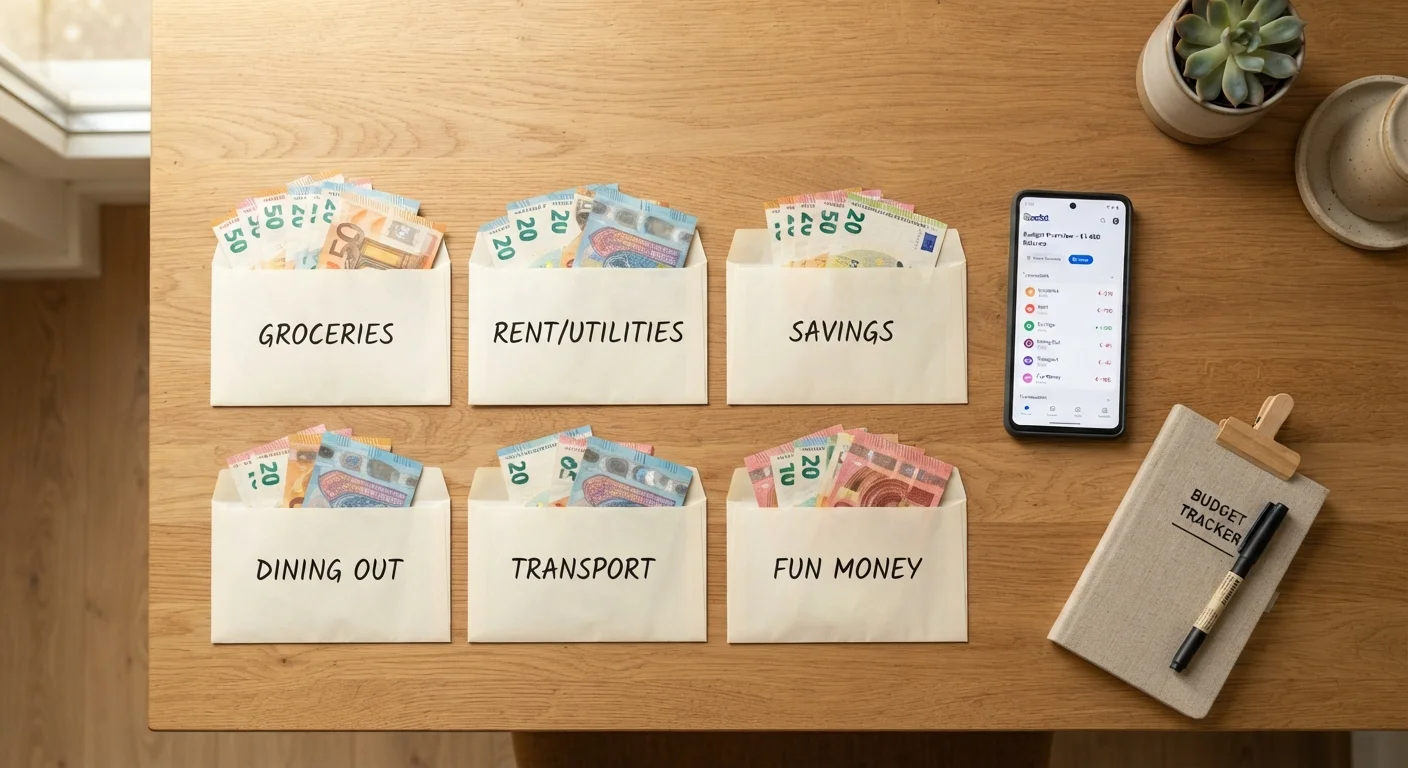
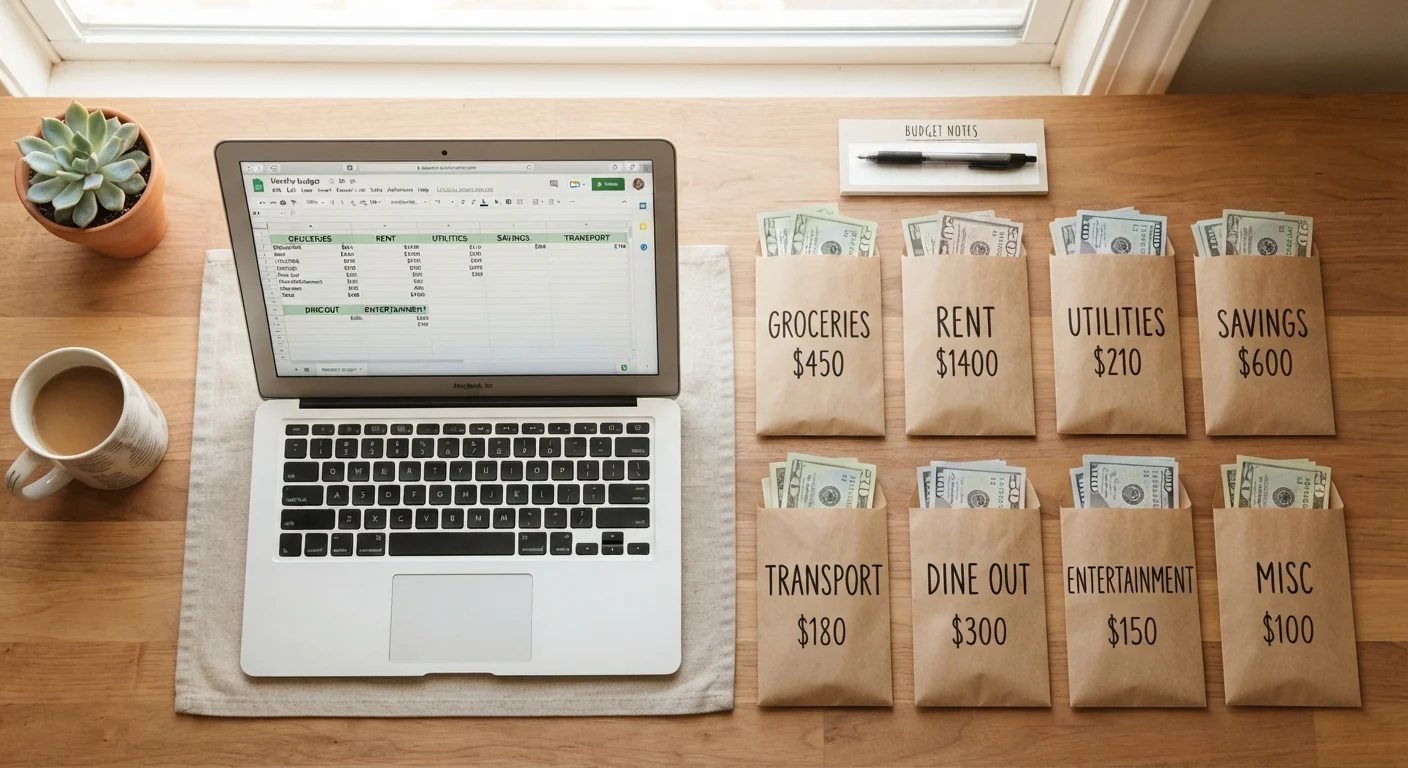
The paper envelope system is straightforward: you withdraw your budgeted spending money as cash each pay period, then divide it into labeled envelopes - one for groceries, one for gas, one for entertainment, and so on. You spend only from the relevant envelope. When it's empty, that category is done for the period. No envelope borrowing without a conscious decision to do so.
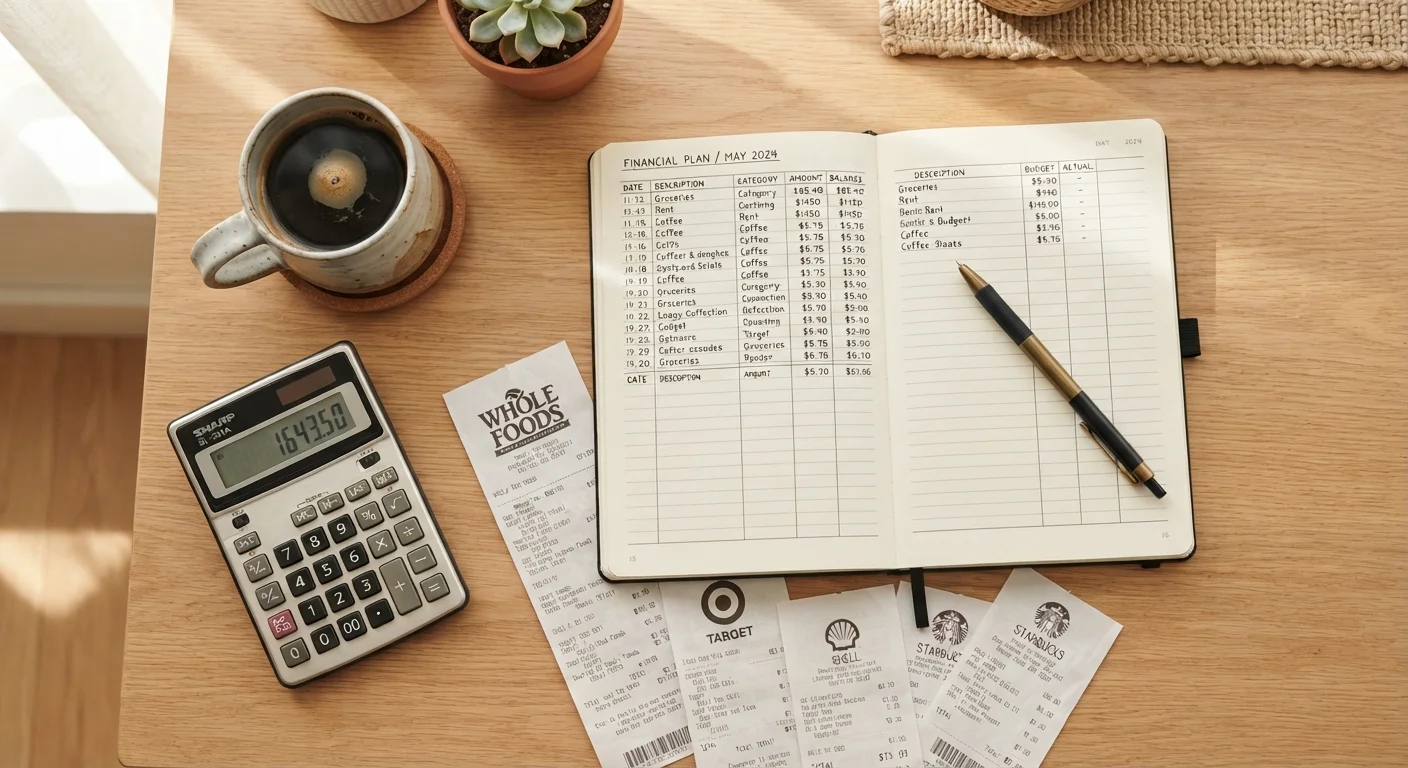
Spreadsheet budgeting works differently. You build a digital table - in a free tool like Google Sheets or similar - that lists every income source and spending category. Each time money moves in or out, you log it. At any point you can see exactly how your planned budget compares to what you've actually spent. For a solid starting framework, see our complete introduction to personal budgeting.
Both methods share a core principle: give every dollar a job before it gets spent. The difference is in the medium - physical cash versus digital records - and that difference has real behavioral implications.
| Criterion | Paper Envelope System | Spreadsheet Budgeting |
|---|---|---|
| Setup time | 30-60 minutes | 1-3 hours initially |
| Ongoing effort | Weekly cash withdrawal | Regular transaction logging |
| Works with digital payments | Poorly - cash-dependent | Yes, fully compatible |
| Spending visibility | Category-level only | Detailed, analyzable data |
| Overspending prevention | Hard physical limit | Relies on self-discipline |
| Cost to start | Envelopes only (near zero) | Free with Google Sheets |
| Best for | Impulse spenders, cash users | Detail-oriented planners |
The Real Strengths and Weaknesses
The envelope system's biggest advantage is friction by design. Research in behavioral economics consistently shows that paying with cash - rather than a card - tends to make people more aware of what they're spending. When you hand over physical bills, the transaction feels more concrete. That psychological effect is the engine behind the envelope method's effectiveness for impulse-control issues.
Its weaknesses are equally concrete. Carrying cash creates safety concerns. It doesn't work cleanly for online purchases, automatic bill payments, or subscription services. And if you lose an envelope, that money is simply gone - no fraud protection, no recovery.
~33%
Adults without a monthly budget
Surveys by the National Foundation for Credit Counseling have consistently found that roughly one-third of American adults do not maintain a budget of any kind.
12-18%
Typical spending reduction with cash
Multiple consumer behavior studies suggest people tend to spend meaningfully less when transacting in cash versus cards, though exact figures vary by study and demographic.
Spreadsheets shine when your finances involve multiple income streams, irregular expenses, or shared household budgets. They can be as simple or as detailed as you need. The downside: they only work if you actually update them. A spreadsheet you stop logging into after two weeks tells you nothing useful. If you manage finances with a partner, the household budgeting approaches guide covers how different structures interact with each method.
Spreadsheets also carry a subtle risk: because there's no physical limit, it's easy to tell yourself you'll "catch up" on overspending next month. That flexibility can become an excuse.
Choosing the Method You'll Actually Use
The most effective budgeting system is the one you maintain consistently. That sounds obvious, but it's genuinely the deciding factor. Ask yourself two questions: Where do I most frequently overspend? and How do I primarily make purchases?
If your weak spots are physical, in-person purchases - a coffee run that turns into lunch that turns into an impulse buy - the envelope system addresses that directly. If your spending is mostly digital and distributed across subscriptions, utilities, and online retailers, a spreadsheet is simply more practical.
Neither Method Requires Perfection
A budget that's 80% consistent beats a perfect system you abandon after a month. Both envelope and spreadsheet methods are forgiving of occasional missed entries or borrowed categories - what matters is returning to the structure rather than giving up entirely. If you're comparing broader frameworks, see our 50/30/20 vs. envelope budgeting comparison for additional context.
It's also worth considering a hybrid approach. Some people use physical envelopes for two or three discretionary categories where they struggle the most, while managing fixed bills and savings contributions through a spreadsheet. The digital-age envelope budgeting guide explores how people adapt the method for modern banking.
Whichever system you choose, a regular review keeps it functional. The monthly budget audit checklist is a useful tool for either method - it surfaces forgotten subscriptions, category drift, and life changes that should update your budget.
This article provides general financial education and is not personalized financial advice. Consider consulting a qualified financial professional for guidance tailored to your situation.