How Envelope Budgeting Actually Works
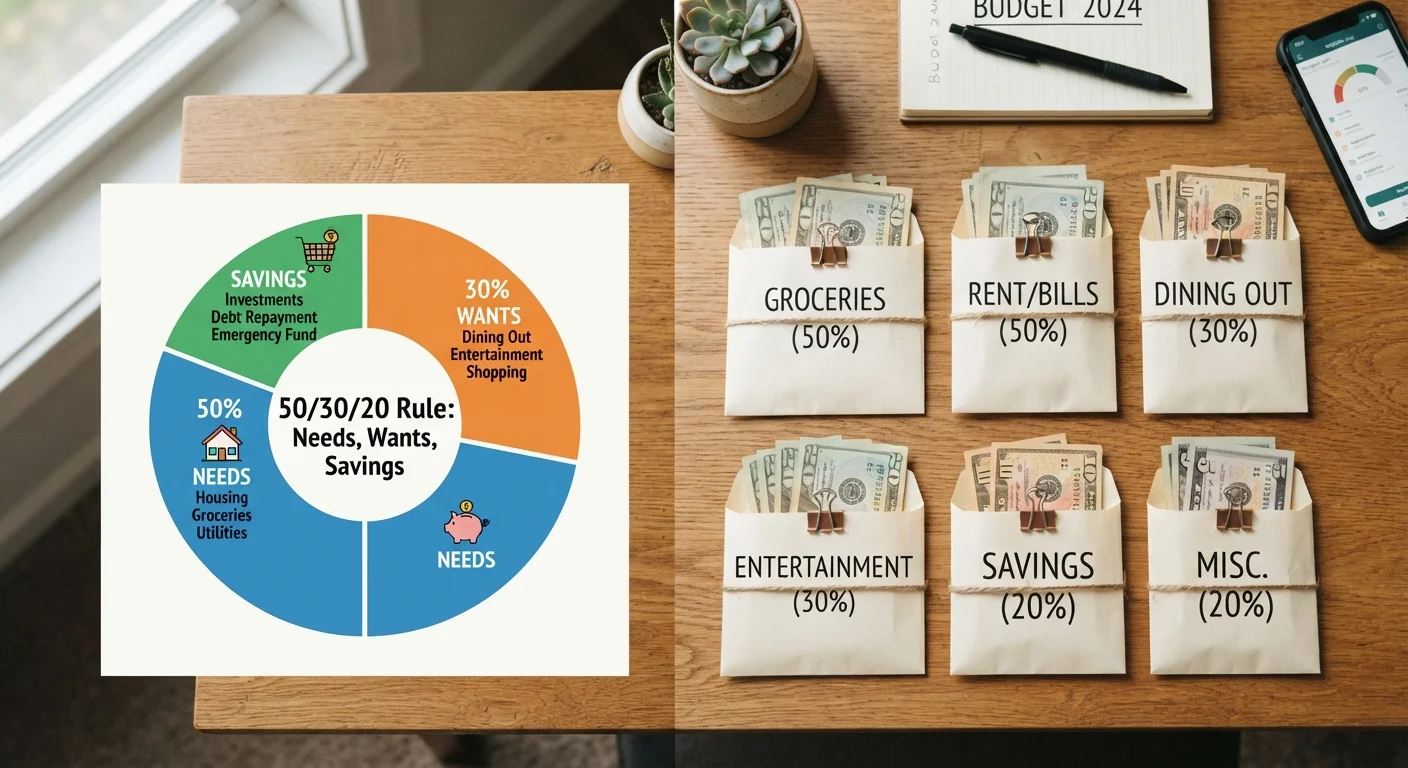
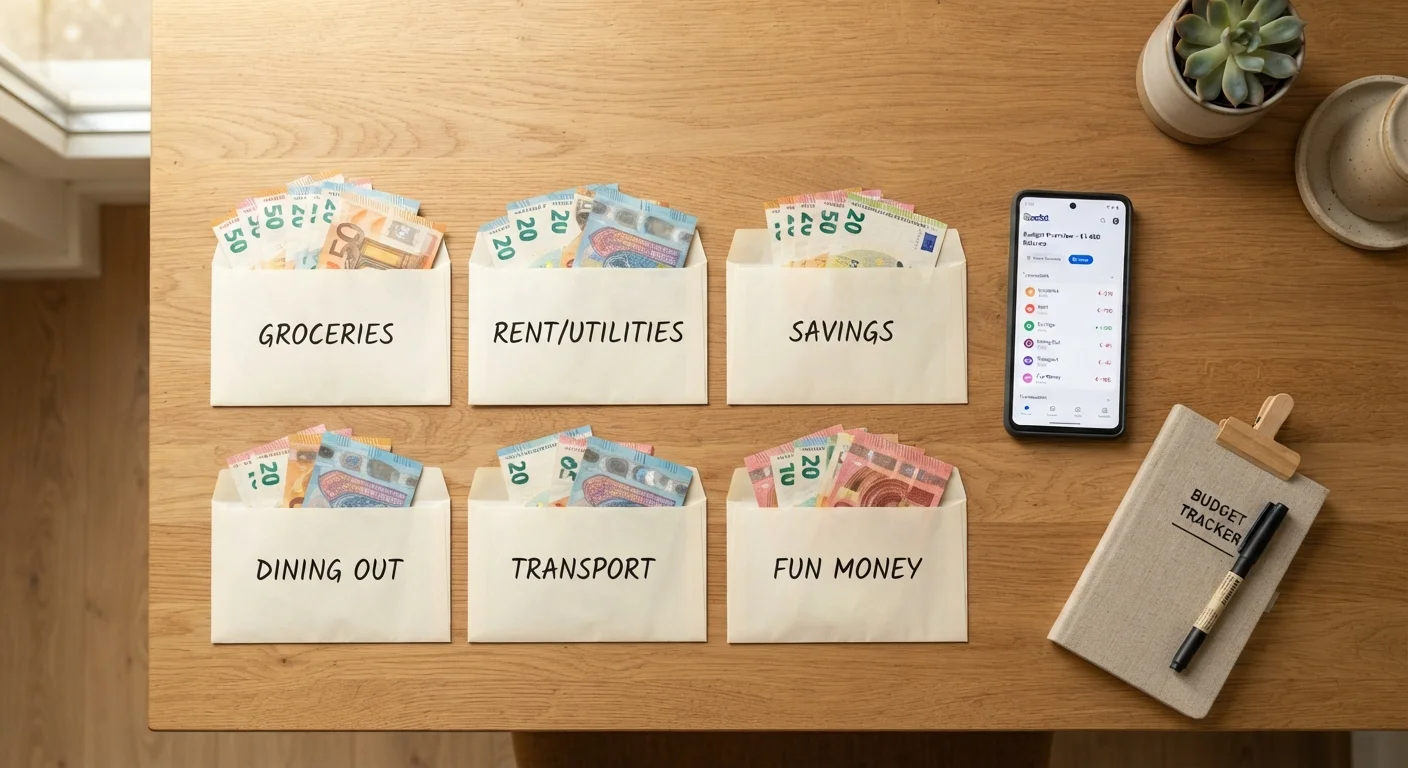
Envelope budgeting is straightforward: at the start of each pay period, you divide your take-home income into labeled envelopes - one per spending category. Groceries, dining out, gas, entertainment, clothing. Each envelope receives a fixed cash amount. Once that cash is gone, no more spending in that category until next month.
The system dates to an era when most Americans were paid in cash, but its psychological logic is durable. Physical or virtual limits force spending decisions that a credit card swipe never does. If you're new to budgeting broadly, the complete introduction to personal budgeting covers foundational concepts worth understanding first.
Today, most people adapt the method digitally - using separate checking sub-accounts, prepaid cards, or apps that replicate envelope logic without physical cash. The mechanics change; the discipline requirement does not.
Pros of the Envelope System
The envelope method offers several genuine advantages that explain why it has lasted this long.
Creates hard, visible spending limits per category
Unlike a general budget tracked in a spreadsheet after the fact, envelopes enforce limits in real time. Seeing a thin envelope mid-month is a more immediate signal than reviewing a bank statement at month-end.
Reduces impulsive overspending without willpower alone
The constraint is structural, not motivational. Research in behavioral economics consistently shows people make better spending decisions when faced with concrete scarcity rather than abstract account balances.
Easy to understand and start immediately
There is no complex formula or proprietary software required. The concept takes minutes to explain and the first iteration can be built the same day you decide to try it.
Builds awareness of where money actually goes
Allocating income by category at the start of the month forces a conscious accounting of every recurring cost, often revealing spending patterns that felt invisible on a debit card statement.
Flexible enough to adjust monthly
Envelope amounts are not permanent. If groceries routinely run short while entertainment goes unspent, you can reallocate next month with no penalty or system migration required.
For a side-by-side comparison with another structured approach, see how envelope budgeting compares to the 50/30/20 rule.
Cons of the Envelope System
No budgeting method is universally suited to every household. The envelope system has real drawbacks worth weighing honestly.
Impractical for card-only or cashless lifestyles
Online purchases, recurring subscriptions, and contactless payments don't map cleanly to physical cash envelopes, requiring workarounds that add friction and complexity to a system meant to be simple.
Difficult to manage with irregular income
Freelancers, gig workers, and anyone with variable paychecks face a challenge: envelope amounts must be set before income is confirmed, which can make limits either too restrictive or too generous month to month.
Time-consuming to maintain accurately
Manual tracking - whether counting cash or logging digital transactions against category budgets - requires consistent daily or weekly attention. Most budgeting systems that fail do so because the maintenance burden outpaces motivation.
Rigid categories can misfire in real spending life
Life doesn't organize spending into neat monthly buckets. A medical expense, a school supply run, or a home repair can blow a single envelope without representing actual mismanagement.
Carries no safety net for envelope-to-envelope borrowing
Moving money between envelopes - which most people eventually do - can erode the system's core constraint. Without discipline around transfers, the method becomes a looser, more complex version of simply tracking a total balance.
~33%
Americans with a detailed monthly budget
Surveys from the National Foundation for Credit Counseling have consistently found that fewer than one in three U.S. adults maintains a detailed monthly budget, highlighting the gap between intention and practice.
~$1,500
Average monthly discretionary spending per household
U.S. Bureau of Labor Statistics Consumer Expenditure data shows significant discretionary spending variation - the category where envelope limits tend to have the most direct impact.
Adapting Envelopes to Digital Banking
Carrying labeled cash envelopes is impractical for most people in 2024. The good news: the core logic translates well to digital tools.
- Sub-accounts: Some banks and credit unions let you create multiple savings or checking pockets within one account, each named by category.
- Prepaid debit cards: Load a fixed amount per card per category - the card declines when the balance hits zero, mimicking the original envelope constraint.
- Budgeting apps: Several apps replicate virtual envelopes, automatically tracking spending against category limits and alerting you when you approach a ceiling.
Envelope Apps vs. Traditional Banking Features
Dedicated budgeting apps that use envelope logic typically offer more granular category controls and real-time alerts than standard bank sub-accounts. However, they may require connecting to your financial accounts, which involves sharing login credentials or read-only bank access. Review the security and privacy practices of any app before linking it to a primary account. Your bank's own sub-account or savings pocket feature, while less feature-rich, keeps your data within your existing institution.
If you prefer a lower-tech approach, paper envelopes versus spreadsheet budgeting compares two methods you can maintain without any app.
Making It Work Long-Term
The most common reason envelope budgeting fails isn't the system - it's the setup. Categories are often too broad or limits set unrealistically tight. A few practices improve durability:
- Review your last two to three months of actual spending before setting envelope amounts. Guessing leads to envelopes that run dry in week two.
- Build a small buffer envelope for genuinely unpredictable costs - a minor car repair, a co-pay, a forgotten annual subscription.
- Do a monthly audit. The monthly budget audit checklist is a practical tool for catching drift before it compounds.
Envelope budgeting pairs naturally with zero-based budgeting, which operates on the same every-dollar-has-a-job principle but approaches it through a spreadsheet framework rather than discrete spending buckets.
This article is for general informational and educational purposes only and does not constitute personalised financial advice. Consult a qualified financial professional for guidance specific to your circumstances.