
Why the Years Before 40 Matter More Than Most People Realize
The financial habits you build during your 30s don't just affect your bank balance - they shape the options you'll have in your 50s and 60s. That's not meant to alarm anyone; it's simply how time and compounding work. A dollar saved or invested at 32 has roughly twice the growth runway of the same dollar invested at 47.
This isn't a guide about deprivation or hitting arbitrary milestones. It's about identifying the everyday habits - the small, repeatable decisions - that quietly build financial stability over time. If some of these are already in place for you, great. If a few aren't, the good news is that habits are changeable at any age. For those earlier in their financial journey, our money management starting point covers the foundational concepts before you dive in here.
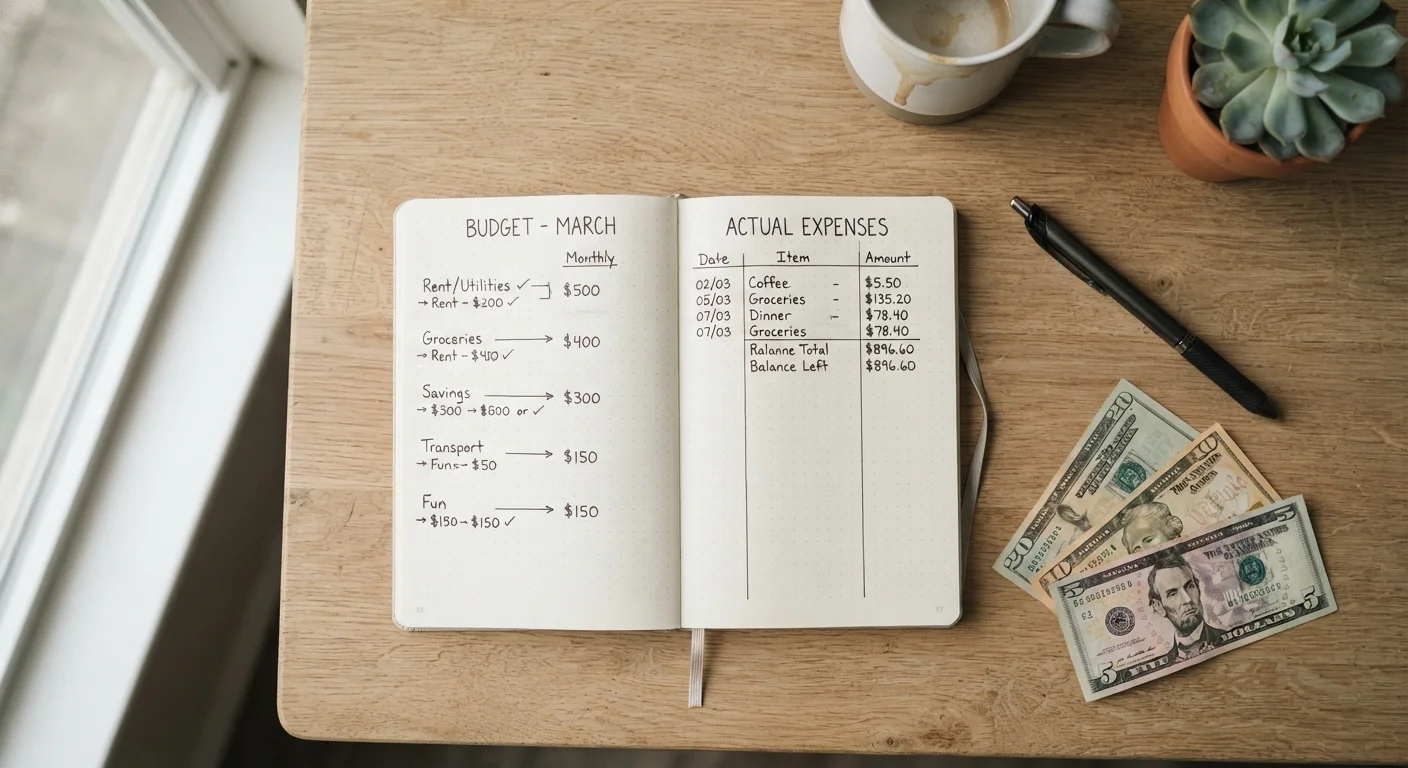
Track your spending with honest regularity
You can't manage what you don't measure. Tracking spending - even at a high level - gives you an accurate picture of where money actually goes versus where you think it goes. Most people are surprised when they first audit their expenses carefully.
The method matters less than the consistency. A simple spreadsheet, a notes app, or a budgeting tool all work. What doesn't work is reviewing spending once every three months and calling it done. A weekly or monthly review rhythm catches problems early. For a deeper look at how everyday expenses add up, see our piece on small daily expenses and long-term savings.
You can't manage what you don't measure - even a rough monthly review beats none at all.
Build an emergency fund before other financial goals
An emergency fund - typically three to six months of essential living expenses held in a liquid, accessible account - acts as a financial buffer between you and debt. Without one, an unexpected car repair, medical bill, or job disruption often lands on a credit card, creating a cycle that's hard to break.
Building this fund doesn't require a dramatic overhaul. Even setting aside a small fixed amount each month adds up. The key is separating this money from your regular checking account so it isn't accidentally spent. Once it's established, the psychological effect alone - knowing you have a cushion - can reduce financial anxiety meaningfully.
An emergency fund is not a luxury - it's the first line of defence against debt cycles.
Automate savings so consistency doesn't rely on willpower
Behavioural research consistently shows that people save more when saving happens automatically - before they have a chance to spend the money. Setting up a recurring transfer to a savings account on payday, or having a portion of a paycheck directed there automatically, removes the decision from every pay cycle.
This principle applies to retirement contributions as well. Increasing a contribution percentage by even one or two points - particularly if your employer offers any matching - can have a significant effect over a 20-to-30-year horizon. The money you never see in your checking account is the easiest money to save. For guidance on building a workable monthly budget, automation is one of the most-recommended starting points.
Automating savings turns a good intention into a guaranteed habit every pay period.
Pay down high-interest debt with a clear strategy
High-interest debt - particularly revolving credit card balances - is one of the most significant obstacles to building wealth. Interest rates on these products can be substantial, meaning a significant portion of every payment goes toward interest rather than reducing what you owe.
Two widely-used approaches exist: the avalanche method (paying off highest-interest debt first, minimising total interest paid) and the snowball method (paying off smallest balances first, building momentum). Neither is universally correct - the one you'll stick with is the right one. What's less productive is carrying high-interest debt into your 40s without a clear plan to address it. See also: where extra money should go first.
The debt payoff method you'll actually stick with is always the right one to use.
Start retirement contributions early and increase them gradually
Compound growth rewards time above almost everything else. Starting retirement contributions in your 20s or early 30s - even at modest levels - provides a significantly longer runway than waiting until income feels more comfortable. The difficult truth is that financial comfort rarely arrives on its own; income tends to expand to fill available spending.
If your employer offers a retirement plan with any matching contribution, prioritising at least enough to capture that full match is generally considered a sound baseline by most financial educators - though individual circumstances vary. From there, many financial professionals suggest gradually increasing contribution rates over time. This is general educational information; for personalised guidance, consult a licensed financial adviser.
Time in the market is the compounding engine - starting early matters more than starting perfectly.
Manage impulse spending before it manages you
Impulse purchases aren't a character flaw - they're partly the result of how retail environments, apps, and marketing are designed. Recognising that makes it easier to put practical friction in place: waiting 24 to 48 hours before non-essential purchases, removing saved payment information from shopping apps, or setting a monthly discretionary spending threshold.
The goal isn't to eliminate discretionary spending - it's to make it intentional. Money spent on things that genuinely matter to you is well spent. Money spent reflexively on things you forget a week later is the kind worth interrupting. For more on the behavioural side of this, our article on impulse spending patterns explores the triggers in detail.
Intentional spending - not zero spending - is the sustainable goal.
Align financial habits with your household, not just yourself
For anyone sharing finances with a partner, the habits you build individually only go so far if they're working against each other at the household level. Different money histories, spending styles, and financial goals between partners are common - and normal. What matters is establishing shared visibility and agreed-on priorities.
This doesn't require merging everything. Many couples use hybrid approaches - shared accounts for joint expenses, individual accounts for personal spending - with a regular check-in on shared goals. Building a communication rhythm around money tends to prevent small misalignments from becoming significant conflicts. Our guide to managing money as a couple covers the practical approaches in more depth.
Shared financial visibility matters more than identical spending styles in a household.
Putting It All Together
None of these habits requires a high income or financial expertise - they require consistency. The ones that tend to stick are the ones built into your routine rather than left to willpower. Start with one or two, let them become automatic, then add the next. For a structured way to keep all of this on track month to month, the monthly financial reset checklist is a useful companion to revisit regularly.
It's also worth knowing what works against you. Common patterns that quietly extend debt timelines are explored in our piece on habits that undermine debt payoff. Building the right habits matters - but so does identifying the ones quietly pulling in the other direction.
This article is for general informational and educational purposes only and does not constitute personalised financial, investment, or tax advice. Readers should consult a qualified financial professional before making decisions specific to their circumstances.
Start with one habit, not seven
Trying to overhaul your finances all at once is a reliable path to abandoning everything within a month. Pick the habit on this list that would have the biggest immediate impact for you - likely tracking or the emergency fund - and make it automatic before adding another. Small, consistent changes compound just as reliably as financial returns do.