
Why Good Intentions Aren't Enough
Most people who carry debt aren't ignoring it. They're making payments, watching their spending in broad strokes, and intending to pay things down. Yet months pass and balances barely move. The culprit is rarely a single catastrophic decision - it's a cluster of repeated, low-visibility habits that quietly eat into progress.
Understanding which behaviors stall a debt payoff plan - and why they feel so harmless in the moment - is the first step toward changing them. This isn't about blame. It's about building accurate awareness so your effort actually translates into forward movement. For a look at the broader misconceptions that keep people stuck, see common myths about paying off debt.
Paying only the minimum balance each month.
Why it happens: Minimum payments feel responsible - they keep accounts current and avoid late fees. But they're designed to preserve interest income for lenders, not to help borrowers get out of debt quickly.
Spending windfalls instead of directing them toward debt.
Why it happens: Tax refunds, bonuses, and gifts feel like "extra" money that's separate from the regular budget, making it easy to rationalize discretionary spending.
Allowing lifestyle inflation to absorb income increases.
Why it happens: When income rises, spending tends to rise in parallel - a newer car, a better apartment, more dining out. This feels like a reward for hard work, and the raises are real, but the debt timeline quietly extends.
Having no structured payoff strategy - just making payments.
Why it happens: Without a method, people make roughly equal payments across all debts or pay whichever bill feels most urgent. This scattershot approach maximizes time in debt and total interest paid.
Skipping regular reviews of debt balances and spending.
Why it happens: Checking in on finances can feel uncomfortable, especially when progress is slow. Avoidance is a natural response to financial anxiety - but it allows drift to go uncorrected.
Building savings aggressively while ignoring high-interest debt.
Why it happens: Saving feels productive and positive, while paying off debt can feel like treading water. It's emotionally easier to watch a savings balance grow than a debt balance shrink.
The Structural Gaps That Compound the Problem
Individual habits rarely operate in isolation. They tend to cluster around a few structural gaps: no clear payoff method, no regular review, and no automation keeping payments consistent.
~$6,500
Average U.S. credit card balance per cardholder
Federal Reserve data consistently shows American cardholders carry substantial revolving balances, making payoff strategy more consequential than most realize.
20%+
Typical annual credit card interest rate
Average credit card APRs have remained above 20% in recent years according to Federal Reserve consumer credit reports, meaning slow payoff carries a steep cost.
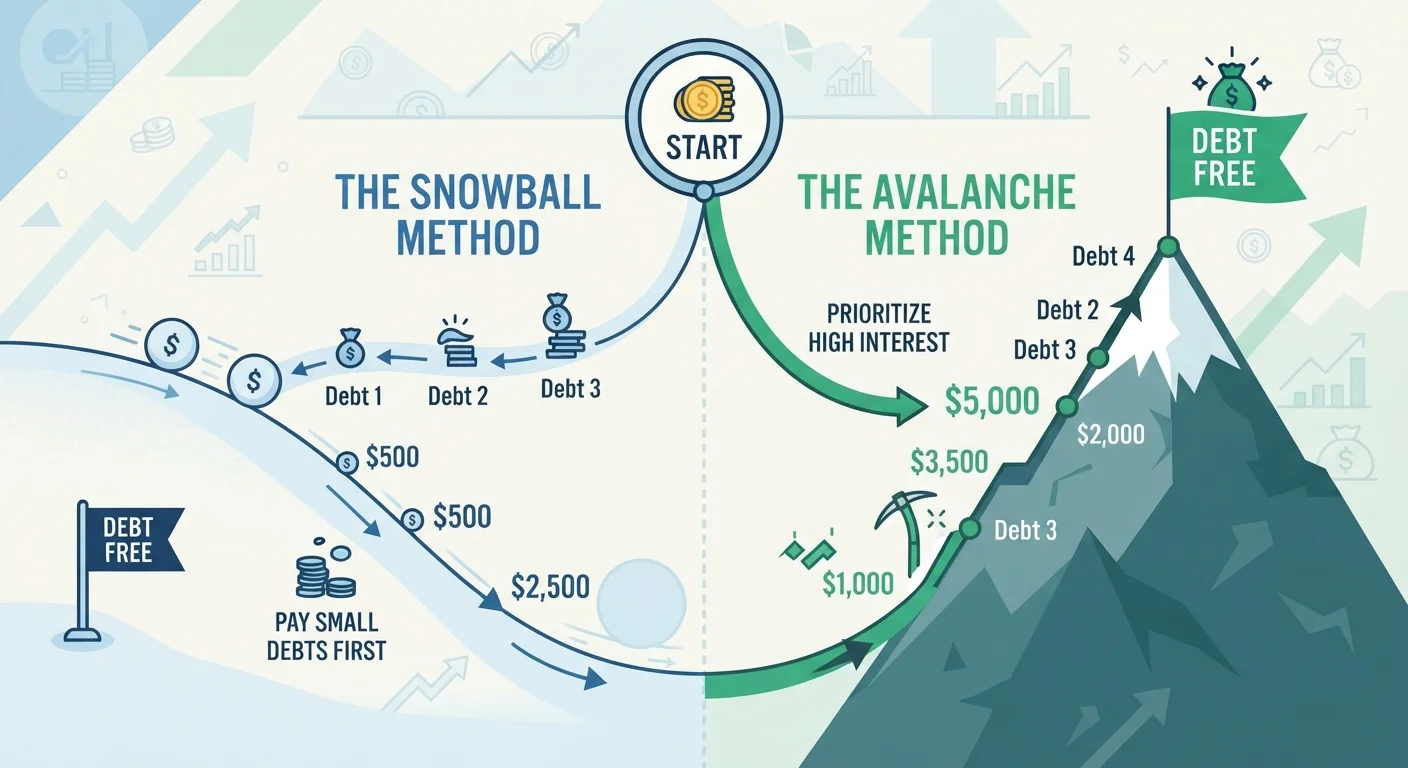
Choosing a structured approach - whether the avalanche method (targeting highest-interest debt first) or the snowball method (smallest balance first) - makes a measurable difference in how efficiently payments reduce what you owe. Understanding how these strategies compare can help you pick the one that fits your psychology and your numbers.
Automation addresses another structural gap. When debt payments and savings transfers happen automatically on payday, they're no longer subject to daily willpower or competing priorities. Scheduling transfers removes friction and makes consistent progress the default, not the exception.
Inconsistent Payments Reset Your Momentum
Skipping or reducing a payment - even once - can undo weeks of progress, particularly on high-interest balances where interest accrues daily. If cash flow is tight one month, pay at least something above the minimum rather than pausing entirely. Setting up automatic minimum payments as a safety net can prevent an accidental missed payment from triggering fees or credit impact.
Finally, a monthly financial reset - reviewing balances, tracking where money went, and recalibrating - catches drift before it compounds. A structured monthly checklist gives that review a reliable format. If building these habits feels like a stretch, it helps to understand which foundational money habits tend to compound into long-term stability.
This article is for general informational and educational purposes only and does not constitute personalized financial or legal advice. Consult a qualified financial professional for guidance specific to your situation.