
Why Subscription Spending Is So Easy to Underestimate
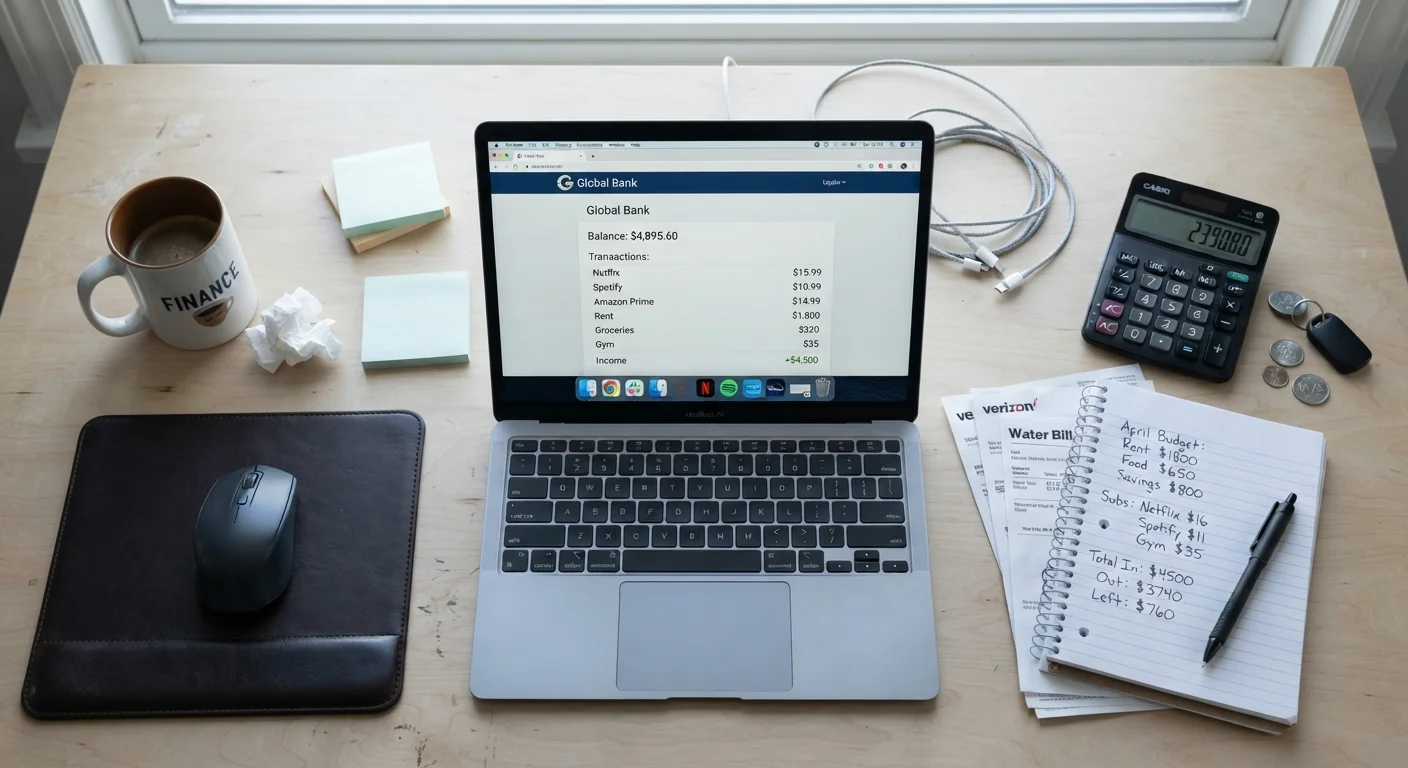
Subscriptions are engineered to feel invisible. Small amounts charged automatically each month rarely trigger the psychological response that a one-time purchase of the same total value would. A $14.99 charge barely registers on a statement, yet twelve of them represent $1,798.80 annually - before counting annual-billed services, premium tiers, and add-ons.
This effect compounds across households. Most people, when asked to estimate their monthly subscription total from memory, come in significantly below what their actual statements reveal. The gap isn't carelessness - it's a predictable result of how recurring billing is designed. The practical solution is a structured audit, not a better memory.
Subscription sprawl also tends to worsen during certain periods: after a move, a job change, a new device, or following a period of heavy promotional offers. These are also the moments when people are least likely to have time to review recurring charges. The result is a slow accumulation that only becomes visible when you force yourself to look.
Subscriptions aren't the only category of spending that hides in plain sight. Vehicle costs behave similarly - small, irregular charges that add up to a much larger annual figure than most drivers realize. The audit habit transfers across categories.
Use One Card for Subscriptions
Routing all recurring charges to a single dedicated credit or debit card makes future audits significantly faster. You only need to scan one statement rather than hunting across multiple accounts, and any unexpected new charges are immediately obvious.
How to Audit and Reclaim Control of Your Subscriptions
The steps below walk you through a complete subscription audit - from pulling statements to scheduling future reviews. The process is straightforward and requires no special tools beyond what you already have access to.
What you will need
Bank and credit card statements (12-13 months)
Primary source for identifying every recurring charge, including annual billings.
Spreadsheet or notepad
Used to log each subscription's name, amount, billing frequency, and payment method.
Email search
Search your inbox for terms like 'receipt', 'invoice', or 'subscription' to surface charges you may have missed in statements.
Pull every statement from the past 13 months
Log in to each bank account and credit card portal and download or review statements covering at least the last 13 months. Thirteen months - not twelve - ensures you catch services billed on an annual cycle that may have renewed just outside a calendar year window. Look at every account you use for online purchases, including PayPal or similar digital wallets.
Flag every recurring charge
Go line by line and highlight any charge that repeats - weekly, monthly, quarterly, or annually. Common culprits include streaming services, music apps, cloud storage, news outlets, software licenses, gym memberships, meal-kit deliveries, and app store subscriptions. Don't skip small amounts; a $2.99 charge repeated monthly is $35.88 a year.
Build a master subscription list
Create a simple table - on paper or in a spreadsheet - with five columns: service name, monthly cost (or annual cost divided by 12), billing date, payment method, and a notes field. Transfer every flagged charge into this list. At the bottom, total the monthly column. This single number is often the first genuine surprise for most households.
Apply a value-per-use test to each item
For each subscription, honestly estimate how many times you used it in the past 30 days. Divide the monthly cost by that number to get a rough cost-per-use figure. A $15 streaming service used 20 times costs $0.75 per session - likely worthwhile. The same $15 used once costs $15 per session and deserves scrutiny. There's no universal right answer, but making the number concrete changes the conversation.
Sort into three categories: Keep, Pause, or Cancel
Label each item on your list as Keep (actively used and valued), Pause (seasonal or situational - worth revisiting), or Cancel (unused, duplicated by another service, or cost-per-use is clearly too high). Streaming services frequently overlap in content; households often carry two or three with minimal unique value from each. Duplicate cloud storage tiers are another common find.
Cancel or downgrade the flagged subscriptions
Work through your Cancel list immediately. Most services allow self-cancellation through account settings, though some route you through a retention flow designed to delay the decision. Stay focused - note your reason for canceling and decline any counter-offers unless the new terms are genuinely attractive. For Pause items, set a calendar reminder at the next billing date to reassess rather than letting them continue by default.
Schedule a recurring audit every quarter
New subscriptions tend to accumulate gradually - a free trial here, a promotional add-on there. Block 20 minutes on your calendar every three months to repeat a lighter version of this audit: scan the past 90 days of statements, check your master list for anything new, and re-apply the value-per-use test to any service you haven't used recently. This keeps subscription creep from rebuilding silently.
Annual Subscriptions Are the Easiest to Miss
Services billed once a year don't show up on your monthly radar, yet they can represent a substantial chunk of annual spending. Always check statements going back at least 13 months to catch every billing cycle. Divide each annual charge by 12 and add it to your monthly subscription total for an accurate picture.
Free Trials Convert Automatically
Most free trials automatically convert to paid subscriptions unless you cancel before the trial ends. If you sign up for a trial you don't intend to keep, set a calendar reminder for at least two days before the trial expires - some services require a notice period to process cancellations.
Once you've trimmed your subscription list, the monthly savings are real and immediate. Consider directing that reclaimed amount toward a specific financial goal. If your spending includes irregular annual charges - insurance premiums, memberships, or registrations - the sinking fund approach is a practical way to smooth those costs across the year rather than absorbing them as budget shocks.
For a broader view of expenses that don't fit neatly into a monthly budget line, see how to account for irregular expenses. Combining a subscription audit with a monthly financial check-in is one of the most reliable ways to stay on track - the monthly budget audit checklist provides a practical structure for doing exactly that.
This article is for general informational and educational purposes only and does not constitute personalized financial advice. Consult a qualified financial professional for guidance specific to your situation.