
What Zero-Based Budgeting Actually Means
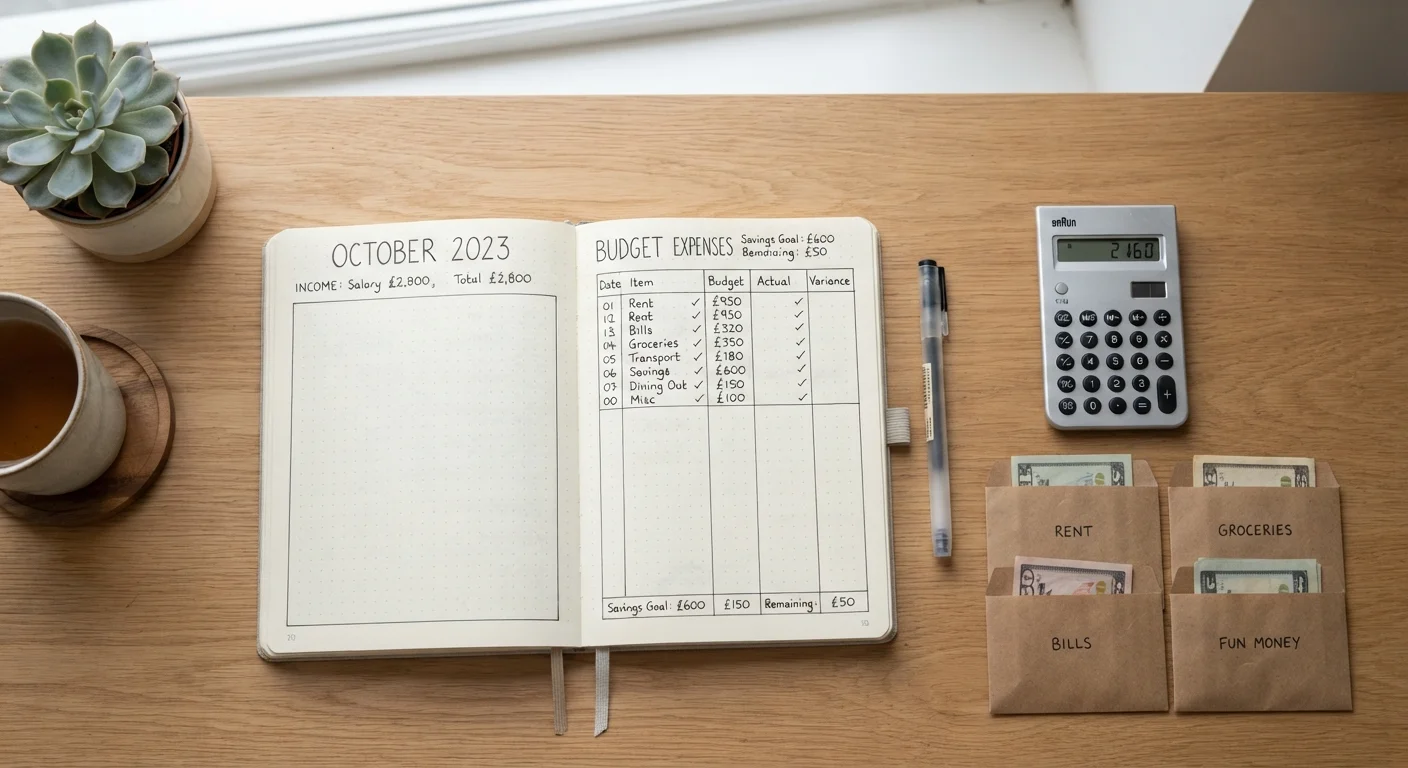
Zero-based budgeting (ZBB) is a method in which you assign every dollar of your monthly income to a specific category - expenses, savings, or debt repayment - so that income minus allocations equals zero. That final zero doesn't mean an empty bank account; it means no dollar is left without a declared purpose.
Zero-based budgeting
A budgeting method where you assign every dollar of income to a specific category each month, so that total income minus total allocations equals zero.
Net income
The amount of money you actually receive after taxes and deductions - the real figure you have available to budget.
Sinking fund
A savings category where you set aside a small amount each month to cover a known future expense, such as an annual insurance premium or holiday gifts.
Budget category
A named line in your budget representing a specific type of expense or financial goal, such as groceries, rent, or emergency savings.
Budget adjustment
A mid-month shift of money from one category to another when actual spending doesn't match the original plan.
The name can mislead beginners. The "zero" refers to the accounting balance between income and planned allocations, not to a spending target. If your take-home income is $3,800 this month, your job is to write a plan that accounts for all $3,800 - including a line for savings - before the month begins. If you're new to the broader practice of budgeting, the complete introduction to personal budgeting covers the foundational concepts worth understanding first.
How It Differs from Traditional Budgeting
Most conventional budgets use a carry-forward approach: you set general spending limits at the start of the year or in the first month, then largely leave those limits in place. Zero-based budgeting, by contrast, requires you to rebuild the budget from scratch each month - every category must be re-justified based on that month's specific income and circumstances.
This monthly rebuild is its defining strength. A vacation planned for August changes your July savings allocation. A car repair in March reshapes how you handle dining out that month. Rather than operating on autopilot, you make active decisions every time. For a side-by-side look at how ZBB compares to other approaches, see how zero-based budgeting differs from traditional methods.
Start with Last Month's Bank Statement
Before building your first zero-based budget, pull up last month's bank and credit card statements. Categorize every transaction - you'll quickly see where money was going without a plan. This real data makes your first allocation far more accurate than guessing from memory.
Setting Up Your Zero-Based Budget
Building your first zero-based budget follows a clear sequence. If you've already worked through a general monthly framework, the seven-step monthly budget guide provides a compatible starting structure.
- Calculate your net monthly income. Use actual take-home pay - after taxes and any deductions. Include all reliable income sources. If income varies month to month, use a conservative estimate based on your lowest recent months.
- List every spending category. Cover fixed expenses (rent, loan payments, insurance), variable necessities (groceries, utilities, fuel), savings goals, debt repayment beyond minimums, and discretionary spending (dining, entertainment, subscriptions).
- Assign a dollar amount to each category. Work through your list until the total equals your income figure. If you run out of income before covering all categories, you must reduce amounts somewhere - this is the method's built-in discipline.
- Track spending in real time. Log transactions as they happen, or review daily. When a category reaches its limit, stop spending in it - or consciously move money from another line.
- Review and adjust at month's end. Note where your estimates were off, then carry those insights into next month's budget.
Your First Budget Won't Be Perfect
First-time zero-based budgeters almost always miscalculate at least a few categories. That's expected and normal - the method improves rapidly once you have actual spending data to work with. Commit to reviewing your results honestly at the end of month one and adjusting accordingly rather than abandoning the approach.
Who Benefits Most - and Who Should Reconsider
Zero-based budgeting tends to deliver the greatest results for people who have a clear financial goal - eliminating credit card debt, building a six-month emergency fund, saving for a down payment - and want a structured method to make progress visible each month. It also suits those who have tried looser budgets and found money disappearing into unexamined spending.
It demands more time than simpler percentage-based systems, so individuals with very unpredictable income, multiple freelance clients, or highly variable hours may find the monthly rebuild frustrating. That said, the method can be adapted: set your budget based on a floor income, then hold a brief mid-month check-in to allocate any surplus once actual earnings clarify. Those who struggle to maintain budgets beyond the initial enthusiasm should also read why most budgets fail in month two before committing to any system.
Don't Skip Savings and Debt Repayment
A zero-based budget is only as effective as the priorities you build into it. If savings and debt repayment aren't assigned dollar amounts before discretionary categories are filled, they tend to get crowded out. Treat savings contributions and debt payments as non-negotiable line items, not an afterthought funded by whatever remains.
Common Pitfalls and How to Avoid Them
The most frequent mistake beginners make is forgetting irregular expenses - annual subscriptions, seasonal bills, vehicle registration, holiday spending. These are predictable costs that simply don't recur monthly. The fix is a dedicated "sinking fund" category where you set aside a portion each month toward these future expenses, so the cost is spread rather than absorbed as a surprise.
A second common problem is setting unrealistic category amounts in the first month. Without real spending data, most people underestimate variable categories like groceries and overestimate their ability to reduce discretionary spending overnight. Treat the first two months as calibration: you're gathering information, not achieving perfection.
Finally, avoid the trap of a budget so rigid it has no flexibility buffer. Including a small "miscellaneous" or "buffer" category - even $20 to $50 - prevents the entire plan from unraveling when a minor, unclassified expense appears. For a broader view of the budgeting basics that support any system, that hub covers strategies that complement the zero-based approach.
This article is for general informational and educational purposes only and does not constitute personalized financial advice. Consult a qualified financial professional for guidance specific to your situation.