
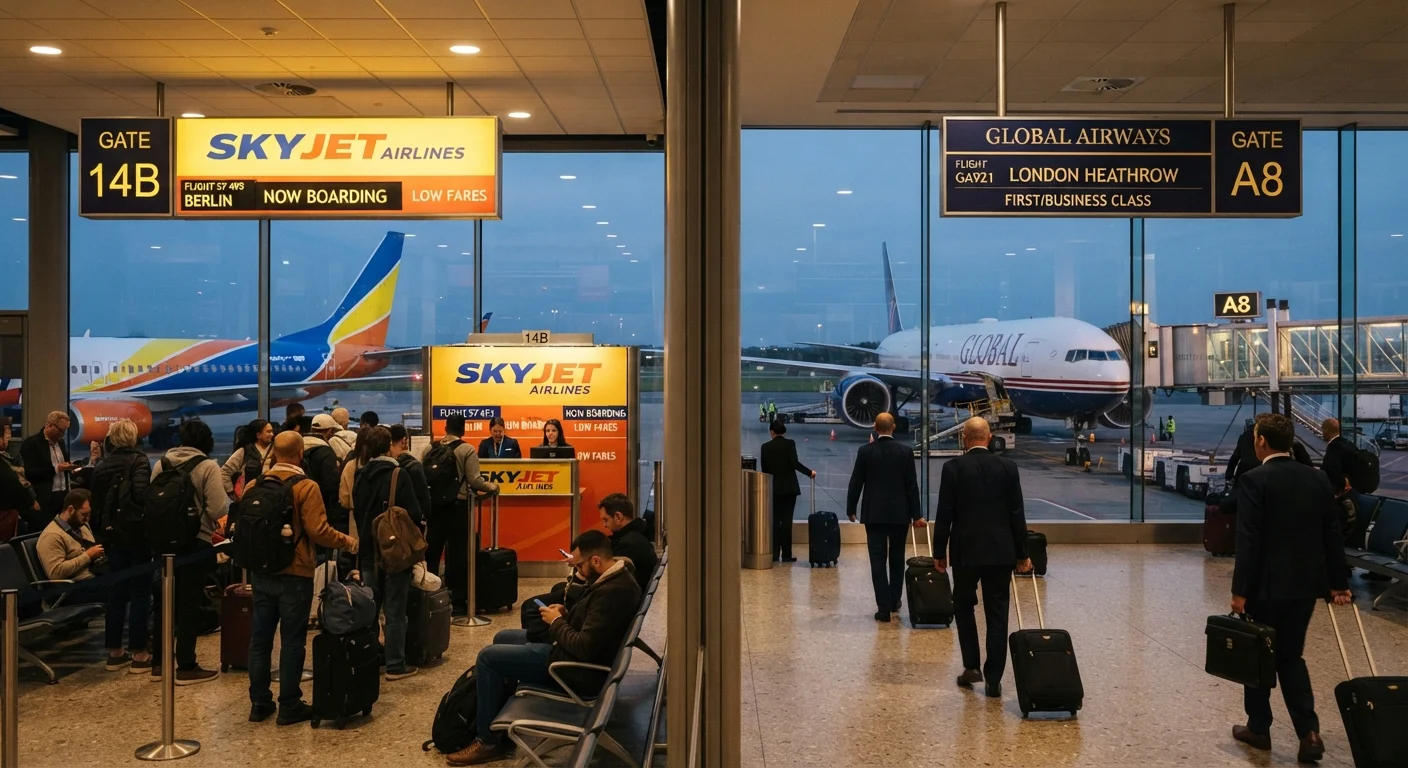
The Headline Fare vs. the Real Fare
Scroll through any flight search on a busy travel weekend and you'll see budget carriers advertising fares that can look dramatically lower than legacy airlines. That gap is real - but it's rarely as wide as it appears at first glance.
Budget carriers - often called ultra-low-cost carriers (ULCCs) or low-cost carriers (LCCs) - build their model around an unbundled pricing structure. The base fare covers your seat and not much else. A carry-on bag, a checked bag, seat selection, and even a printed boarding pass can each carry a separate fee. Legacy (or full-service) airlines typically bundle many of these items into the ticket price, particularly on transcontinental or international routes.
To compare accurately, start by listing everything you'll actually need for your trip - bags, seat preference, in-flight food - and price each one on both carriers. That single exercise often reveals the true cost difference.
| Criterion | Budget Carriers | Legacy Airlines |
|---|---|---|
| Base fare | Often lower | Often higher |
| Carry-on bag | Fee (varies by carrier) | Usually included |
| Checked bag | Fee (per bag) | Often included or lower fee |
| Seat selection | Fee or random assignment | Often included (basic seats) |
| Rebooking flexibility | Limited; fees common | More options; stronger protections |
| Hub network / connections | Point-to-point; fewer hubs | Large hub networks |
| Airport served | Often secondary airports | Usually primary hubs |
| In-flight food & drink | Purchase only | Some included (varies by route) |
Where Budget Carriers Win
When the conditions align, budget carriers deliver genuine, meaningful savings. The clearest win is a one-bag traveler on a direct short-to-medium haul route. If you can pack everything into a personal item (typically a small backpack that fits under the seat), you pay the base fare and nothing more.
Early booking also amplifies the advantage. Budget carrier fares tend to rise steeply as the departure date approaches, so travelers with flexible schedules who book weeks or months out capture the best prices. Off-peak timing - mid-week departures, early-morning flights - further reduces fares on both carrier types, but the percentage savings can be more dramatic on budget airlines.
~$50-$75
Typical carry-on fee range per flight on major budget carriers
Fee structures vary by carrier and booking timing; fees booked at the gate are generally higher than those added during online check-in.
2-3x
How quickly bag fees can multiply the base fare for a family
A family of four each adding a carry-on and a checked bag can add $400-$600 or more in fees on a round trip, depending on the carrier's fee schedule.
30-60 min
Extra ground travel time from secondary airports in some metro areas
Secondary airports used by budget carriers can add meaningful transit time and cost compared to primary hubs, depending on the city.
One caveat worth planning around: many budget carriers operate from secondary or regional airports rather than a city's main hub. Before booking, check the ground transportation cost and travel time from your actual destination, since a cheaper fare can be partially offset by a longer, more expensive ground transfer. Our guide on airport ground transportation costs can help you factor that in.
Where Legacy Airlines Hold Their Ground
Legacy carriers earn their higher base fare in several specific situations. The most common is the multi-bag traveler: once you add a carry-on and a checked bag to a budget carrier booking, the price gap can shrink to single digits - or vanish entirely. Families traveling with children face the same math multiplied across every passenger.
Disruption protection is the other major advantage. Legacy airlines typically operate large hub networks, which gives them the flexibility to rebook you on another flight when delays or cancellations occur. Budget carriers often operate point-to-point networks with fewer alternative options, and their rebooking policies tend to be more restrictive. If your trip involves a connection, a tight schedule, or a non-negotiable arrival time, that difference in operational safety net matters.
Frequent flyers who accumulate miles or points with legacy carriers can also offset a portion of the fare difference over time, though the value of loyalty programs varies and should be evaluated separately for your own travel patterns.
If you're weighing the total cost of a trip, don't forget that travel insurance is a factor alongside your fare choice. Travel insurance on a tight budget walks through what protection is worth prioritizing when you're stretching every dollar.
Fare Class and Change Policies Have Evolved
Many legacy airlines now offer basic economy fares that strip out bag allowances and change flexibility - bringing them structurally closer to budget carriers. When comparing, check the specific fare class on both sides, not just the airline category. A legacy basic economy fare and a budget carrier standard fare may carry very similar restrictions and total costs.