What You're Actually Signing Up For
Choosing between a coastal drive and an interior route isn't just about scenery - it's about the kind of traveler you want to be for a week or two. These two approaches to seeing America deliver fundamentally different rhythms, logistics, and emotional payoffs.
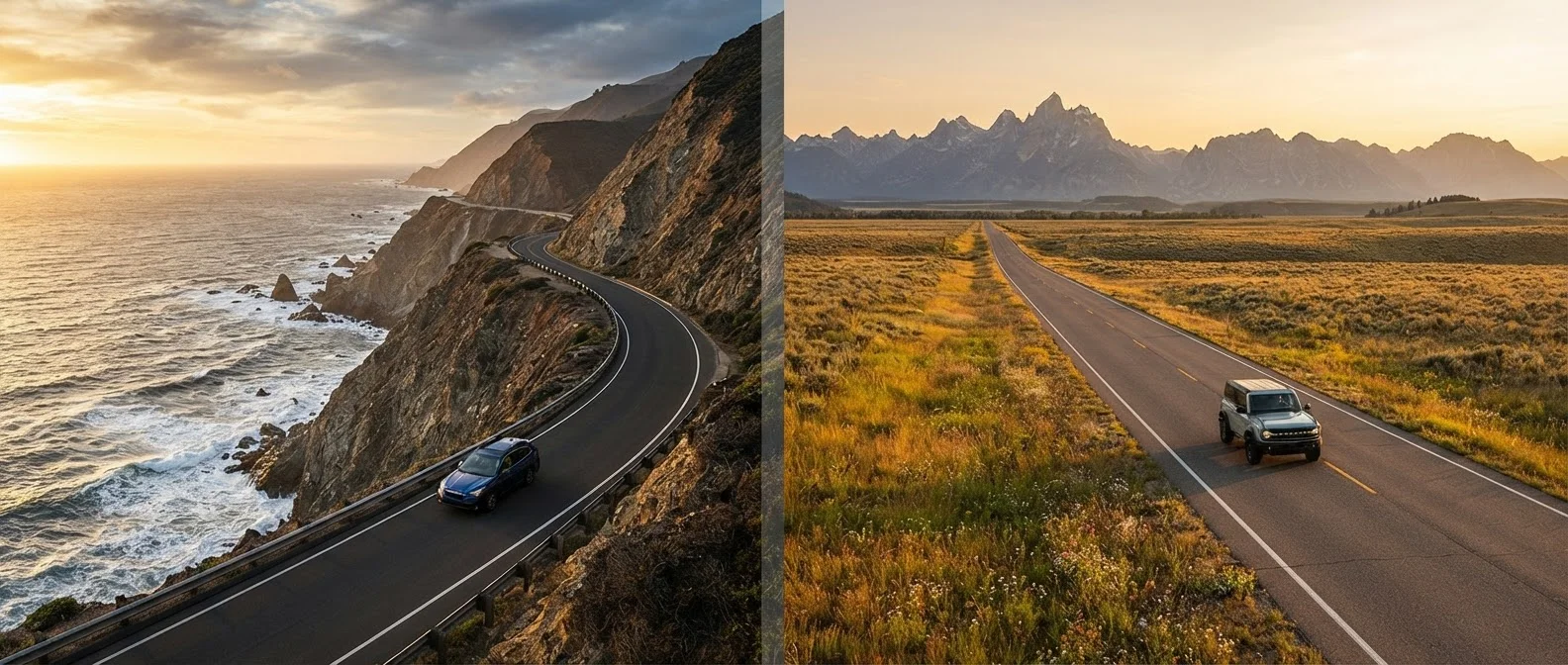
Coastal routes - think California's Highway 1, Oregon's Highway 101, the Florida Keys' Overseas Highway, or the Maine coast on US-1 - tend to be geographically compact but experientially dense. You're never far from a harbor town, a seafood shack, or a state park trailhead. That density is a genuine asset, especially if you prefer your adventure with easy access to a hot shower and a decent cup of coffee.
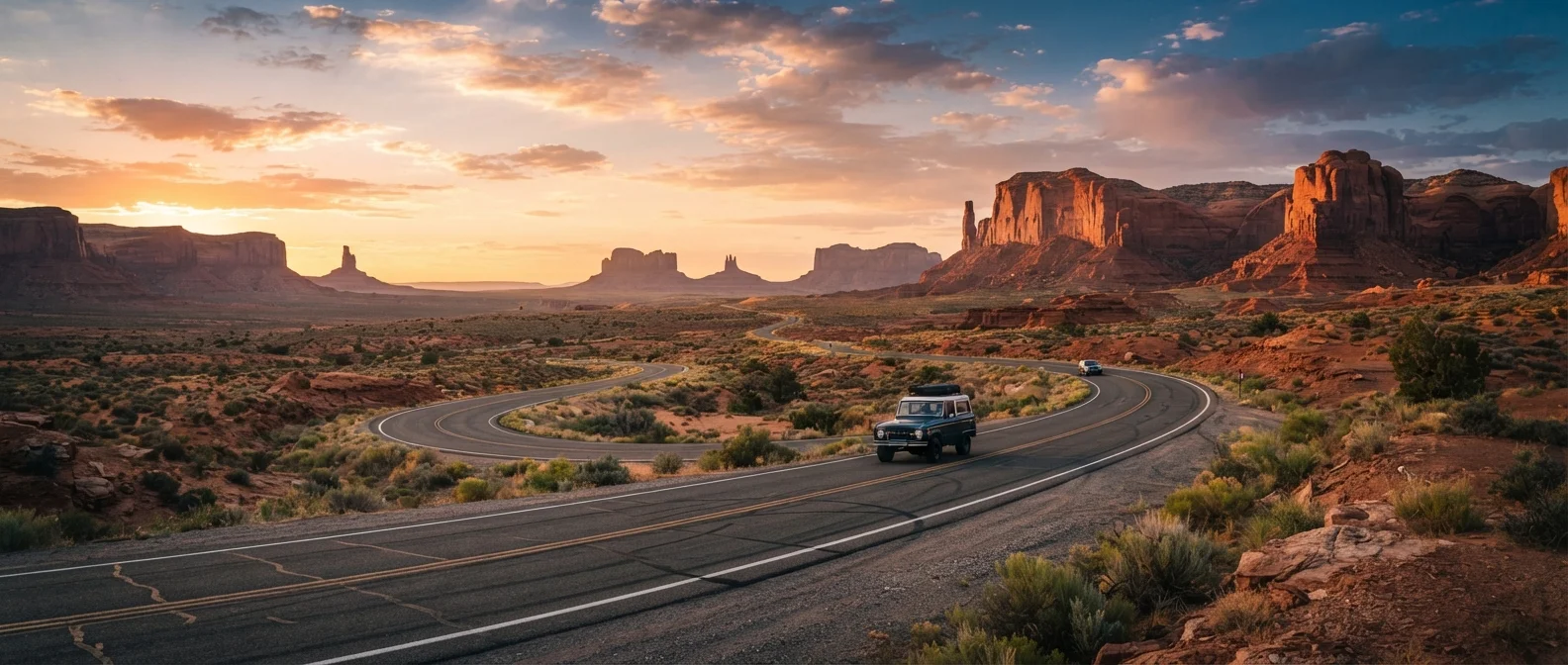
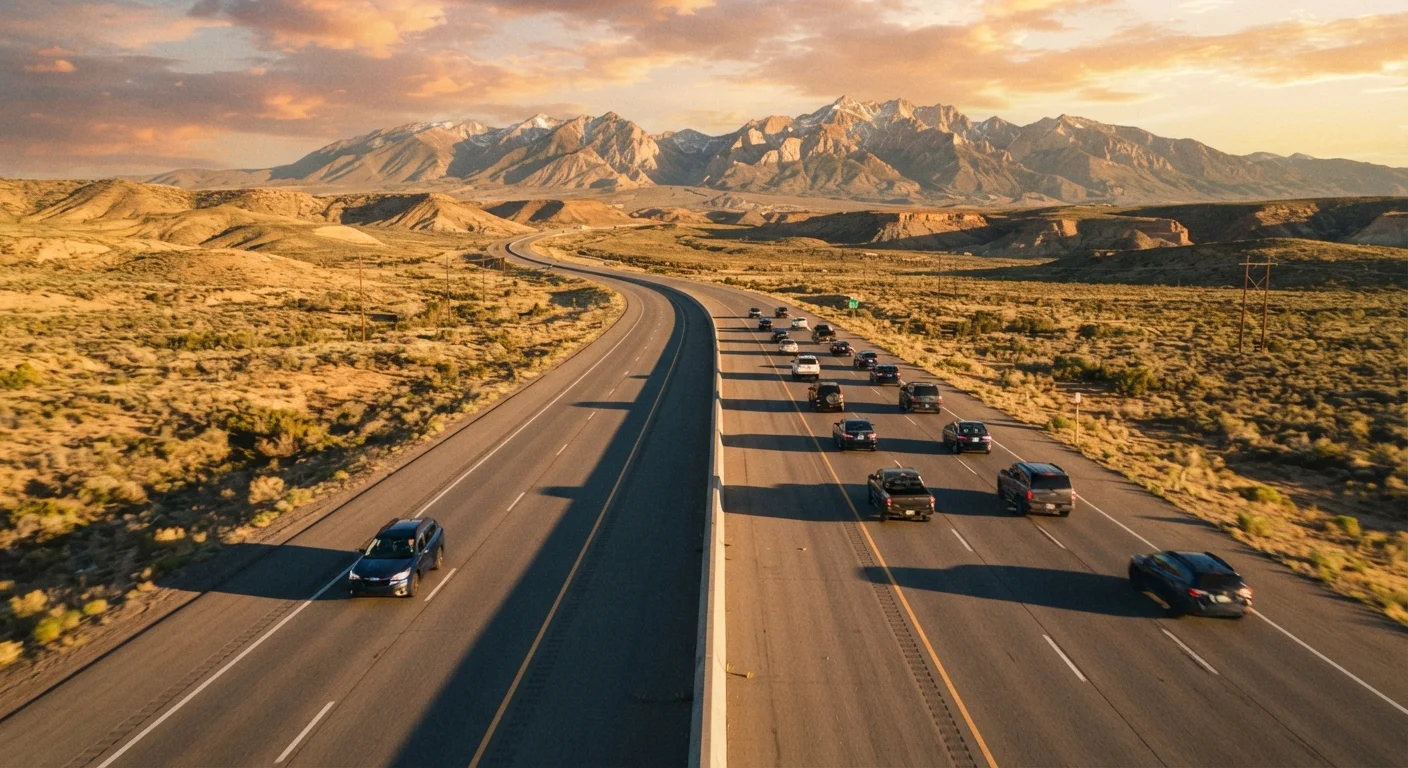
Interior highways operate on a different scale entirely. Routes like US-50 across Nevada (famously dubbed "the Loneliest Road in America"), the stretch of I-70 through the Colorado Rockies, or the Great Plains corridor along US-83 ask you to sit comfortably with empty miles. The rewards are real - towering mesa country, grassland horizons that seem to curve with the Earth, mountain passes that take your breath away - but they require more preparation and a higher tolerance for stretches between services. For a deeper look at what defines these iconic routes, see America's Great Road Trip Routes.
| Criterion | Coastal Drive | Interior Highways |
|---|---|---|
| Scenery type | Ocean, cliffs, dunes, wetlands | Plains, mountains, canyons, desert |
| Crowd levels | High in summer, especially at viewpoints | Low to moderate year-round |
| Service frequency | Frequent; towns close together | Sparse; plan fuel and water carefully |
| Typical lodging cost | Higher, especially in resort towns | Generally lower in small towns |
| Cell coverage | Reliable along most corridors | Patchy; dead zones are common |
| Best season | Spring or fall to avoid peak crowds | Spring, early summer, or fall |
| Weather risks | Hurricanes (Gulf/Southeast), coastal fog | Mountain snow, extreme heat in desert |
| Cultural variety of stops | High - cities, ports, surf towns | Moderate - small towns, national parks |
Scenery, Crowds, and Seasonal Windows
Coastal drives earn their fame honestly. The interplay of ocean, cliff, dune, and wetland along America's edges produces some of the most photographed landscapes on the planet. But fame has a cost: Pacific Coast Highway between Los Angeles and San Francisco can crawl in summer, and parking at popular overlooks on the Maine coast fills by mid-morning in July and August.
Interior routes flip that equation. Yes, the Great Plains can feel relentless on a hot August afternoon, but spring wildflower blooms across Texas Hill Country or autumn aspen gold in the Colorado Rockies rival anything the coast offers - with a fraction of the company. Many seasoned road-trippers consider September and October the interior's golden window.
~3,000 mi
Length of the US Pacific coastline drive corridor
The Pacific Coast from the Mexican border to the Canadian border spans roughly 1,300 miles as the crow flies, but highway routes following the shore total far more when detours are included.
150+ miles
Longest stretch between towns on US-50, Nevada
The Nevada segment of US-50, nicknamed 'the Loneliest Road in America,' includes gaps exceeding 100 miles between services in several places - fuel planning is essential.
63
US National Parks accessible by road
According to the National Park Service, the majority of America's 63 national parks can be reached by standard passenger vehicle, with interior routes accessing a disproportionate share.
Seasonality also affects safety and road conditions in ways that matter for planning. Coastal routes in hurricane-prone regions (Gulf Coast, Outer Banks) carry genuine weather risk from June through November. Interior mountain passes like US-550 in Colorado can close or become treacherous from October into May. Always verify current conditions with state DOT resources and check travel advisories before departure. For guidance on adapting your driving style to different road environments, highway driving hazards and techniques is worth a read before you roll out.
Logistics: Fuel, Food, Lodging, and Connectivity
Coastal drives are logistically forgiving. Gas stations, grocery stores, urgent care clinics, and lodging appear with reassuring regularity. Cell coverage is generally solid, which matters if you rely on navigation apps or need to share those ocean-view photos in real time.
Interior driving demands more planning discipline. On US-50 through Nevada, towns like Ely and Eureka are genuine lifelines - fuel up whenever you can, carry extra water, and don't assume the next exit has anything beyond a rest area. The same applies to stretches of US-83 through the Dakotas or US-191 through Wyoming. That said, this planning ritual is part of the appeal: there's a satisfying self-sufficiency to interior travel that coastal driving rarely demands of you.
Budget-conscious travelers consistently find that interior routes stretch a dollar further. Motel rates in small Plains and mountain towns often run noticeably lower than comparable lodging in coastal resort communities, though prices vary widely by season and location. If you're weighing the cost and logistics of vehicle readiness for either journey, car ownership essentials covers insurance and maintenance considerations worth reviewing. And for a related strategic question - who you bring along - solo vs. group road tripping trade-offs breaks down how company changes the calculus entirely.
If the coastal vs. interior framing still feels too broad, you might also want to explore scenic byways vs. interstates - a related decision that applies to both route types - and hidden gem drives across the US for routes that don't fit neatly into either category.
Verify Conditions Before You Go
Road closures, seasonal weather, and entry requirements at national parks and state lands can change without much notice. Before any long road trip - coastal or interior - check the relevant state Department of Transportation website and the National Park Service reservation portal. For international travelers or those crossing into border regions, verify entry documentation with official government sources well ahead of your departure date.