
Why Most Fitness Routines Fail Over Time
The fitness industry is built around transformation - dramatic change, fast results, complete overhauls. But the habits most reliably linked to lifelong health look nothing like a 12-week program. Research consistently shows that physical activity patterns adopted for enjoyment and flexibility outlast those driven by short-term goals or external pressure.
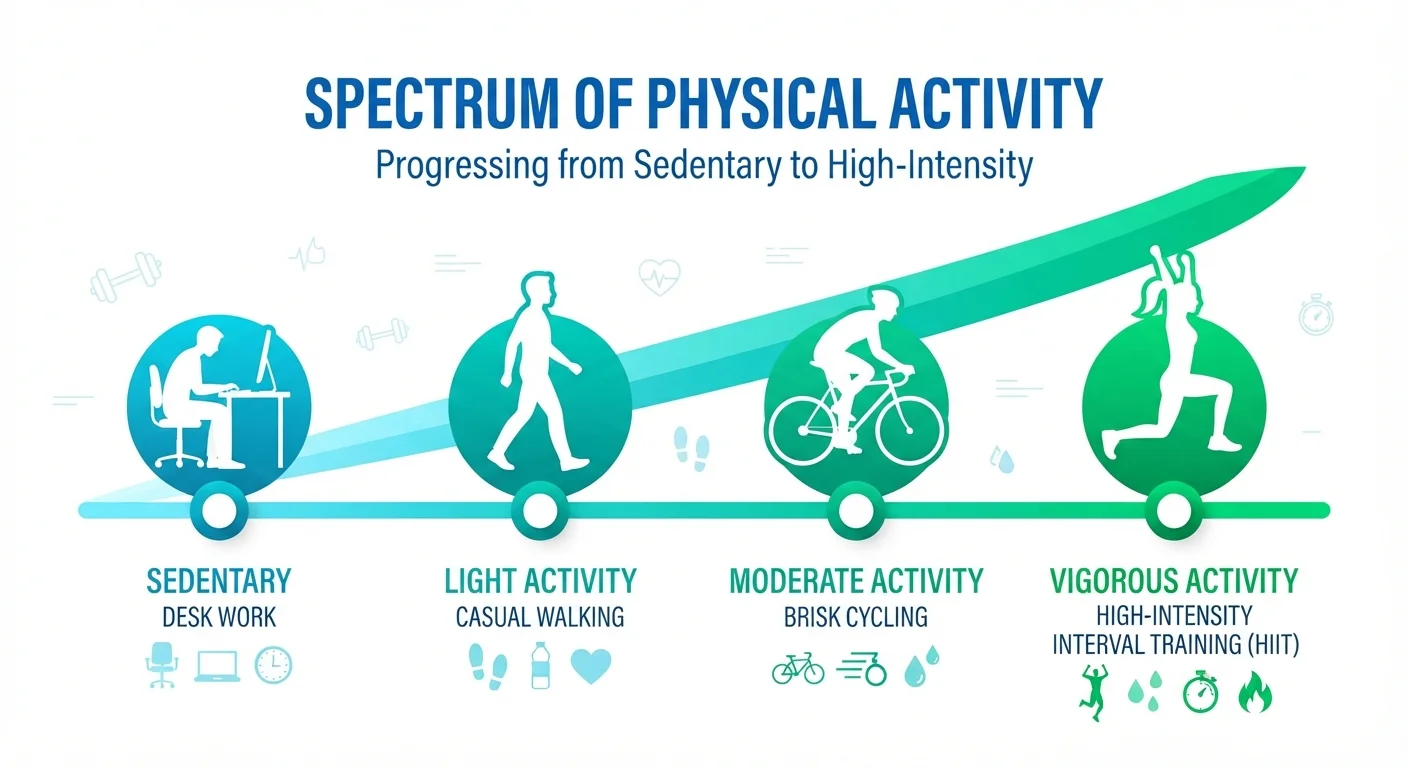
Understanding the full spectrum of physical activity - from structured workouts to everyday movement - helps reframe what "being active" actually means across a lifetime. The evidence points clearly: it is not what you do in peak condition that shapes your long-term health, but what you keep doing through illness, stress, aging, and change.
“Exercise is the closest thing to a magic bullet that exists in medicine. It improves almost every physiological system in the body and is one of the few interventions shown to extend healthy years of life.”
— Peter Attia, Physician and author specializing in longevity medicine
Core Practices That Endure
The following habits are grounded in decades of exercise science and behavioral research. They are not prescriptions for any individual - always consult a qualified healthcare professional before making significant changes to your activity level, especially if you have existing health conditions.
Prioritize consistency over intensity at every life stage
Research published in exercise science literature repeatedly demonstrates that frequency and regularity of movement predict long-term health outcomes more strongly than peak performance. A moderate routine maintained for years delivers far greater benefit than an intense program abandoned after months.
Apply progressive overload gradually and patiently
The body adapts to the specific demands placed on it - but only when those demands increase progressively and allow adequate recovery. Rushing this process leads to injury; ignoring it leads to stagnation. Understanding how progressive overload works is foundational to any long-term fitness plan.
Build recovery time into your schedule intentionally
Adaptation - the physical change produced by exercise - occurs during rest, not during training. Sleep quality, rest days, and stress management directly affect whether training loads translate into strength and endurance gains or cumulative fatigue.
Maintain variety to support both body and motivation
Doing only one type of activity creates muscular imbalances, elevates overuse injury risk, and often leads to motivational burnout. Cross-training across modalities - such as combining cardiovascular work, strength training, and flexibility - addresses the full range of physical capacities.
Cultivate intrinsic motivation tied to how movement feels
External motivators - weight loss targets, appearance goals, performance metrics - tend to diminish over time or become unsustainable when life circumstances change. People who exercise because they value how it makes them feel, their energy levels, or their sense of capability tend to maintain the habit across decades.
Recovery as a Non-Negotiable
One of the most undervalued elements of any sustainable fitness approach is deliberate recovery. Muscle repair, cardiovascular adaptation, and hormonal rebalancing all occur during rest - not during the workout itself. Consistently ignoring recovery is one of the most common reasons active people accumulate overuse injuries and eventually stop exercising altogether.
Treat Rest Days as Training Days
Recovery is not the absence of training - it is a structured part of it. Light movement such as walking or gentle mobility work on rest days promotes circulation and tissue repair without adding stress load. Think of rest days as an investment in your next week of activity, not as lost time.
If you are returning to exercise after a break, the readiness checklist provides a structured way to reassess before ramping back up.
Adapting Fitness Across Life Stages
A fitness habit built at 25 will need to look different at 45 and different again at 65. This is not a failure - it is physiology. Muscle fiber composition shifts, recovery windows lengthen, and joint tolerances change. The habits that hold up are those that adapt alongside these changes rather than resist them.
30%
Reduction in all-cause mortality risk
Adults who meet physical activity guidelines show roughly 30% lower all-cause mortality risk compared to inactive adults, according to analyses published in leading epidemiological journals.
~1-3%
Annual muscle mass loss after age 30
Research estimates that without resistance training, adults lose approximately 1-3% of muscle mass per year after age 30, a process called sarcopenia that accelerates after 60.
150 min
Weekly moderate aerobic activity recommended
The U.S. Department of Health and Human Services Physical Activity Guidelines for Americans recommend at least 150 minutes of moderate-intensity aerobic activity per week for adults.
Strength training in particular tends to become more - not less - important with age. Foundational movement patterns such as squats, hinges, and carries preserve functional capacity and reduce fall risk in older adults. Similarly, nutrition needs shift alongside activity levels - the nutrition across life stages overview explains how dietary priorities evolve in ways that complement an active lifestyle.
Special Populations: Get Professional Guidance
Older adults, people managing chronic conditions, those who are pregnant or postpartum, and anyone recovering from injury should consult a qualified healthcare professional or certified exercise specialist before modifying their activity levels. General principles apply broadly, but individual circumstances require individualized guidance.
Start Small, Start Now
The research on habit formation is clear: small, consistent actions compound into durable behavior change far more reliably than ambitious overhauls. Just as building a learning habit depends on designing realistic routines, fitness habits form best when they fit seamlessly into existing schedules.
This article is for general informational and educational purposes only. It is not medical advice. Always consult a qualified healthcare professional before starting, changing, or stopping any exercise program, particularly if you have existing health conditions or are recovering from injury.