
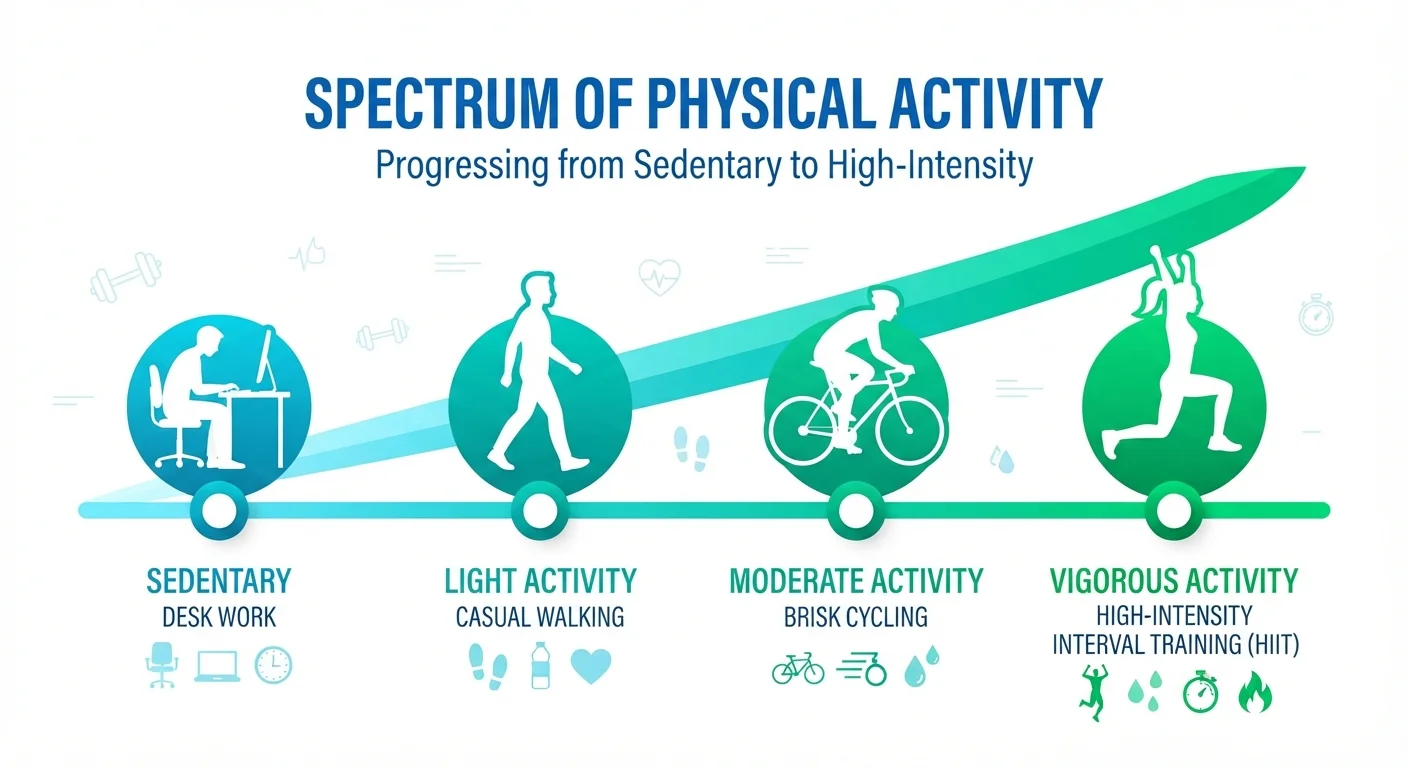
The Full Spectrum of Human Movement
Physical activity exists on a broad continuum - from small, incidental movements that fill an ordinary day to structured, high-intensity sessions that challenge the cardiovascular and musculoskeletal systems. Understanding where different activities fall on this spectrum helps clarify what an active lifestyle actually looks like. Structured workouts matter, but they represent one component of a larger picture. Research consistently shows that the total sum of daily movement shapes health outcomes - not only the hours logged in a gym or on a running track.
150 min/week
Recommended moderate aerobic activity for adults
Per the U.S. Physical Activity Guidelines for Americans, published by the Department of Health and Human Services.
75 min/week
Vigorous-intensity weekly activity equivalent
The same guidelines note that 75 minutes of vigorous aerobic activity per week provides comparable health benefits to 150 minutes of moderate activity.
2:1
Minute equivalence: moderate to vigorous activity
U.S. health guidelines count one minute of vigorous-intensity activity as equivalent to two minutes of moderate-intensity activity toward weekly targets.
NEAT - Non-Exercise Activity Thermogenesis
NEAT - Non-Exercise Activity Thermogenesis - refers to the energy the body expends through all movement that is not structured exercise, sleep, or eating. This includes walking to the car, standing during a phone call, climbing stairs, or fidgeting at a desk. Because NEAT accumulates continuously throughout the waking day, its cumulative contribution to total daily energy expenditure can be substantial. Research in exercise physiology suggests the NEAT difference between highly sedentary and highly active individuals can be considerable, making it a meaningful lever for overall metabolic health - particularly for people with desk-bound routines.
Light and Moderate-Intensity Activity
Light-intensity activity - gentle walking, slow stretching, or leisurely household tasks - keeps the body moving without significantly elevating heart rate or breathing. Moderate-intensity activity, such as brisk walking, recreational cycling, or water aerobics, raises heart rate and breathing noticeably while still permitting conversation. The U.S. Department of Health and Human Services' Physical Activity Guidelines for Americans recommend at least 150 minutes of moderate-intensity aerobic activity per week for most adults, citing broad associations with cardiovascular health, metabolic function, and psychological wellbeing. This range is widely considered the most accessible foundation for long-term fitness.
Vigorous Exercise and High-Intensity Interval Training (HIIT)
Vigorous-intensity activity - running, competitive sports, or fast cycling - demands sustained high effort and significantly elevates heart rate and breathing. High-Intensity Interval Training (HIIT) is a structured format that alternates short bursts of vigorous effort with active or passive recovery periods. Research has found that HIIT can generate cardiovascular and metabolic adaptations in shorter session durations compared to steady-state moderate exercise, making it appealing for individuals with limited time. However, HIIT carries a meaningfully higher risk of injury and is not universally appropriate - particularly for people new to exercise or those managing chronic health conditions. A qualified healthcare provider can help determine whether high-intensity training is suitable for your individual situation.
Talk to a Healthcare Provider Before Intensifying
Before beginning any high-intensity exercise program, consult a qualified healthcare provider - especially if you are new to vigorous activity, have a cardiovascular condition, or are managing a chronic illness. Starting at a lower intensity and progressing gradually is a well-supported principle in exercise science that helps reduce the risk of injury and overtraining.
How Each Tier Complements the Others
No single tier of activity is sufficient on its own. Population-level research has linked prolonged sedentary time to adverse metabolic outcomes - even among adults who meet weekly exercise targets - underscoring the distinct value of NEAT distributed throughout the day. Moderate activity builds a reliable health foundation, while vigorous exercise can drive additional cardiovascular and muscular adaptations when appropriate. A well-rounded approach layers all three tiers, calibrated to individual capacity, life stage, and recovery needs. For a closer look at how exercise frequency and intensity interact, see our discussion of daily training tradeoffs.
Building an Activity Profile That Lasts
A sustainable activity profile draws from across the entire spectrum. Prioritize consistent low-level movement throughout the day, build a base of moderate aerobic activity, and introduce vigorous sessions gradually as fitness and recovery capacity allow. Fitness habits that hold up across life stages consistently emphasize adaptability and variety over any single intensity level. Pairing an active lifestyle with thoughtful nutrition choices further supports whole-body health and sustained energy.
This article is for general informational and educational purposes only and is not a substitute for professional medical advice, diagnosis, or treatment. Consult a qualified healthcare provider before starting any new exercise program, especially if you have an existing health condition.