
What 'Training Every Day' Actually Means
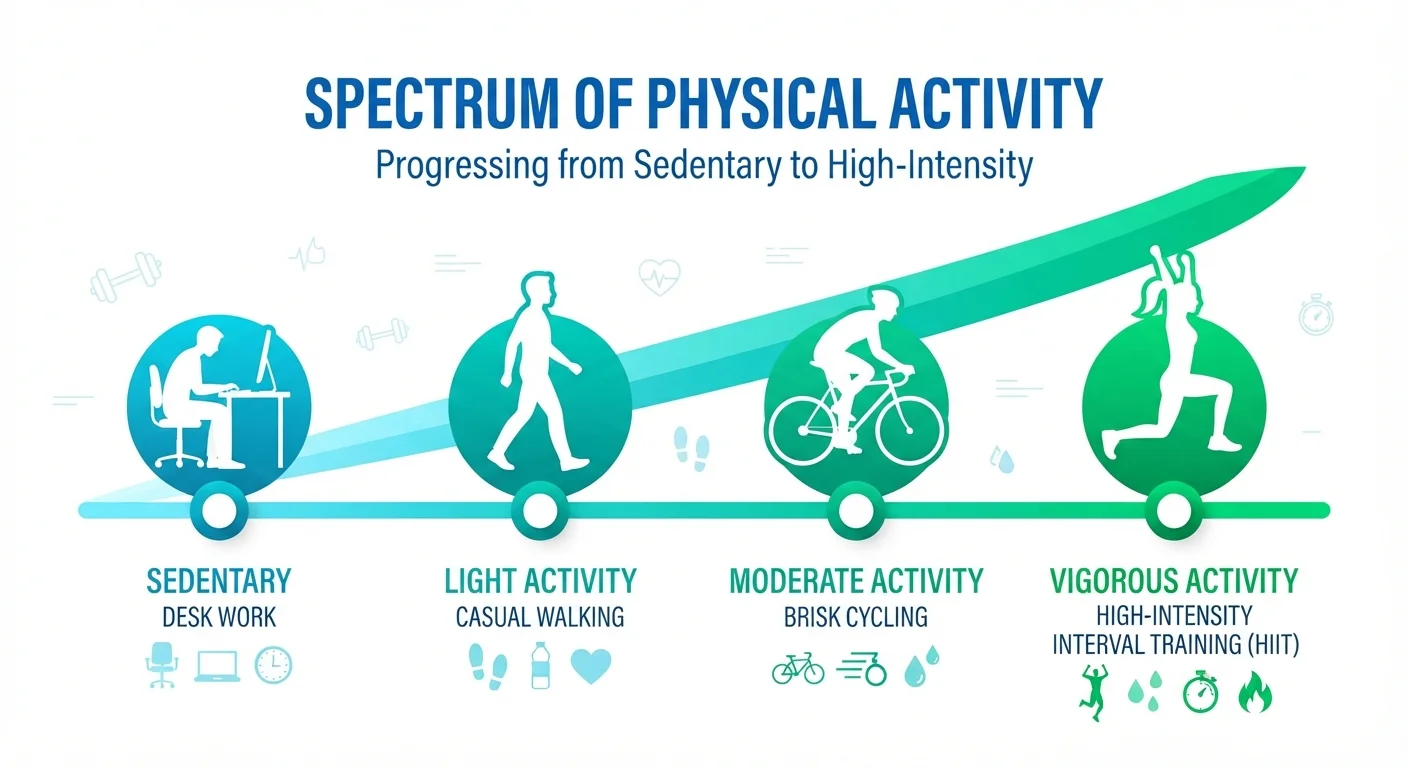
The phrase "training every day" covers a wide range of practices - from a 20-minute walk each morning to back-to-back high-intensity sessions with little variation. That distinction matters enormously. Exercise science treats these scenarios very differently, and collapsing them into one question produces misleading answers.
What most fitness researchers examine is not whether daily activity is appropriate, but whether sufficient recovery is embedded in that activity. Movement exists on a spectrum, and daily training is only a problem when it consistently exceeds the body's capacity to adapt and repair.
For this reason, the tradeoffs below apply most directly to people considering daily moderate-to-high-intensity exercise - not those supplementing structured workouts with light daily movement like walking or stretching.
The Case For Daily Training
Builds consistent exercise habits through daily repetition
Performing a behavior at the same time and place each day strengthens automaticity - the process by which actions become habitual. This reduces reliance on motivation, which research suggests is an unreliable driver of long-term behavior.
Supports cardiovascular and metabolic health markers
Daily moderate activity is associated with lower resting heart rate, improved insulin sensitivity, and better lipid profiles. These benefits accumulate even when sessions are short or low in intensity.
Can improve mood, sleep, and cognitive function
Regular exercise influences neurotransmitter activity - including serotonin and dopamine - and has been shown in multiple studies to reduce symptoms of anxiety and depression when practiced consistently.
Allows structured variation between hard and easy days
Daily training does not require constant high effort. Alternating demanding sessions with active recovery (walking, yoga, mobility work) maintains the habit while respecting biological recovery needs.
Consistency is one of the strongest predictors of long-term fitness progress. Research consistently shows that habit formation benefits from low friction - and exercising at the same time every day removes the decision-making that causes many people to skip sessions. Beyond habit, daily physical activity is associated with measurable improvements in cardiovascular health, mood regulation, sleep quality, and metabolic function.
Daily training also allows for intentional variation. A hard resistance session on Monday can be followed by mobility work or an easy walk on Tuesday - both count as "training every day" while still serving recovery. This structure aligns with progressive overload principles, where stimulus and recovery alternate to drive adaptation over time.
The Case Against Daily High-Intensity Training
Elevated risk of overuse injuries over time
Tendons, ligaments, and joints adapt more slowly than muscles. Repeated daily loading without adequate recovery can lead to stress fractures, tendinopathy, and other overuse injuries that are often slow to resolve.
High-intensity daily training can impair adaptation
When training stimulus outpaces recovery, the body cannot complete the repair processes that drive strength and fitness gains. This can result in performance plateaus or regression despite continued effort.
Increases risk of psychological burnout
Mandatory daily training can shift exercise from an intrinsically motivating activity to an obligation. Research on athlete burnout identifies chronic overload - physical and psychological - as a key contributing factor.
May suppress immune function in some individuals
Sustained high-intensity training without adequate recovery has been associated with transient suppression of immune markers, potentially increasing susceptibility to upper respiratory illness.
The central problem with daily high-intensity training is the physiology of recovery. Muscle tissue repairs and grows during rest, not during the workout. When that repair window is shortened repeatedly, cumulative fatigue accumulates faster than adaptation can occur - a state researchers call overreaching, which, if sustained, can progress to overtraining syndrome.
Overtraining syndrome is characterized by declining performance, persistent fatigue, mood disturbance, increased injury susceptibility, and hormonal disruption. It is not merely feeling tired - it represents a systemic physiological imbalance that can take weeks or months to resolve. Understanding what pre- and post-workout routines actually accomplish is one practical way to reduce daily training risk.
Overreaching vs. Overtraining: An Important Distinction
Functional overreaching - short-term fatigue from a hard training block - is a normal and sometimes deliberate part of periodized training plans. It typically resolves within days to a few weeks of reduced load. Overtraining syndrome, by contrast, involves systemic physiological disruption that can persist for months. The two are often confused, but their timelines and management differ substantially. If symptoms like persistent fatigue and declining performance last beyond two to three weeks of reduced training, consulting a sports medicine physician is advisable.
What the Research Suggests About Frequency
Major physical activity guidelines - including those from the American College of Sports Medicine - generally recommend 150-300 minutes of moderate-intensity aerobic activity weekly, or 75-150 minutes of vigorous activity, alongside two or more days of muscle-strengthening. These guidelines do not prescribe a specific number of training days, because frequency is less important than total weekly load and recovery quality.
2-3x
Optimal weekly muscle-group training frequency
Multiple meta-analyses in sports science suggest training each muscle group two to three times per week produces greater hypertrophy than once-per-week programs.
~10%
Recommended maximum weekly training load increase
A commonly cited guideline in sports medicine suggests increasing weekly training volume by no more than 10% per week to manage overuse injury risk, though individual tolerance varies.
Studies on strength training frequency suggest that training a muscle group two to three times per week produces superior hypertrophy compared to once per week, but training it daily provides no additional benefit and may impair results. For endurance athletes, high-frequency training is more common - but is structured with deliberate variation in effort level, a concept known as periodization.
Understanding the difference between cardiovascular and resistance training demands is relevant here, as each modality places different recovery requirements on the body. Similarly, mobility and flexibility work can often be performed daily without the same recovery cost as strength or high-intensity cardio sessions.
Individual Factors That Change the Equation
How much daily training any individual can sustain varies considerably based on several factors: training age (how many years a person has been exercising consistently), sleep duration and quality, nutritional adequacy, age, baseline fitness level, and the presence of any underlying health conditions.
Beginners, for example, experience muscle damage and soreness at lower intensities than trained individuals and typically need more rest between sessions. Older adults may recover more slowly due to changes in protein synthesis rates. People with chronic conditions - including autoimmune disorders, cardiovascular disease, or diabetes - should consult a qualified healthcare professional before adopting any daily training program, as recovery capacity and safe intensity ranges vary significantly.
Long-term fitness sustainability depends far more on respecting these individual signals than on adhering to any fixed daily training rule.
This article is for general informational and educational purposes only and does not constitute medical or professional fitness advice. Consult a qualified healthcare provider before starting or significantly changing an exercise program, particularly if you have an existing health condition.