Why 'Added Sugars' Gets Its Own Line on the Label
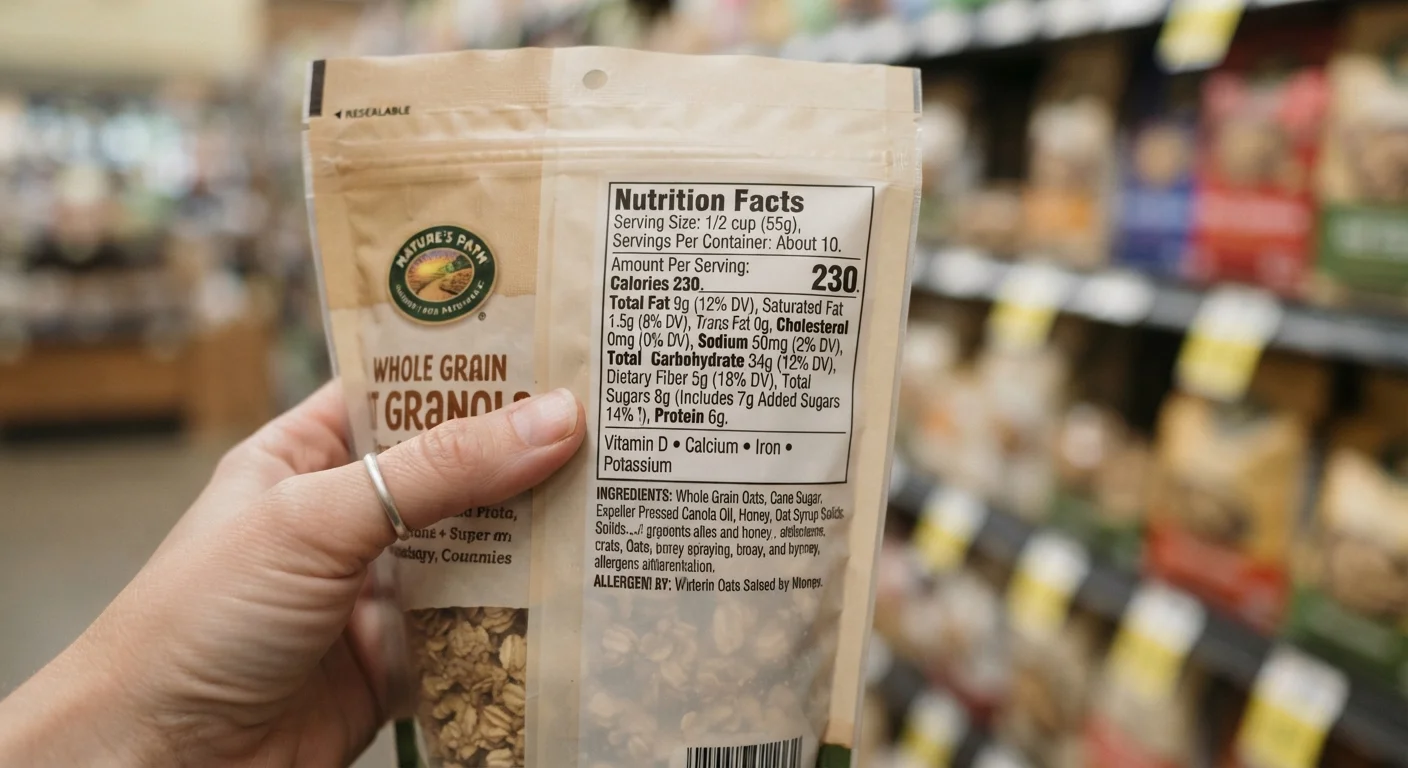
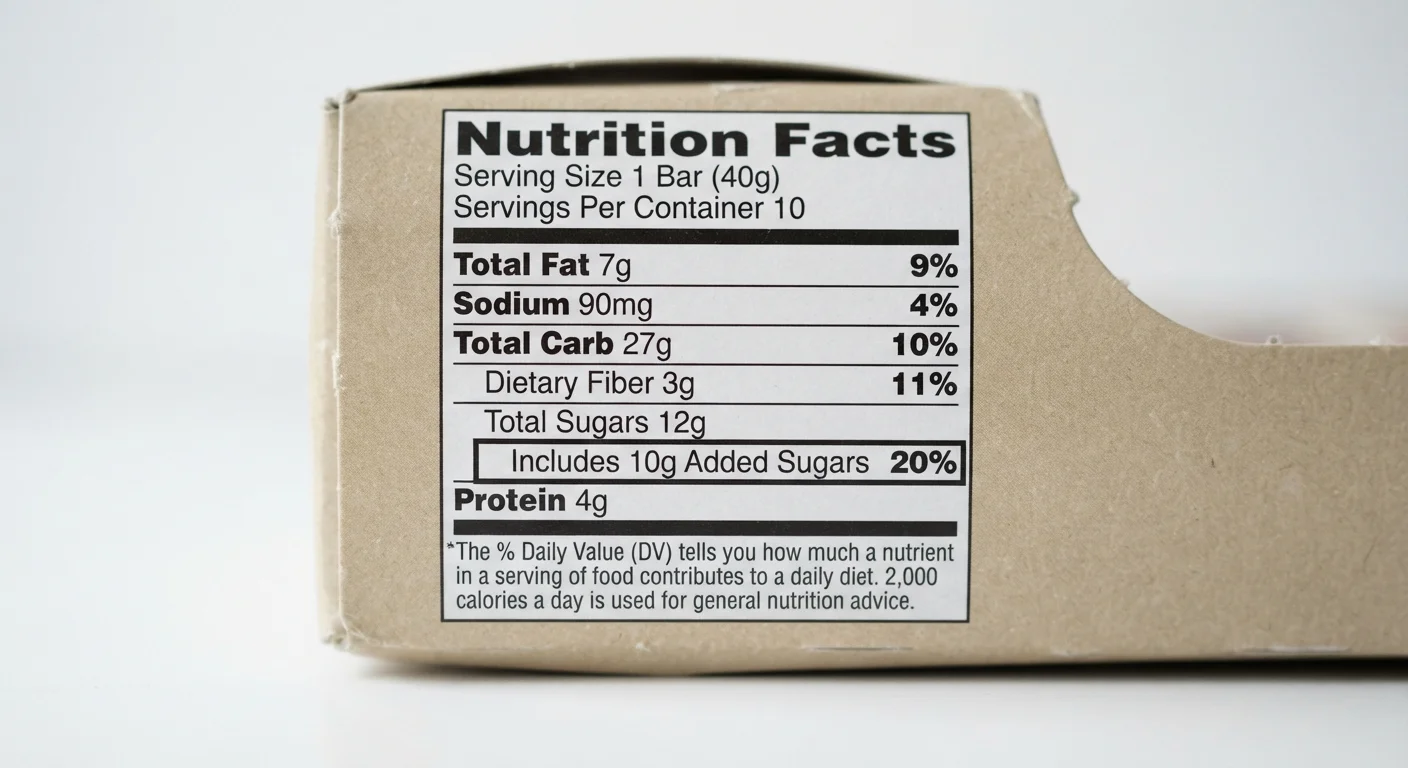
Before 2020, US nutrition labels listed only 'Total Sugars,' leaving consumers no way to know how much of that figure came from fruit or milk versus a manufacturer's sweetener. The FDA's updated Nutrition Facts label - mandated for most food companies by 2020 - changed that by requiring a distinct 'Added Sugars' sub-line, expressed both in grams and as a percentage of the Daily Value.
The reason for singling out added sugars is straightforward: dietary research consistently distinguishes between sugar that arrives with nutritional context and sugar that does not. A cup of plain whole milk contains about 12 grams of lactose, but that sugar comes alongside calcium, protein, and vitamins. A flavored coffee drink with 30 grams of added syrup delivers those same calories with little else of nutritional value. The label now lets you see both numbers clearly. For a broader guide to decoding every row on the panel, see how to read a nutrition label.
17 tsp
Average daily added sugar intake for US adults
According to CDC National Health and Nutrition Examination Survey data, US adults consume an average of about 17 teaspoons of added sugars daily - well above the recommended limit.
39%
Share of added sugar Americans get from beverages
Research published in dietary surveillance reports estimates that roughly 39% of adult added sugar intake in the US comes from sugar-sweetened beverages including sodas, energy drinks, and sweetened coffees.
60+
Names for added sugar on ingredient labels
Sugar Science, a project of University of California researchers, identified more than 60 names used for added sugars on food ingredient lists, making label literacy a valuable consumer skill.
What Dietary Guidelines Say - and Why
The Dietary Guidelines for Americans recommend limiting added sugars to less than 10% of daily calorie intake across all age groups above two years old. This threshold is not arbitrary. A substantial body of epidemiological and clinical evidence associates high added sugar consumption with weight gain, elevated triglycerides, dental caries, and increased risk of type 2 diabetes and cardiovascular disease - independent of total calorie intake in some studies.
Critically, naturally occurring sugars in whole foods are not subject to the same caution. Whole fruit, for example, contains fructose, but it also delivers fiber that slows absorption, along with antioxidants and micronutrients. Dietary guidance singles out added sugars precisely because they provide energy without those accompanying benefits.
“Sugar is sugar is sugar to the body. Whether it comes from cane, beet, honey, or high-fructose corn syrup, the metabolic response is fundamentally similar. The source matters far less than the total quantity consumed.”
— Robert Lustig, Professor of Pediatrics, University of California San Francisco; author of research on dietary sugar and metabolic health
It is worth noting that the 10% guideline is a population-level public health target, not a hard clinical cutoff. Individual needs vary, and anyone managing conditions like diabetes or metabolic syndrome should work with a qualified healthcare provider rather than relying on general population targets.
Where Added Sugar Hides - and How to Spot It
Added sugars appear in obvious places - candy, soft drinks, pastries - but also in foods many people consider healthy or neutral, including flavored yogurt, bottled salad dressings, pasta sauces, bread, and protein bars. Manufacturers are not required to list 'sugar' by that name; more than 60 ingredient-list synonyms exist.
A practical approach when reading ingredient labels:
- Look for words ending in -ose: sucrose, fructose, dextrose, maltose, glucose.
- Identify syrups: high-fructose corn syrup, brown rice syrup, malt syrup, agave syrup.
- Note 'natural' sweeteners that still count: honey, maple syrup, molasses, fruit juice concentrate.
- Remember that ingredients are listed by weight - if any form of sugar appears among the first three ingredients, it is present in a significant quantity.
Use the % Daily Value as a Quick Benchmark
The % Daily Value for Added Sugars on the Nutrition Facts label is based on a 50-gram daily limit. A product with 5% DV or less per serving is considered low in added sugars; 20% DV or more is considered high. This quick benchmark works even if you don't want to track grams throughout the day.
The 'Added Sugars' gram count on the Nutrition Facts panel is the most direct and reliable figure. Cross-referencing it with the ingredient list gives a fuller picture of both quantity and source.
Putting the Numbers in Context
Seeing '24g Added Sugars' on a label is only useful if you have a reference point. The Daily Value for added sugars is set at 50 grams per day, based on a 2,000-calorie diet - so 24 grams represents roughly 48% of that target in a single serving. Many sweetened beverages reach or exceed the entire daily limit on their own.
That does not mean a single food with added sugar is harmful in isolation. Overall dietary patterns matter more than any individual item. Public health recommendations are designed to guide habitual intake across meals and days, not to classify specific foods as forbidden. Understanding the label simply allows you to make more deliberate choices rather than inadvertently consuming far more added sugar than you intended.
This article is for general informational and educational purposes only and is not a substitute for professional medical or dietary advice. Consult a qualified healthcare provider or registered dietitian for guidance specific to your health needs.