
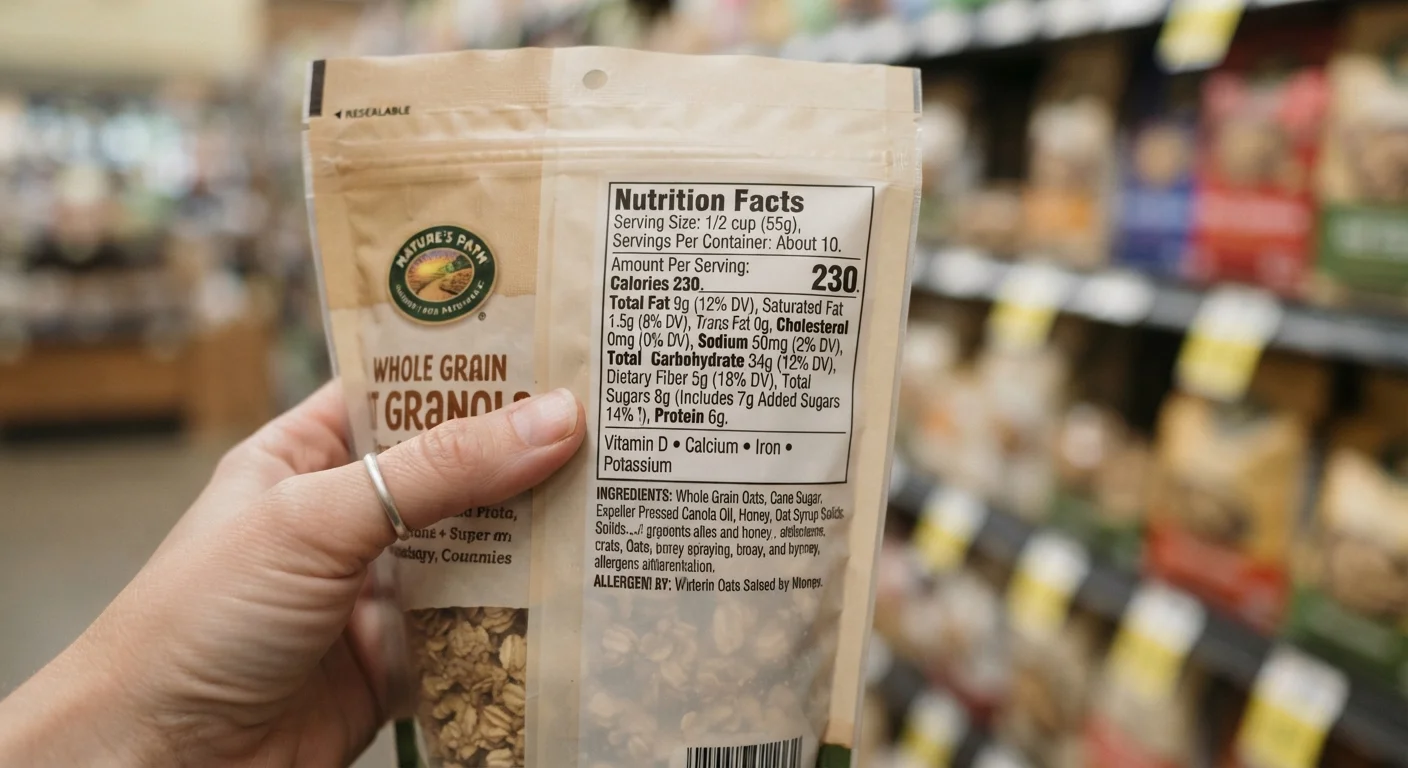
Why the Nutrition Facts Panel Exists - and What It Can Actually Tell You
The Nutrition Facts label is a standardized tool regulated by the U.S. Food and Drug Administration (FDA). Its purpose is to give consumers consistent, comparable information across packaged foods. The FDA updated the label format in 2016 to reflect newer nutrition science, including a dedicated line for added sugars and larger, bolder calorie text.
What the label can tell you: the calorie and nutrient content of a specific amount of food. What it cannot tell you: whether a food is inherently "good" or "bad" for your health. That judgment depends on your overall dietary pattern, health status, and individual needs - factors a label can inform but never fully capture. For a broader picture of how individual foods fit into diet quality, see our practical weekly eating audit for useful questions to consider.
The label is most useful as a comparison tool. Holding two similar products side by side - or tracking how a food fits into your day - is where the numbers become genuinely actionable.
Use Labels for Comparison, Not Judgment
Nutrition labels are most powerful when you use them to compare similar products - two brands of yogurt, two types of bread - rather than to categorize foods as forbidden or ideal. No single food determines the quality of a diet. Consistent patterns over time matter far more than any one purchase.
How to Read Each Section of the Label
Working from top to bottom is the most reliable approach. Each section of the label builds on the one above it.
Start with serving size and servings per container
Every number on the label - calories, fat, sodium, everything - applies only to one serving, not the whole package. Check the serving size (listed in both a common household measure and grams) and the number of servings per container before reading anything else. A food with 150 calories per serving contains 300 calories if you eat two servings.
Check calories in context
Calories measure the energy a food provides per serving. The label doesn't tell you how many calories you should consume - that varies by age, sex, activity level, and health status. What calories can tell you is how energy-dense a food is relative to its serving size, which is useful for comparison shopping within a category.
Use % Daily Value as a quick guide
The % Daily Value (%DV) column shows how much of a nutrient one serving contributes toward a daily reference amount, based on a 2,000-calorie diet. As a general rule of thumb established by the FDA: 5% DV or less is considered low; 20% DV or more is considered high. Use this to quickly identify foods that are high in nutrients you want more of (fiber, vitamin D, calcium) or to spot those high in nutrients most people benefit from limiting (saturated fat, sodium, added sugars).
Focus on the nutrients that matter most to you
For general population guidance, nutrition researchers and public health bodies often highlight: limiting saturated fat, sodium, and added sugars; getting enough dietary fiber, vitamin D, calcium, iron, and potassium. These reflect common dietary gaps and excess patterns in the U.S. diet. Your individual priorities may differ based on health conditions - a conversation for a registered dietitian or your healthcare provider.
Scan the ingredient list alongside the label
The ingredient list is required to appear on packaged foods and lists ingredients in descending order by weight. A short ingredient list isn't automatically better, but it's worth noting where added sugars and refined starches appear. Added sugars appear under many names - look for terms ending in "-ose" (glucose, fructose, sucrose), syrups, concentrates, and malt.
One area that often trips people up is the distinction between total sugars and added sugars. Total sugars include both naturally occurring sugars (found in milk and whole fruit, for example) and sugars added during processing. Added sugars are the ones with the stronger link to health concerns at high intake levels, which is why the FDA now requires them to be listed separately. The American Heart Association and other health bodies generally recommend keeping added sugars relatively low, though specific targets should be discussed with a healthcare provider based on individual circumstances.
Similarly, the ingredient list - though not technically part of the Nutrition Facts panel - is worth scanning alongside the label. Ingredients are listed in descending order by weight. If added sugar (under any of its many names: cane syrup, dextrose, maltose, fruit juice concentrate, and others) appears among the first three ingredients, that product contains a substantial amount. This connects to broader questions about how processed foods are classified and what that means nutritionally.
Common Pitfalls and How to Avoid Them
Even careful shoppers get tripped up by a few recurring label-reading mistakes. The most common is ignoring the serving size and treating the numbers as if they apply to the whole package. A bag of crackers listed as "3 servings" means every calorie and sodium figure on the label must be multiplied by three if you eat the whole bag.
Front-of-package language is another frequent source of confusion. Terms like "natural," "made with real fruit," or "multigrain" are largely unregulated marketing claims. "Multigrain," for instance, simply means more than one grain type was used - it says nothing about whether those grains are whole or refined. Our article on whole grains vs. refined grains explains why the distinction matters.
"Low fat" is another label that can mislead. Fat removed in processing is frequently replaced with added sugar to maintain palatability - a pattern worth checking on the label itself rather than trusting the front claim.
Front-of-Package Claims Are Not Regulated Like Labels
Terms such as 'natural,' 'light,' 'healthy,' and 'clean' on the front of a package have limited or inconsistent regulatory definitions. The Nutrition Facts panel on the back is the standardized, FDA-regulated information. Always use the panel - not the front label - as your primary reference when evaluating a product's nutritional profile.
For a broader look at how well-intentioned choices can quietly go sideways, see common habits that undermine an otherwise healthy diet. And if you want to understand the micronutrients listed toward the bottom of the label - vitamin D, calcium, iron, potassium - our guide to vitamins and minerals provides useful context.
This article is for general informational and educational purposes only and is not a substitute for professional medical or nutritional advice. Consult a qualified healthcare provider for guidance specific to your individual health needs.