What the Terms Actually Mean
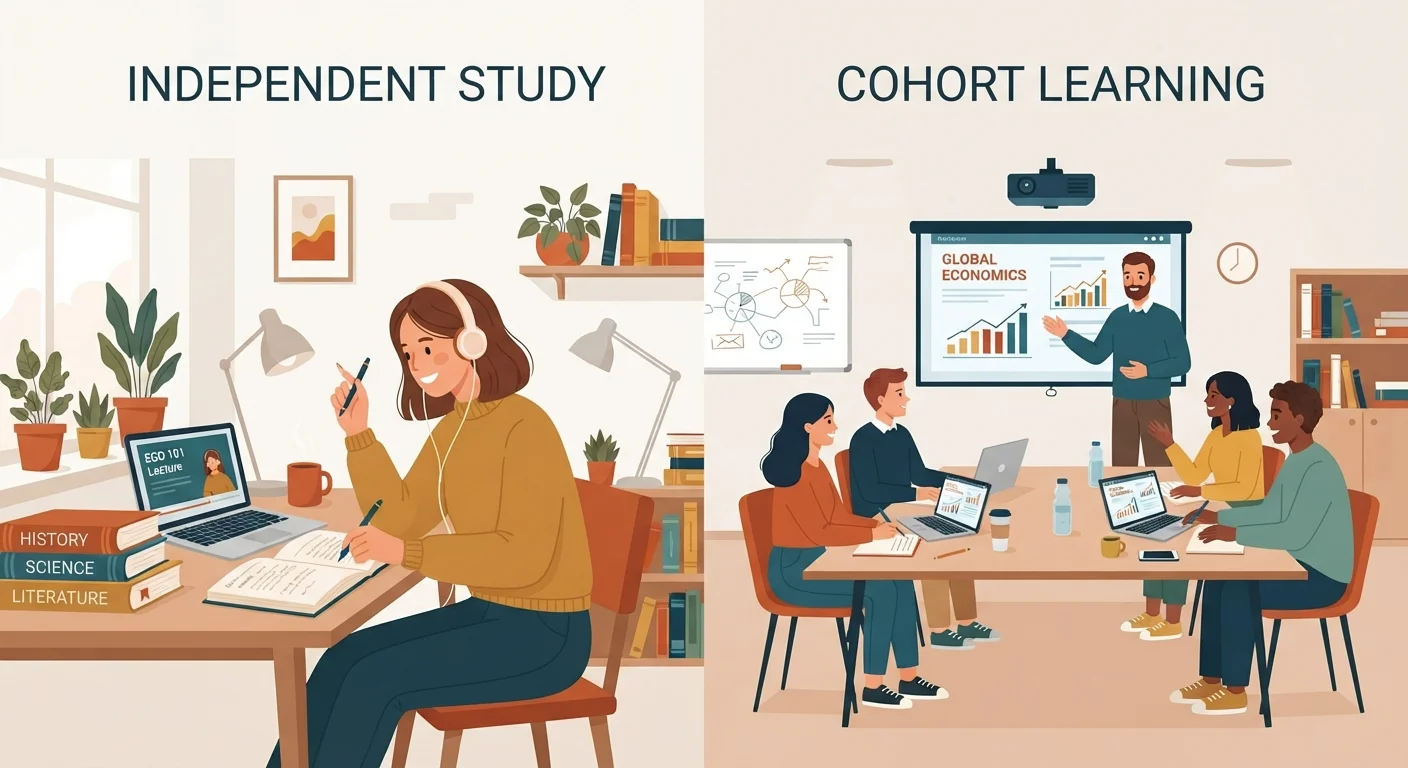
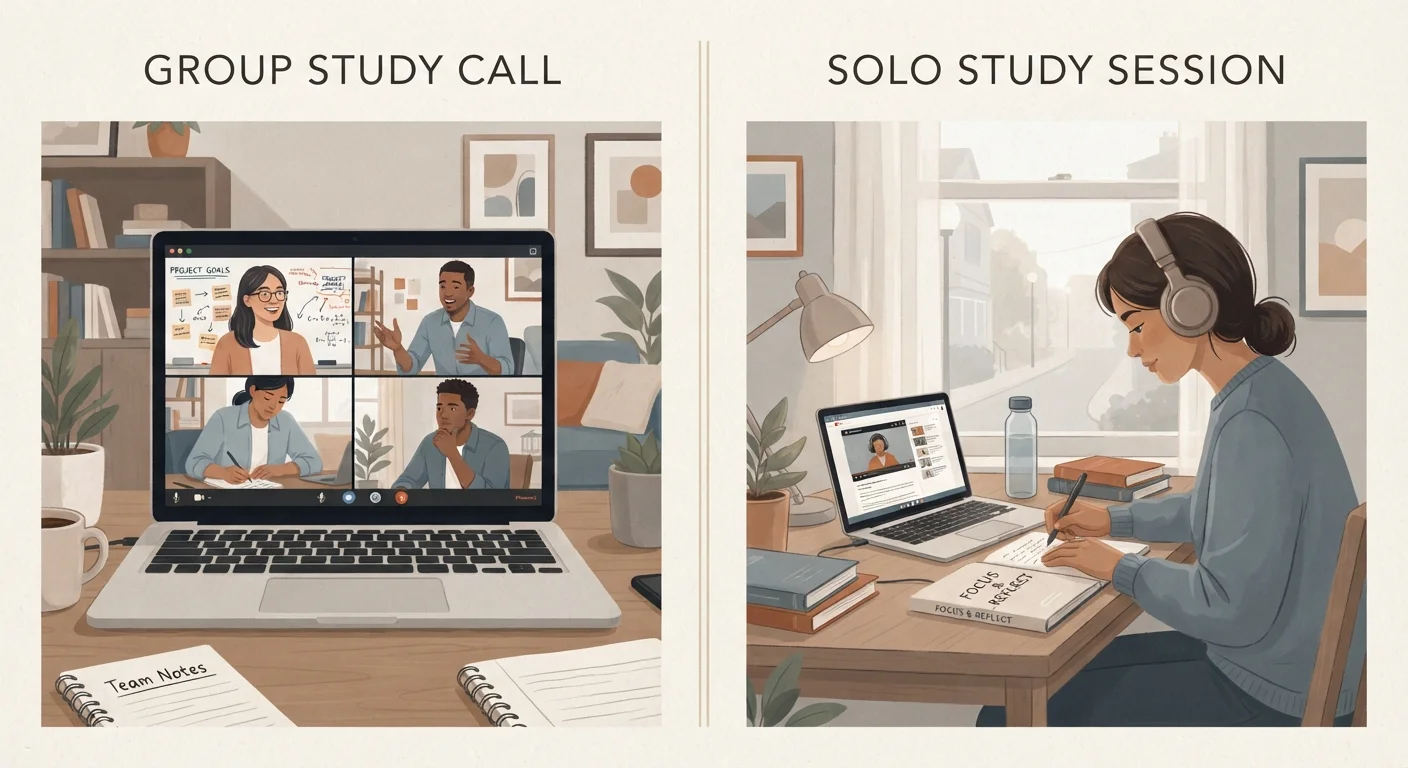
Synchronous learning means instruction that happens in real time - everyone participates at the same hour, whether in a physical classroom or a live video session. The instructor teaches, students respond, and the learning event is simultaneous. Think of a live webinar, a scheduled Zoom class, or a traditional evening course at a community college.
Asynchronous learning removes the shared clock. Lectures are pre-recorded, readings are posted in advance, and discussion boards replace live conversation. You engage with the material on your own schedule - within a deadline window, but not at a prescribed moment. Platforms that host video libraries, self-paced certificate programs, and recorded university courses all operate this way.
These formats are not mutually exclusive. Many hybrid or blended programs include both: weekly live sessions paired with recorded supplementary content, for example. Understanding what each format requires helps you evaluate any program honestly before you enroll. For a broader look at how format choices interact with accountability, see Self-Directed Learning vs. Structured Programs.
| Criterion | Synchronous Learning | Asynchronous Learning |
|---|---|---|
| Schedule requirement | Fixed times; must attend live | Flexible; learner sets own pace |
| Instructor interaction | Real-time Q&A and feedback | Delayed via email or forums |
| Peer collaboration | Live group discussion and activities | Discussion boards; asynchronous peer review |
| Accountability structure | External - deadlines and attendance | Internal - self-managed deadlines |
| Content replay | Limited; recordings vary by program | Full replay on demand |
| Best for complex discussion | Strong - real-time nuance possible | Moderate - depth depends on forum culture |
| Geographic/time zone flexibility | Low - tied to a shared time window | High - works across time zones |
Scheduling Realities: What Each Format Actually Demands
The most common mistake adult learners make is choosing a format based on what sounds appealing rather than what their calendar can realistically support.
Synchronous programs require you to be available at a fixed time - often weekly or several times per week. Missing sessions typically means missing instruction that may not be recorded. If your job involves late shifts, travel, or on-call responsibilities, a course with mandatory Tuesday evening meetings can become a source of chronic stress rather than growth.
Asynchronous programs sound liberating, but they transfer the entire scheduling burden to you. Research on adult online learning consistently identifies self-regulation - the ability to plan, initiate, and sustain study without prompts - as the strongest predictor of success in self-paced formats. If you have historically delayed tasks when no one is watching, an asynchronous course requires a deliberate structure to compensate. Building that structure proactively is worth the effort; the Setting Up a Learning Plan guide offers a useful framework.
~40%
Completion rate for typical MOOCs
Research on massive open online courses consistently shows completion rates well below 50%, highlighting the self-regulation challenge in fully asynchronous, low-stakes environments.
6 in 10
Online learners prefer some live interaction
A Babson Survey Research Group study found that a majority of online students still value at least some synchronous elements, even in primarily online programs.
Honest self-assessment of your schedule consistency - not your aspirational schedule, but your actual one - is the most useful first step before choosing either format.
Learning Style and Interaction Needs
Format choice is not only a scheduling question. How you learn best also matters.
Learners who benefit from immediate clarification - who tend to have questions that build on each other in real time - often find asynchronous discussion boards frustrating. Waiting 24 to 48 hours for a response to a conceptual question can stall progress. Synchronous formats let you ask, receive an answer, and move forward in the same session.
Conversely, learners who need time to process before responding often feel put on the spot in live sessions. Asynchronous formats give introverted or reflective learners space to formulate thoughtful contributions without the pressure of real-time performance.
Social motivation is another dimension. Some people find that seeing the same cohort week after week creates a sense of community that sustains their commitment. Others find that community naturally through discussion boards, study groups, or peer review workflows - formats that work well asynchronously. The social side of self-education explores how to build that connection regardless of format.
Consider also the subject matter. Skills requiring real-time feedback - public speaking, negotiation practice, clinical simulation - are often poorly served by asynchronous delivery alone. Technical or knowledge-based content frequently translates well to recorded formats where replay is a genuine advantage.
When Blended Formats Are the Answer
Many universities and professional training providers now offer hybrid delivery that combines weekly live sessions with asynchronous coursework between meetings. This approach can capture the accountability benefits of synchronous instruction while offering scheduling relief for busy adults. If a fully synchronous or fully asynchronous program feels like a poor fit, look specifically for programs that describe a blended or hybrid model - and ask the provider exactly how many sessions are mandatory versus optional.
Making a Decision That Holds
A useful decision process involves three honest questions: When are you reliably available? How do you behave when no deadline is imminent? And what does the subject matter actually require?
If your answers point in different directions - say, an irregular schedule but a strong track record of self-directed follow-through - an asynchronous format is likely the better structural fit. If your schedule is consistent but you know accountability matters to you, a synchronous or blended program will likely produce better outcomes even if it is less convenient.
Many learners also benefit from mixing formats across different goals. You might take a synchronous cohort-based course for a credential where peer discussion matters, while using asynchronous video content to build a parallel technical skill on your own timeline. Exploring Formal Courses, Self-Study, or Mentorship can help clarify how these formats fit into a broader learning strategy.
For practical help structuring your time once you have chosen a format, the Building a Study Schedule That You'll Actually Stick To provides specific techniques for protecting study time against competing demands. And if you are evaluating specific platforms for either format, Online Learning Platforms: What to Weigh Before Committing Your Time walks through the key factors worth examining before committing.