
Understanding the Three Learning Paths
When deciding how to grow a skill or deepen knowledge, most adults face three broad options: enrolling in a formal course (in-person or online), pursuing self-study through books, articles, and free resources, or finding a mentor who can guide them directly. Each path rests on different assumptions about how learning happens and what motivates people to keep going.
Formal courses - from community college certificates to online programs - impose external deadlines, structured curricula, and often a credential at the end. Self-study places full control in the learner's hands: you choose the material, the pace, and the depth. Mentorship sits between the two, pairing you with someone whose experience shortens your learning curve through direct feedback and real-world perspective.
Understanding these differences is the first step toward making a deliberate choice. For a closer look at how program format affects your schedule, see how synchronous and asynchronous learning compare.
| Formal Courses | Self-Study | Mentorship | |
|---|---|---|---|
| Structure | High - set curriculum and schedule | Low - learner designs their own path | Variable - depends on the mentor |
| Cost | Often significant (tuition, fees) | Low to none (books, free resources) | Usually free; time investment required |
| Credential outcome | Certificate, degree, or badge common | Rarely produces formal credential | No credential; portfolio may grow |
| Flexibility | Limited by schedule and syllabus | Fully flexible pace and focus | Depends on mentor availability |
| Accountability | Built in via deadlines and grades | Self-imposed; easy to drift | Relational - varies by relationship |
| Personalization | Low - same content for all students | High - learner chooses focus | Very high - tailored to your needs |
| Access | Enrollment required; varies by program | Widely accessible to most learners | Requires finding a willing mentor |
Formal Courses: Structure, Credentials, and Accountability
Formal courses work well when the subject matter is complex, when an employer or institution recognizes the credential, or when you know you need external accountability to stay on track. A structured syllabus removes the guesswork of what to study next, and interaction with instructors and peers can deepen understanding through discussion and feedback.
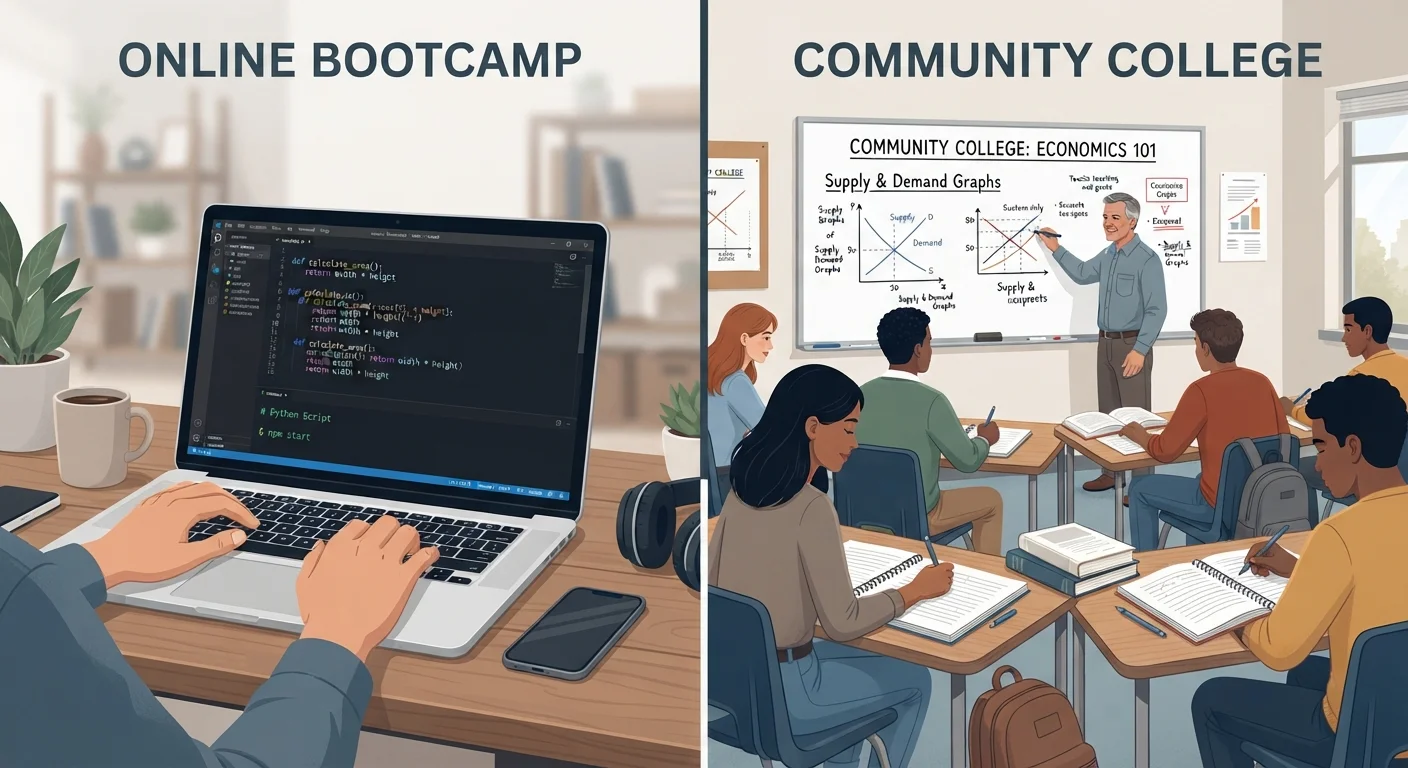
The trade-offs are real. Formal programs cost time and often money, and the curriculum may not match your specific goals exactly. Adults balancing work and family may find rigid schedules difficult to sustain. If you are weighing whether a formal credential is worth the investment, comparing bootcamps and community college certificates can help clarify your options. Working adults returning to formal study should also consider the logistics involved - returning to school as a working adult covers common hurdles and how to navigate them.
Maximize Formal Courses with a Clear Goal
Before enrolling, identify the specific skill or credential the course should deliver and verify it is recognized in your target field. Treating a course as a means to a defined end - rather than learning for its own sake - helps you evaluate whether the time and cost commitment is justified. After completing a course, applying what you have learned to a real project deepens retention significantly.
Self-Study: Flexibility, Depth, and the Discipline Required
Self-study suits learners who already have clear goals, can evaluate sources critically, and are motivated enough to sustain progress without external prompts. The flexibility is real: you can focus on exactly the subtopics that matter to you, move quickly through familiar material, and slow down where concepts are difficult.
The challenge is that self-directed learning requires you to design your own curriculum - an underestimated skill in itself. Without a plan, it is easy to skim broadly without building genuine depth. Reading deeply versus reading widely explores the tension between covering more ground and truly mastering a subject. A written learning plan also helps: setting up a learning plan you will actually follow offers a practical framework for structuring independent study.
Self-Study Without a Plan Loses Direction
Starting with a long reading list or a collection of saved videos without a defined goal is one of the most common self-study pitfalls. Without structure, learners often consume a lot of content without building transferable skills. Set a specific, measurable objective before you begin, and revisit it regularly to check that your resources are actually moving you toward it.
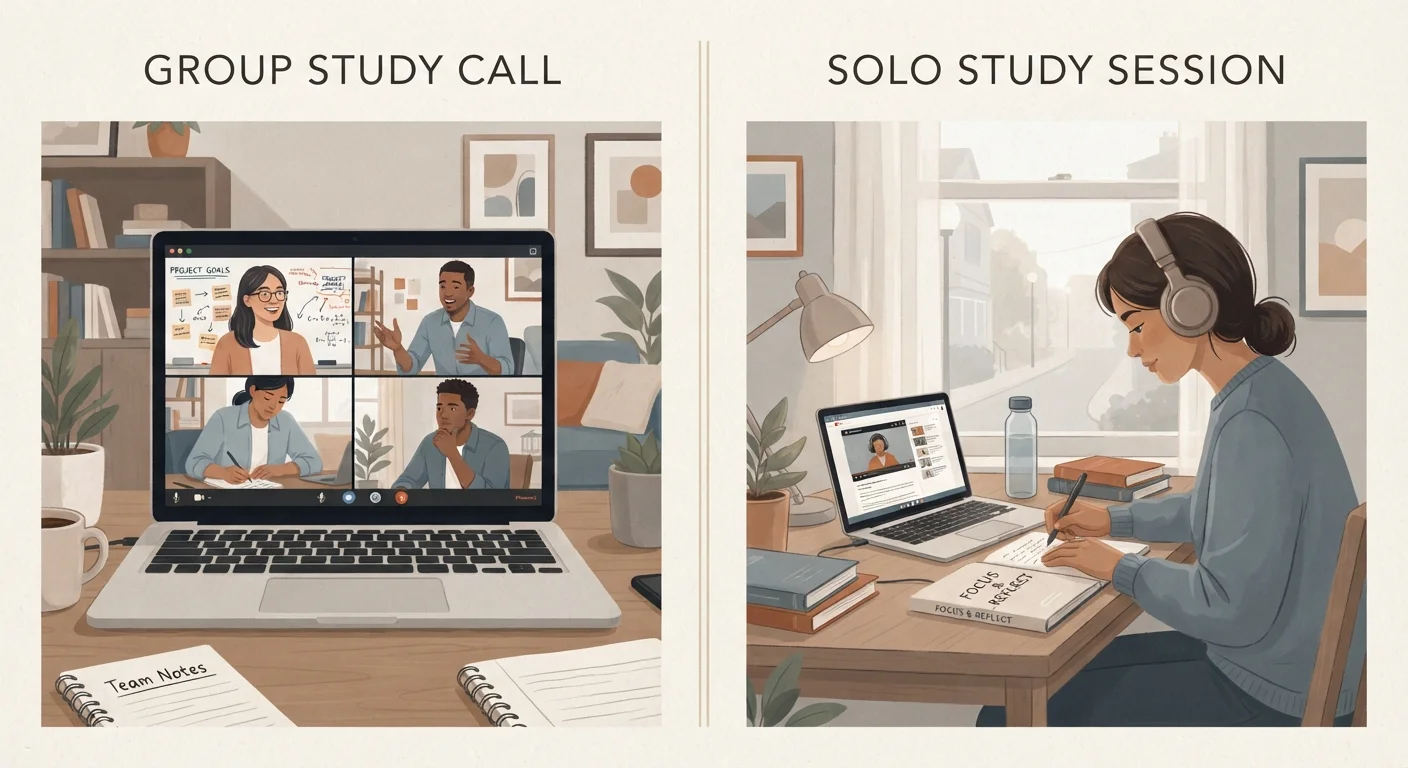
Self-study also benefits from social reinforcement. Learning communities and study groups can provide accountability and diverse perspectives even when you are not enrolled in a formal program.
Mentorship: Personalized Guidance and Accelerated Growth
Mentorship is distinct from the other two paths because learning happens through relationship rather than curriculum. A mentor - whether a senior colleague, an industry peer, or a formal program match - provides context that no textbook captures: how decisions are actually made, which skills matter most in practice, and how to navigate specific professional environments.
Research in adult learning consistently points to feedback as one of the most powerful accelerators of skill development. Mentorship delivers this directly and in context. The limitation is access: finding a willing and capable mentor takes effort, and the relationship requires investment from both parties. Informal mentorship (asking experienced colleagues thoughtful questions, building relationships at professional events) is often more accessible than formal programs.
For learners focused on career learning and professional development, mentorship often works best as a complement to either formal study or structured self-study - providing the real-world translation layer that courses and books can lack.
76%
Professionals who say a mentor was important
According to a survey by the American Psychological Association, approximately three-quarters of working professionals report that having a mentor positively influenced their career development.
70%
Learning from on-the-job experience
The widely cited 70-20-10 model in corporate learning research suggests roughly 70% of professional skill development comes from experience, 20% from others, and 10% from formal training.
Choosing the Right Mix for Your Life
Few people should commit to just one path. The most effective strategy is to lead with whichever approach fits your current goal and constraints, then supplement with the others. Someone building a new technical skill might take a structured online course for fundamentals, use self-study to explore adjacent topics, and seek out a mentor for feedback on applied projects.
Before deciding, consider three questions: What outcome do I actually need? (a credential, a skill, a career connection) How much time and money can I realistically commit? And how well do I sustain motivation without external structure? Your honest answers will point toward a primary path.
If professional development is a priority, it is also worth examining whether your current approach is producing real progress - where professional development commonly goes wrong identifies patterns that lead to credentials without growth. For a broader view of building lifelong learning habits, the lifelong learner's complete roadmap offers a comprehensive framework from early curiosity to deep expertise.