
The Paradox of Knowing Too Much
There is a peculiar irony embedded in expertise: the more capable someone becomes, the easier it is for them to stop growing. This isn't about laziness or lack of ambition. It's a subtle psychological shift that happens when accumulated knowledge begins to feel like a finished product rather than a foundation.
Researchers who study learning behavior note that high achievers are often the most vulnerable to intellectual stagnation. Years of success create mental shortcuts - efficient, yes, but also limiting. When a framework has worked reliably, the brain stops questioning it. Challenging it starts to feel unnecessary, even threatening.
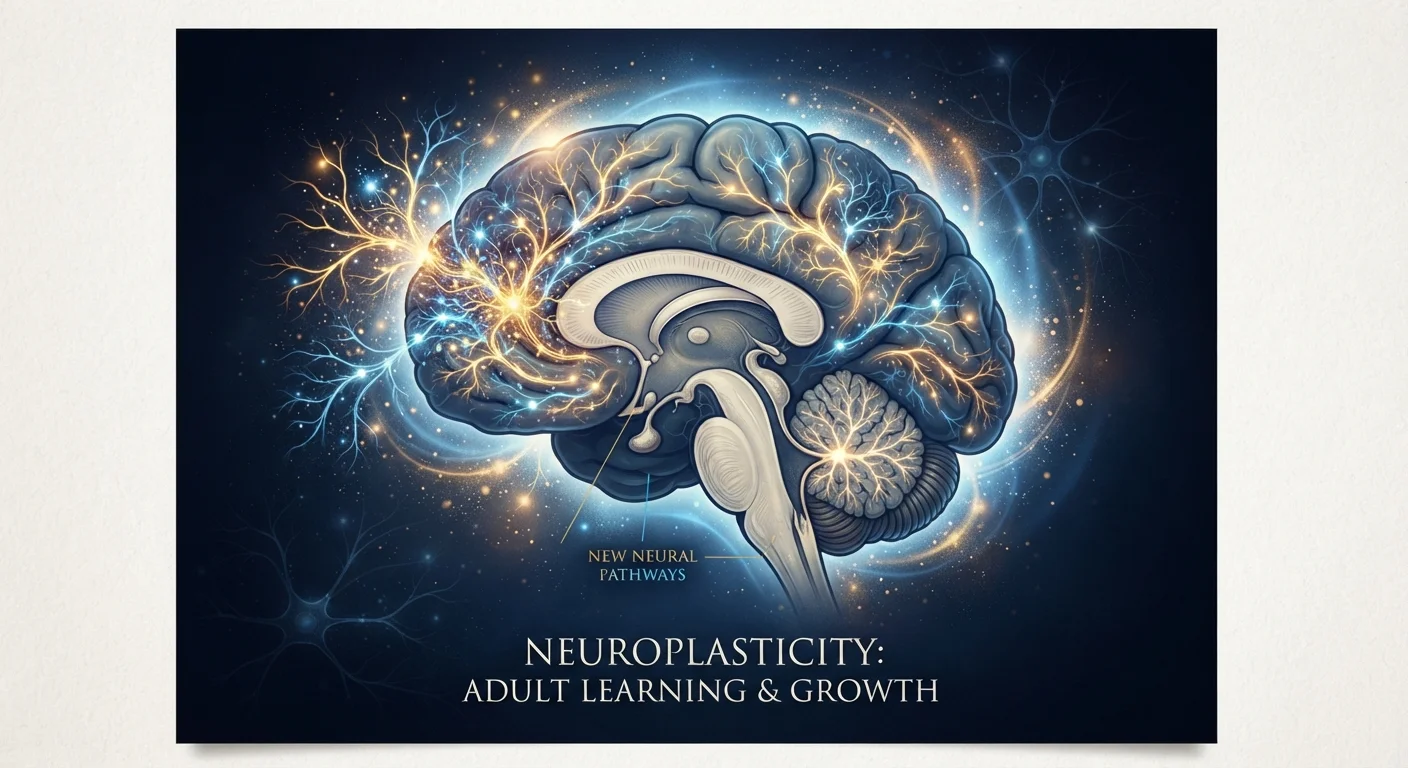
Understanding why this happens is more useful than simply being told to "stay curious." The science of adult learning confirms that the brain retains the capacity to grow at any age - but that capacity requires active engagement, not passive assumption.
70%
Adults who believe they are lifelong learners
A Pew Research Center survey found roughly 73% of American adults describe themselves as personal learners, yet far fewer report taking concrete steps to learn new skills in a given year.
~10 yrs
When career learning often plateaus
Organizational psychology research suggests that skill acquisition rates commonly slow significantly around the ten-year mark in a profession, as familiar routines replace active problem-solving.
Common Mistakes That Close the Learning Loop
The patterns below aren't character flaws - they're predictable cognitive and emotional responses to success. Recognizing them in yourself is the real skill.
Confusing fluency with mastery and stopping there.
Why it happens: When you can explain something confidently, the brain registers the task as complete. Fluency feels like mastery, but it often reflects familiarity with a narrow slice of a much larger domain.
Treating identity and expertise as the same thing.
Why it happens: After years of being the person who knows about a subject, new information that contradicts your understanding can feel like a personal attack rather than useful data.
Only consuming information that confirms what you already believe.
Why it happens: Confirmation bias is a well-documented cognitive tendency. Algorithms, social networks, and even professional communities often amplify this by surfacing content that aligns with established views.
Mistaking busyness for ongoing development.
Why it happens: Professionals often equate a full schedule with continued growth. Being active and being a learner feel interchangeable - until you notice that years have passed without any meaningful change in your thinking.
Avoiding beginner experiences to protect your self-image.
Why it happens: Experts often resist entering spaces where they must appear inexperienced. The social cost of visible incompetence feels high, so new domains get quietly avoided.
If any of these patterns feel uncomfortably familiar, you're not alone - and that recognition itself is a productive starting point. Building a sustainable learning habit becomes far easier once you've identified which trap you've fallen into.
What Re-Engagement Actually Looks Like
Escaping intellectual complacency rarely requires dramatic reinvention. More often, it starts with small, deliberate acts of epistemic humility - treating your existing knowledge as provisional rather than final.
Humility Is a Cognitive Skill, Not a Personality Trait
Intellectual humility - the capacity to recognize the limits of your own knowledge - can be deliberately practiced, like any other skill. Research in cognitive psychology suggests that people who regularly audit what they don't know make better decisions and adapt more successfully to change. This isn't about self-doubt; it's about keeping your mental models updatable. The goal is not to know less, but to hold what you know more lightly.
One practical approach is to regularly seek out sources that challenge your current model, not to replace it wholesale, but to stress-test it. Reading outside your field, sitting with genuine beginners, or revisiting foundational texts with fresh eyes can all surface blind spots you didn't know you had.
For professionals who sense their momentum has quietly stalled, targeted upskilling strategies can help identify specific gaps rather than pursuing unfocused self-improvement. And if you've been taking courses without seeing real progress, it may be worth examining where professional development commonly goes wrong before investing more time or money.
The broader goal - developing a learning practice that evolves with you across decades - is mapped out in The Lifelong Learner's Complete Roadmap, which offers a structured framework for sustaining growth well beyond any single course or credential.
This article is for general educational and informational purposes only. It does not constitute professional psychological, career, or financial advice. Readers seeking personalized guidance are encouraged to consult a qualified professional.