How Each Framework Is Structured
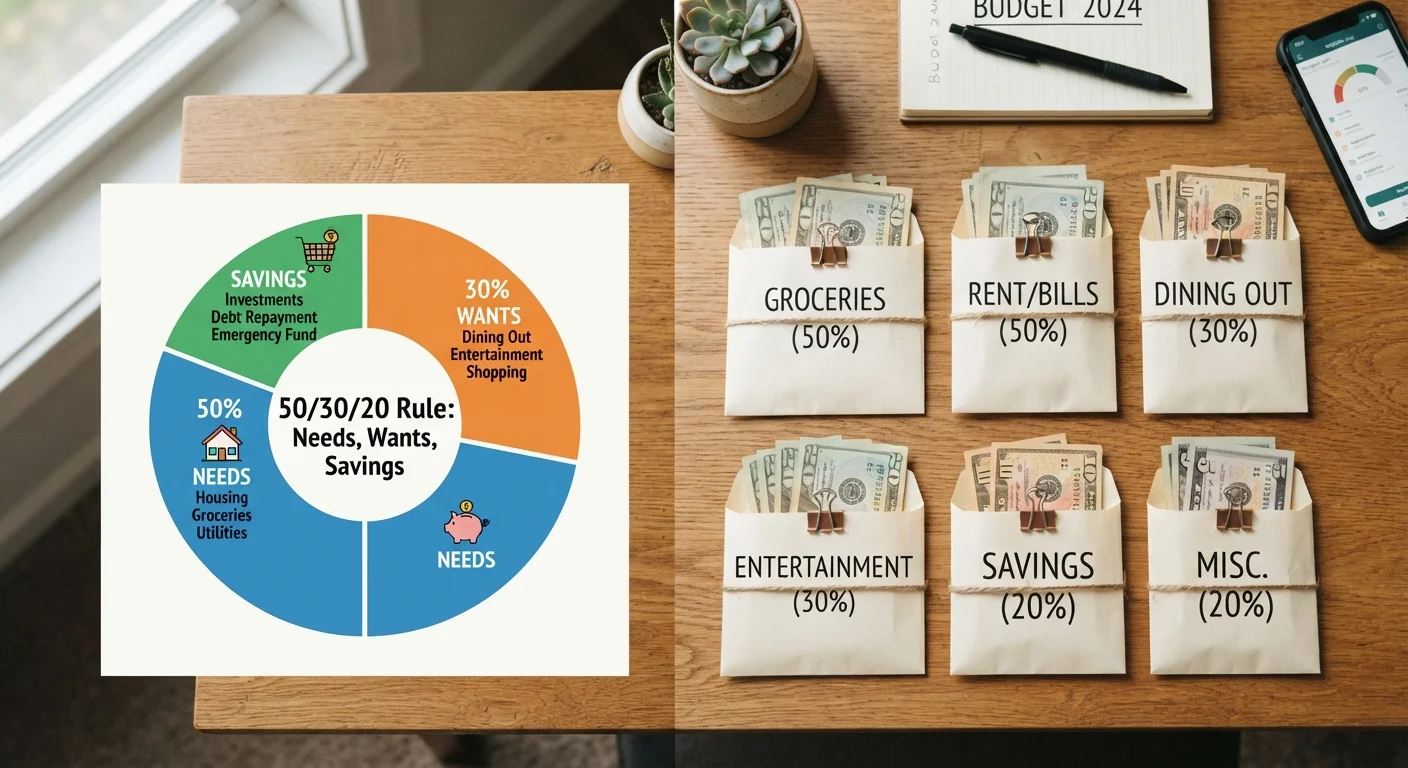
The 50/30/20 rule - popularized in personal finance circles over the past two decades - breaks your after-tax income into three broad buckets: 50% for needs (housing, groceries, utilities, minimum debt payments), 30% for wants (dining out, subscriptions, hobbies), and 20% for savings and debt repayment above minimums. The appeal is its simplicity. You don't need to categorize every transaction; you just need to keep three running totals. For a deeper breakdown of how each category is defined, see our 50/30/20 reference guide.
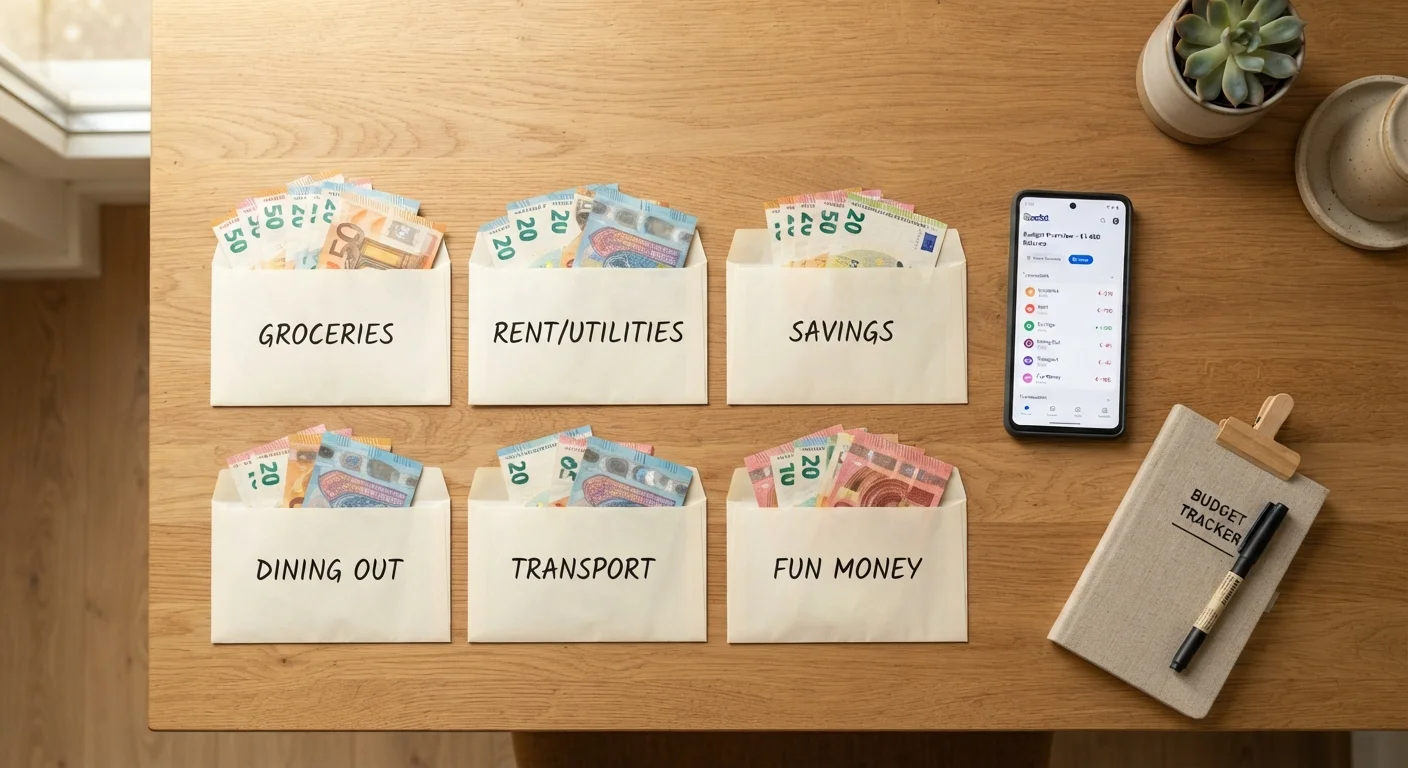
Envelope budgeting works differently. You divide your income into specific spending categories - groceries, gas, dining, clothing, entertainment - and allocate a set dollar amount to each. Traditionally, you'd fill physical envelopes with cash. When an envelope is empty, spending in that category stops until the next pay period. Today, many people replicate this logic digitally using dedicated apps or separate bank accounts. For more on how this method translates to modern banking, our article on envelope budgeting in the digital age walks through practical adaptations.
| Criterion | 50/30/20 Rule | Envelope Budgeting |
|---|---|---|
| Structure | 3 broad percentage buckets | Many specific dollar-amount categories |
| Tracking effort | Low - periodic check-ins | High - ongoing per-category tracking |
| Flexibility | High - scales with income changes | Lower - fixed amounts require manual resets |
| Spending control | Moderate - broad categories can hide issues | Strong - hard limits per category |
| Best for income type | Variable or salaried income | Steady, predictable income |
| Setup time | Under one hour | Several hours initially |
| Works digitally | Yes - simple spreadsheet or app | Yes - apps or separate accounts needed |
Where Each Method Excels - and Where It Struggles
The 50/30/20 rule's biggest strength is its adaptability. When your income fluctuates - say you pick up freelance work or take unpaid leave - the percentages adjust automatically. You don't need to rebuild your entire budget. The downside: broad categories can mask problem areas. If you're technically staying within your 30% wants bucket but spending most of it on impulsive online purchases, the rule won't flag that pattern.
Envelope budgeting excels at granular control. Because each category has its own explicit ceiling, it's harder to drift into habitual overspending without noticing. Research in behavioral economics consistently shows that friction - in this case, the act of physically moving or counting money - tends to reduce impulsive spending. The method's weakness is its rigidity. Life doesn't always cooperate with fixed envelopes; an unexpected car repair can throw your whole allocation off, and redistributing funds mid-month requires deliberate effort.
When Your Income Doesn't Stretch Far Enough
Both the 50/30/20 rule and envelope budgeting assume that after-tax income is sufficient to cover basic needs and leave something for savings. For households where essential expenses already exceed take-home pay, a budgeting framework alone isn't a solution - addressing the income-expense gap directly is the necessary first step. In those situations, a financial counselor or nonprofit credit counseling service may offer more targeted support.
It's worth noting that neither framework works well in isolation if your income doesn't reliably cover your essential expenses. In those cases, the priority is finding ways to close the gap before implementing any budgeting structure. Both methods assume a baseline surplus to allocate.
Practical Setup: What It Takes to Start
Getting started with the 50/30/20 rule requires just three steps: calculate your monthly after-tax income, multiply by 0.50, 0.30, and 0.20 to get your targets, then compare those targets against last month's actual spending. Most people find this exercise takes under an hour. Ongoing, you'll want to revisit it monthly - a process our monthly budget audit checklist can help structure.
Envelope budgeting demands more upfront work. You need to list every spending category, decide on allocations for each, and then fund those envelopes at the start of every pay period. The physical cash version adds a trip to the ATM; digital versions require setting up separate accounts or using budgeting software that mimics the envelope logic. If you're weighing whether to go analog or digital with this approach, our comparison of the paper envelope system vs. spreadsheet budgeting covers that decision in detail.
For practical tips on building everyday financial habits alongside whichever framework you choose, the Everyday Money Tips hub is a useful starting point.
~74%
Americans living paycheck to paycheck
According to a 2023 LendingClub report, nearly three in four Americans report spending most or all of their monthly income, underscoring the need for structured budgeting.
1 in 3
Adults with no written budget
U.S. financial literacy surveys consistently find that a large share of adults manage spending informally, without any documented framework or plan.
Combining Both Approaches
Many people find the most sustainable system isn't a pure version of either method - it's a hybrid. A common approach: use the 50/30/20 rule as your overall guardrail, then apply envelope-style limits within the categories where you know you overspend. For example, you might track your total wants spending against the 30% ceiling, but enforce a strict weekly dining envelope within that bucket to keep restaurant spending from crowding out everything else.
This kind of hybrid also eases the all-or-nothing pressure that causes many budgets to fail. If you miss your envelope limit one month, you still have the broader 50/30/20 structure to fall back on - and vice versa. The goal of any budgeting framework is consistent behavior over time, not perfection in any single month. For anyone looking to build stronger savings habits alongside their chosen method, our Saving & Debt hub covers strategies for reducing debt and growing an emergency fund in parallel.
This article is for general informational and educational purposes only and does not constitute personalized financial advice. Consult a qualified financial professional before making decisions specific to your financial situation.