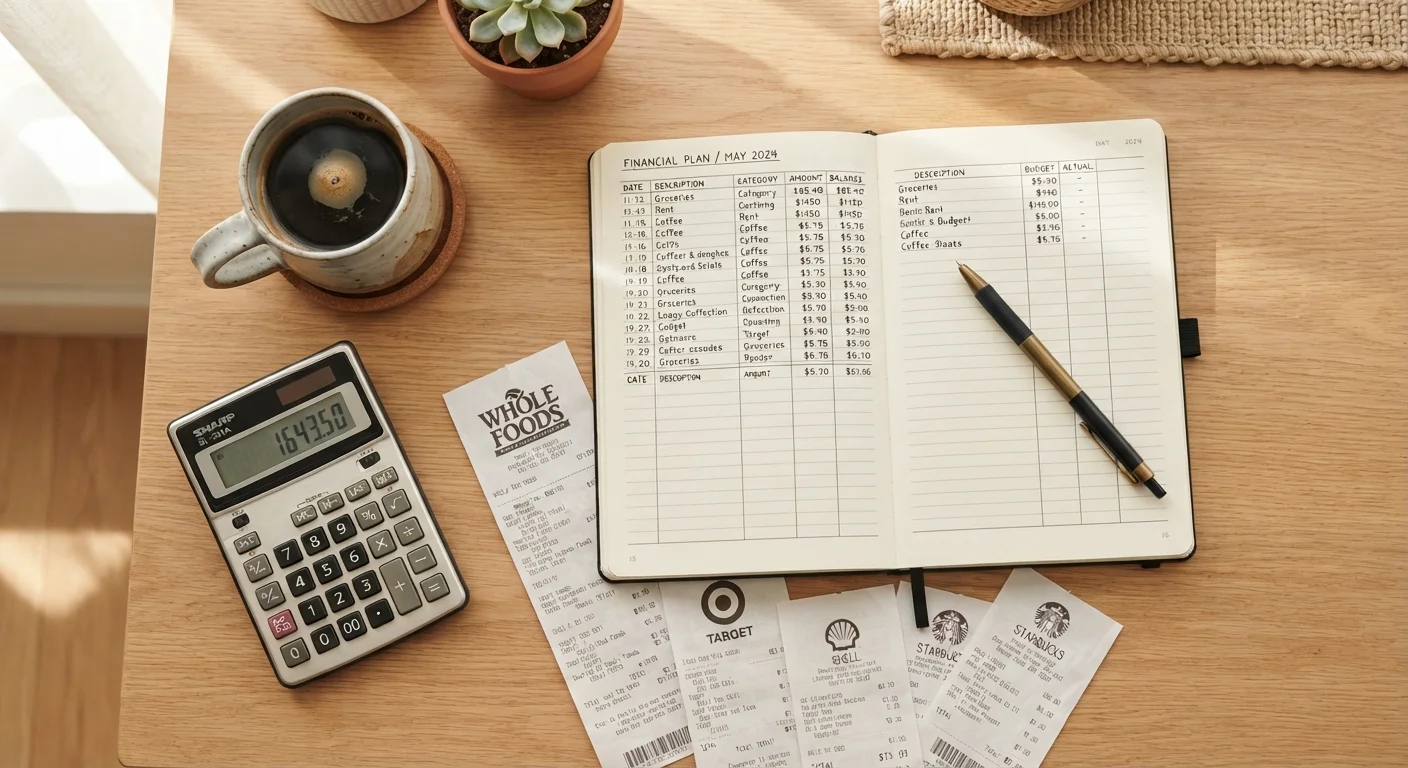

Why Writing It Down Actually Works
There's a well-documented principle in behavioral economics sometimes called the "observer effect" in self-monitoring: when people track their own behavior, that behavior tends to change. Applied to spending, the act of recording a purchase-even just typing "$4.75 coffee" into a notes app-creates a brief moment of conscious awareness that automatic card-tap purchases do not.
This isn't about guilt or shame. It's about making spending visible. Many Americans operate on financial autopilot, where the mental tally of what they've spent in a given week is significantly lower than the actual total. A spending journal closes that gap. For a broader foundation on why tracking matters, see our introduction to personal budgeting.
“Self-monitoring is one of the most robust behavior-change techniques we have. When people observe and record their own actions, those actions shift - often significantly - even before any other intervention is applied.”
— Roy Baumeister, Social psychologist and co-author of research on self-regulation and willpower
Proven Practices for Keeping a Spending Journal
The format matters far less than the habit. What follows are the practices most likely to make your spending journal genuinely useful rather than an abandoned notebook in a drawer.
Record every purchase within 24 hours of making it
Delayed logging leads to forgotten transactions and an incomplete picture. The closer to real-time your entries are, the more accurately they reflect actual spending-including the small, forgettable purchases that add up fastest.
Note the context alongside the dollar amount
Numbers alone don't reveal patterns-context does. Recording where you were, who you were with, or how you felt adds the layer of information that makes review sessions genuinely insightful rather than just an accounting exercise.
Choose one format and commit to it for at least 30 days
Switching between tools resets your data and breaks the habit loop. Consistency in format allows patterns to emerge over enough time to be meaningful, and 30 days provides a sufficient baseline to identify recurring behaviors.
Set a specific weekly review time on your calendar
Without a scheduled review, journal entries accumulate without producing insight. A recurring 10-minute appointment converts raw data into spending awareness and keeps the habit from feeling pointless.
Track cash and card spending equally
Cash purchases are invisible to bank statements and budgeting apps, making them the most common source of untracked spending. Including cash in your journal closes the gap that most digital tracking tools miss entirely.
Struggling with one particular spending area? Our guide on why grocery budgets keep going over applies these same awareness principles to one of the most common budget pain points.
Turning Entries Into Decisions
Raw transaction logs have limited value on their own. The leverage comes from a short weekly review-ten to fifteen minutes where you look at your entries, notice patterns, and ask one question: Does this reflect how I actually want to spend?
~$314
Average monthly unplanned spending per U.S. adult
According to a Slickdeals survey cited in multiple financial publications, Americans report spending roughly this amount on unplanned purchases each month - most of which goes untracked.
1 in 3
Americans who don't track spending at all
A National Foundation for Credit Counseling survey found that a substantial share of U.S. adults have no system for monitoring where their money goes on a regular basis.
This is also the moment where emotional context becomes useful. If you've noted that three impulse purchases happened on Thursday evenings, that's data. Our article on interrupting impulse spending patterns explains the behavioral triggers behind those moments and practical ways to build friction into them.
Pair your weekly review with a monthly financial reset checklist to catch drift before it compounds across savings and debt goals.
Spending Journals and Budgeting Apps Aren't Competitors
Automated tools like bank account dashboards can categorize transactions, but they capture only card-based spending and don't record emotional context or cash purchases. A spending journal works alongside these tools, adding the human layer of awareness and reflection that automation cannot provide. Many people find the two approaches complement each other well once both habits are established.
Getting Started Without Overthinking It
The most common obstacle to spending journals isn't motivation-it's setup paralysis. People wait for the perfect app, the right notebook, or the ideal Monday-morning start date. None of that is necessary.
Once the habit is established, you can layer in more detail: categories, emotional tags, or a monthly audit. Our monthly budget audit checklist is a natural next step once you have a few weeks of data to work with. You can also explore everyday money tips for additional practical habits that work alongside journaling.
This article is for general informational and educational purposes only and does not constitute personalized financial advice. For guidance specific to your financial situation, consider consulting a qualified financial professional.