The Hidden Cost Built Into Every Statement
When a credit card statement arrives, the minimum payment figure is prominently displayed - and it's deliberately modest. It's designed to be affordable, which is precisely what makes it financially dangerous. Paying just enough to satisfy the issuer each month leaves the bulk of your balance untouched, and that remaining balance accrues interest every single day.
Most credit cards carry APRs between 20% and 29%, and interest is typically compounded daily. That means the interest charged one day is added to your balance, and the next day's interest is calculated on that slightly larger number. Over weeks and months, this compounding effect quietly erodes your progress.
To understand how interest actually accumulates on a revolving balance, see our plain-language guide to APR and compounding.
20%-29%
Typical credit card APR range in the U.S.
According to Federal Reserve consumer credit data, average credit card interest rates have risen substantially in recent years, with many cards now charging APRs in this range.
$1,000+
Interest paid on a $3,000 balance at minimum payments
Estimates based on standard minimum payment formulas (2% of balance) and a 24% APR show total interest can easily exceed the original purchase cost over the repayment period.
10+ years
Time to repay a mid-sized balance at minimum-only payments
Credit card statement disclosures, mandated by the CARD Act of 2009, frequently show repayment timelines exceeding a decade for balances in the $2,000-$5,000 range.
What the Numbers Actually Look Like
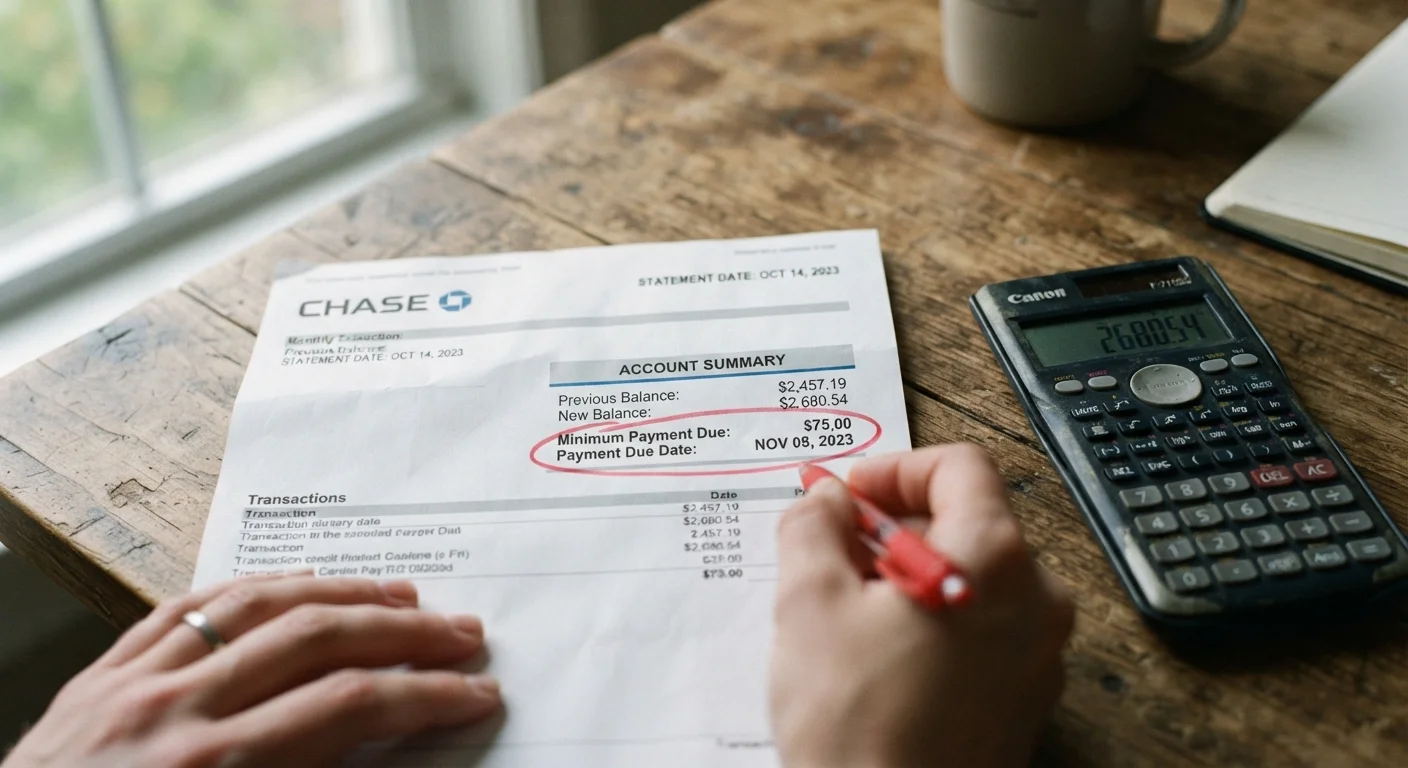
Federal law requires credit card issuers to include a minimum payment warning on every statement - a disclosure that many people skip over. This box shows two things: how long it will take to pay off your current balance making only minimum payments, and the monthly amount needed to pay off that same balance in three years.
The contrast is often striking. On a $3,000 balance at 24% APR with a minimum payment calculated at 2% of the balance, making only minimum payments could take well over a decade and result in paying more than $3,000 in interest alone - effectively doubling the cost of whatever was purchased. Paying a fixed amount even modestly above the minimum from the start compresses that timeline to a few years and saves hundreds of dollars.
These aren't worst-case projections - they reflect how everyday balances behave at typical card rates. The math is straightforward once you look at it directly.
Why Small Increases in Payment Have Outsized Impact
One of the most useful things to understand about revolving debt is that payments above the minimum directly reduce the principal - the actual balance you owe - rather than simply covering interest charges. When the principal shrinks faster, less interest accrues the following day. That self-reinforcing dynamic means even modest payment increases produce compounding benefits in reverse: your balance falls more quickly, interest charges shrink, and payoff accelerates.
For example, paying $50 more than the minimum each month on a mid-sized balance at a high APR can reduce total interest paid by hundreds of dollars and shave years off repayment time. The dollar amounts vary by situation, but the directional impact is consistent: more principal paid now means less interest owed later.
Use Your Statement's Payoff Disclosure
Every credit card statement includes a minimum payment warning box required by the CARD Act. This shows exactly how long minimum-only payments will take and what a three-year payoff amount would be. Use this figure as a target - even matching the three-year payoff amount for a few months can meaningfully shift your trajectory.
If you're managing debt alongside other financial goals, it's worth understanding how to balance both. Our article on building an emergency fund while carrying debt walks through how to make progress on both fronts without derailing either.
Turning Awareness Into Action
Knowing that minimum payments are costly is only useful if that knowledge changes behavior. A few practical approaches can help move the needle without requiring a dramatic budget overhaul.
- Set a fixed payment amount. Rather than letting the minimum float downward as your balance falls (which slows progress further), choose a fixed dollar amount and pay that consistently each month.
- Find one budget line to redirect. Small recurring expenses - even those that feel insignificant - add up over a year. Our piece on daily spending habits and long-term savings explores where these trade-offs genuinely matter.
- Watch for habits that stall progress. Certain spending patterns can quietly extend debt timelines even when you're making consistent payments. See habits that undermine a debt payoff plan for patterns worth identifying early.
Hidden Costs Extend Beyond Credit Cards
Debt-related costs are rarely isolated. Many households managing credit card balances are also underestimating other recurring expenses. Our article on hidden annual car costs shows how overlooked expenses in one area can crowd out debt repayment in another.
This article is for general informational and educational purposes only. It does not constitute personalized financial, tax, or legal advice. Consider consulting a qualified financial professional regarding your specific situation.