Why Dogs Pull - and Why Corrections Alone Don't Work
Dogs pull on the leash for a straightforward reason: it works. Every time a dog surges forward and reaches the interesting smell, the other dog, or the fire hydrant, pulling is reinforced. From the dog's perspective, forward pressure equals forward progress.
Physical corrections - jerking the leash, using prong or choke collars - can suppress pulling temporarily, but they don't teach the dog what you want it to do. Repeated harsh corrections also raise stress levels, which can increase reactivity toward other dogs and people. Force-free methods, by contrast, give the dog a clear rule: a tight leash makes everything stop; a loose leash keeps the walk going.
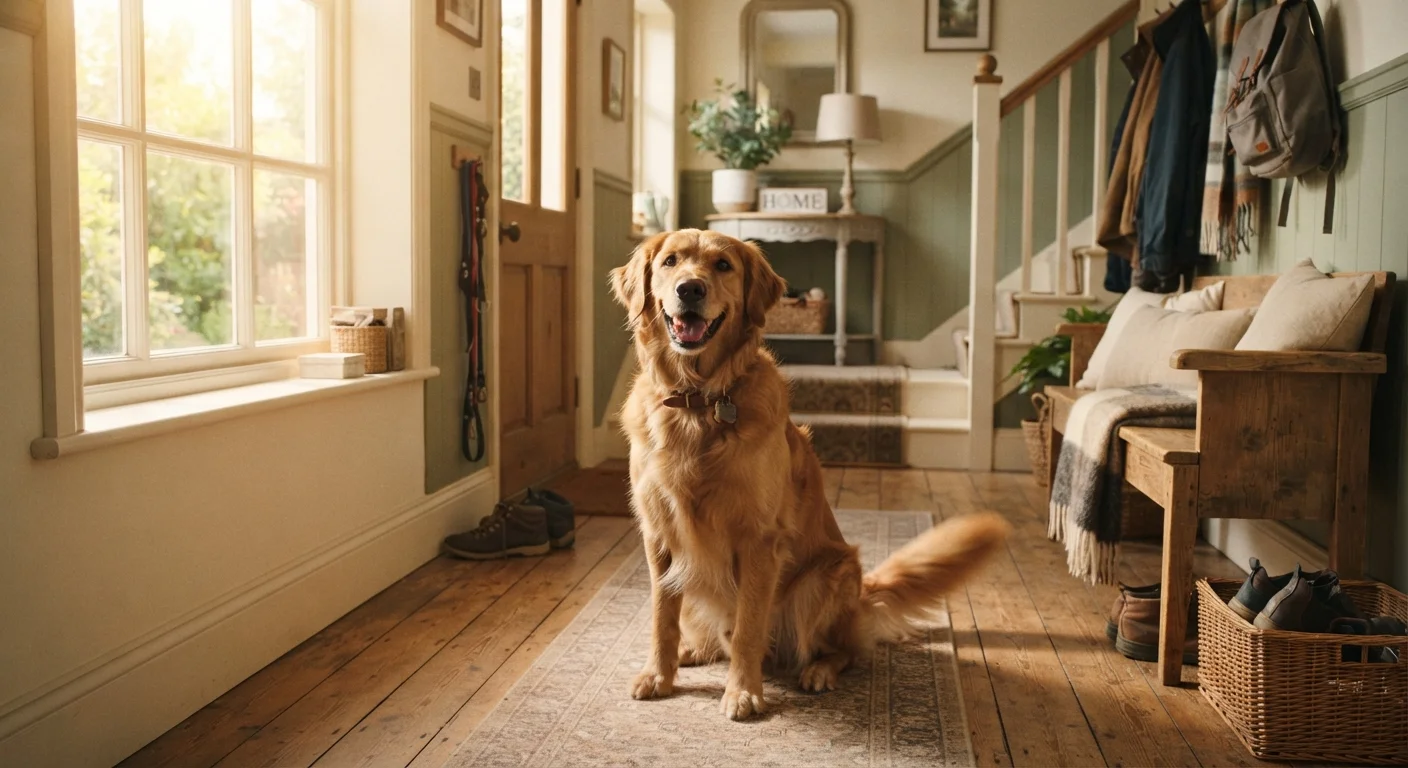
If you've just brought a new dog home, establishing calm leash habits early pays dividends for years. See our guide to bringing a dog home for the first time for help setting up a structured daily routine from day one.
What you will need
Equipment and Setup
You don't need complicated gear. The essentials are a flat collar or front-clip harness, a standard 4-6 foot leash (not a retractable), and high-value treats your dog reliably responds to - small, soft, pea-sized pieces work best so they're consumed quickly without disrupting momentum.
A front-clip harness attaches at the dog's chest and gently redirects the body when the dog pulls, making it easier for both of you during the learning phase. Whatever equipment you choose, confirm the fit is snug but not constricting - you should be able to slide two fingers comfortably underneath.
Front-clip harness
Attaches at the chest to gently redirect a pulling dog without pressure on the throat.
Flat collar
Standard collar used for attaching ID tags and a leash on dogs that don't pull aggressively.
Standard 4-6 foot leash
Provides enough distance for natural movement while keeping the dog safely close.
Training clicker
Delivers a precise, consistent marker sound the moment the dog performs the correct behavior.
High-value soft treats
Small, fast-to-eat rewards that motivate the dog and reinforce loose-leash position.
Treat pouch
Keeps rewards accessible without fumbling in your pocket, maintaining training flow.
Step-by-Step Loose-Leash Training
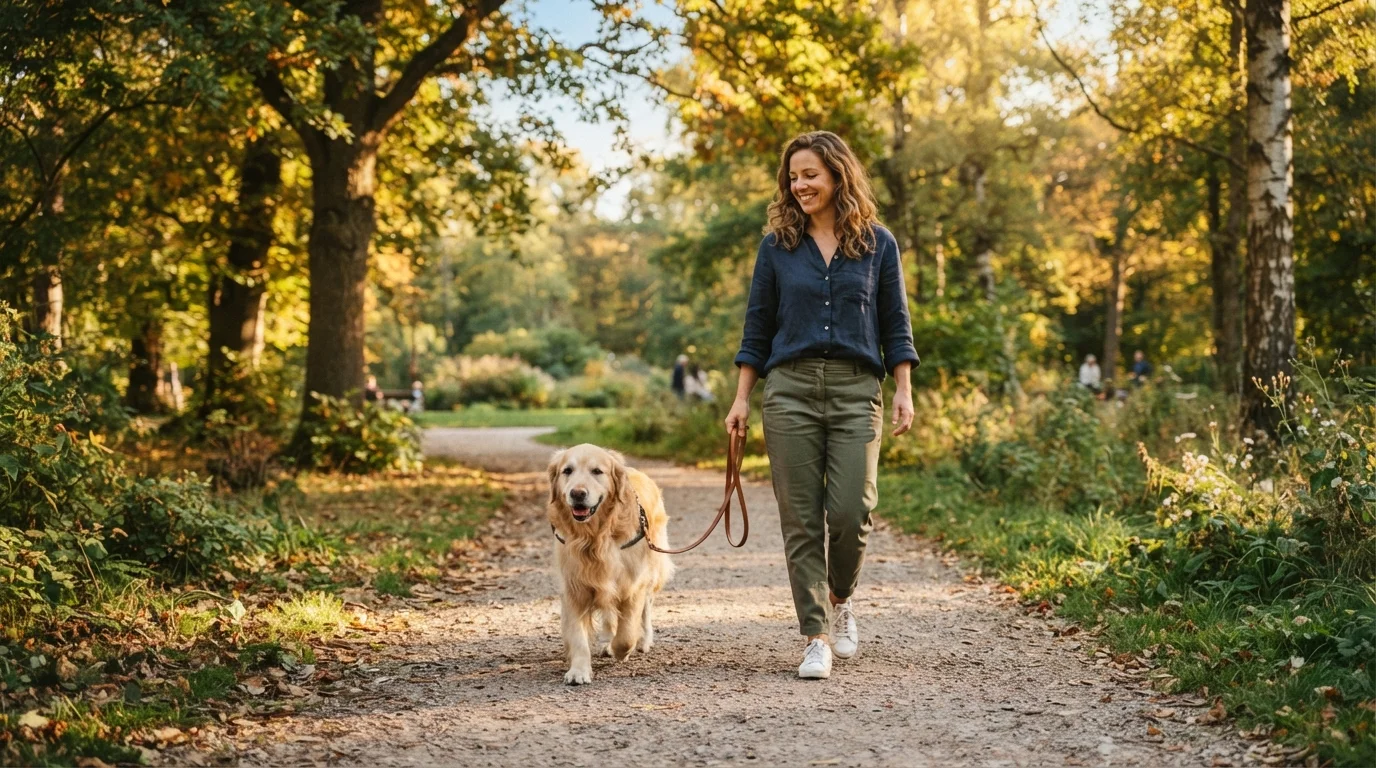
Work through the steps below in low-distraction environments first - your yard, a quiet hallway, or an empty parking lot - before graduating to busier settings like sidewalks or parks.
Establish a marker signal
Before you clip the leash, teach your dog that a specific sound - a clicker or a short verbal cue like "yes" - means a treat is coming immediately. Click or say "yes," then deliver a treat. Repeat 10-15 times in a single session until the dog's ears perk up at the sound. This marker bridges the gap between the correct behavior and the reward.
Reward the position you want
Stand still with your dog on leash. The moment the dog is at your side with slack in the leash, mark and reward. Do this repeatedly so the dog starts choosing that position voluntarily. You're building a mental map: standing next to you = good things happen.
Take one step, then reward
Take a single step forward. If the leash stays loose and the dog stays near your side, mark and reward. If the leash tightens before you've completed the step, stop immediately - don't say anything, don't pull back - just become a statue. Wait for the dog to release the tension by turning back toward you, then mark the moment the leash goes slack and reward.
Build duration gradually
Once the dog walks one step reliably, extend to two steps, then five, then ten before marking and rewarding. Vary the reward schedule slightly - sometimes reward at step three, sometimes at step seven - so the dog stays attentive rather than anticipating a fixed pattern. Gradually reduce treat frequency as the behavior becomes reliable.
Add distractions incrementally
Once your dog walks calmly in a low-distraction setting for a full five minutes, introduce mild challenges: a neighbor in the yard, a parked bicycle, mild foot traffic. Each new environment or distraction level should initially be treated like step one - shorter distances, more frequent rewards - before you fade treats again. Patience here prevents the frustration of inconsistent results on real-world walks.
Keep Sessions Short and Frequent
Five to ten minutes of focused loose-leash practice twice a day produces faster results than a single 45-minute slog. Short sessions keep your dog mentally sharp and end before frustration sets in for either of you. Consistency over days and weeks matters more than any individual session's length.
Troubleshooting Common Setbacks
Even with consistent training, you'll hit rough patches. Here's what to do when progress stalls:
- Dog ignores treats outdoors: Increase treat value (try small pieces of cooked chicken or cheese) or reduce the distraction level of the environment.
- Dog lunges at other dogs or joggers: Increase distance from the trigger and reward heavily for calm attention. If lunging is intense or frequent, a certified professional trainer or veterinary behaviorist can help build a more targeted desensitization plan.
- Progress in the yard doesn't transfer to the street: Dogs generalize poorly. Treat every new location as a fresh training session and expect some regression - it's normal.
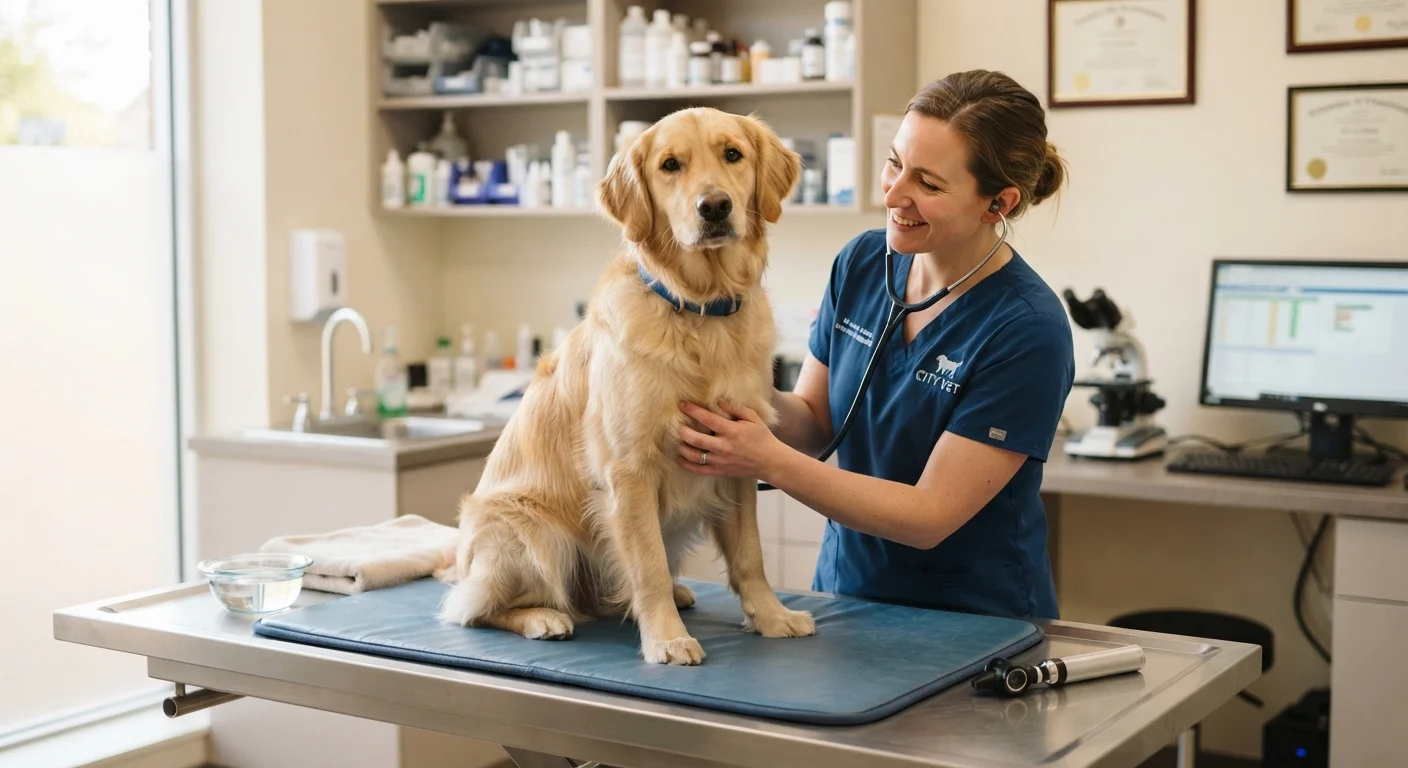
Persistent pulling despite weeks of consistent training can occasionally signal underlying anxiety or discomfort. If your dog's behavior on walks changes suddenly or seems driven by pain rather than excitement, that's worth discussing with your veterinarian. Our article on when dog behavior warrants a vet visit covers signs that go beyond typical training challenges.
Avoid Retractable Leashes During Training
Retractable leashes teach dogs that pulling extends their range - the opposite of what you're trying to build. Reserve retractable leashes, if you use them at all, for open spaces where loose-leash structure isn't the goal. During any training phase, stick to a standard fixed-length leash.