Why Dental Disease Is So Easy to Miss
Dogs are instinctive pain concealers. A dog with significant gum inflammation or a loosening tooth may continue eating, playing, and behaving normally - which is exactly why dental disease advances so quietly in so many pets. By the time an owner notices something is wrong, the disease is often well past its earliest, most treatable stage.
Periodontal disease starts with plaque - a sticky bacterial film that forms on teeth within hours of eating. Without mechanical disruption (brushing), plaque mineralizes into tartar, also called calculus, within days. Tartar accumulates at and beneath the gumline, creating an environment where bacteria thrive and the body's immune response causes collateral tissue damage. That damage, over months and years, is what destroys gums, ligaments, and bone.
Because dogs don't vocalize dental pain the way humans do, owners frequently interpret normal behavior as proof that everything is fine. Our guide to signs of pain in dogs that owners often miss covers many of the subtle cues - like changes in chewing side preference or reluctance to pick up toys - that can signal oral discomfort.
Dental Disease Progresses in Stages
Veterinarians classify periodontal disease in four stages. Stage 1 (gingivitis) is fully reversible with professional cleaning and good home care. Stages 2 through 4 involve progressively greater and ultimately permanent damage to supporting bone and tissue. Early detection - through regular exams - is what keeps the disease in the reversible range.
What Untreated Dental Disease Actually Does to a Dog
The consequences of ignored dental disease go well beyond bad breath. At the local level, advanced periodontal disease erodes the bone surrounding tooth roots, causes painful abscesses, and leads to tooth loss. Jaw fractures, while less common, can occur in small dogs whose bone density has been severely compromised.
The systemic effects are equally concerning. Bacteria colonizing infected gum tissue can enter the bloodstream - a process called bacteremia - and reach distant organs. Veterinary research has associated chronic periodontal disease with changes in kidney, liver, and heart tissue in dogs, though the precise causal relationships are still being studied. What is clear is that the mouth is not isolated from the rest of the body, and persistent oral infection creates a physiological burden.
~80%
Dogs showing dental disease signs by age 3
Veterinary consensus, including guidance from the American Veterinary Dental College, estimates the majority of dogs develop early signs of periodontal disease by their third year.
#1
Most diagnosed condition in adult dogs
Periodontal disease is consistently identified as the most frequently diagnosed health condition among adult dogs in general veterinary practice.
5-10×
Higher dental disease risk in small breeds
Toy and small breeds experience significantly accelerated tartar accumulation and periodontal progression due to tooth crowding relative to jaw size, according to veterinary dental literature.
Small and toy breeds face compounded risk. Their teeth are often crowded into a smaller jaw, which accelerates tartar accumulation and makes early-stage disease harder to detect visually. If you share your home with a small breed, proactive dental care should begin early in the dog's life.
Prevention: What Actually Works
Veterinary dental specialists consistently identify daily toothbrushing as the gold standard for at-home prevention. Using a soft-bristled brush and a toothpaste formulated for dogs - never human toothpaste, which contains ingredients toxic to dogs - mechanical brushing disrupts the plaque biofilm before it hardens. Even brushing three to four times per week offers meaningful benefit compared to no brushing at all.
Start Toothbrushing Before Problems Appear
The easiest time to introduce toothbrushing is during puppyhood, before tartar accumulates and gums become sensitive. Begin by letting your dog taste the toothpaste, then gradually introduce the brush over several sessions. Consistency matters far more than perfection - a brief daily brushing is more effective than an occasional thorough one.
Professional dental cleanings performed under general anesthesia are the necessary complement to home care. Only under anesthesia can a veterinarian probe below the gumline, take full-mouth dental X-rays, and safely scale and polish all tooth surfaces. "Anesthesia-free" dental cleanings offered by non-veterinary providers address only visible surface tartar and cannot assess or treat subgingival disease - the part that matters most.
Veterinary-approved dental chews, diets, and water additives can serve as supplementary tools. Look for products carrying the Veterinary Oral Health Council (VOHC) seal, which indicates the product has met independently evaluated standards for plaque or tartar reduction. These are additions to - not replacements for - brushing and professional care.
Dental health is one of several routine care areas owners can underestimate. The same principle applies to cats; our overview of routine cat care that owners often overlook touches on this pattern across species.
Building Dental Care Into Routine Veterinary Visits
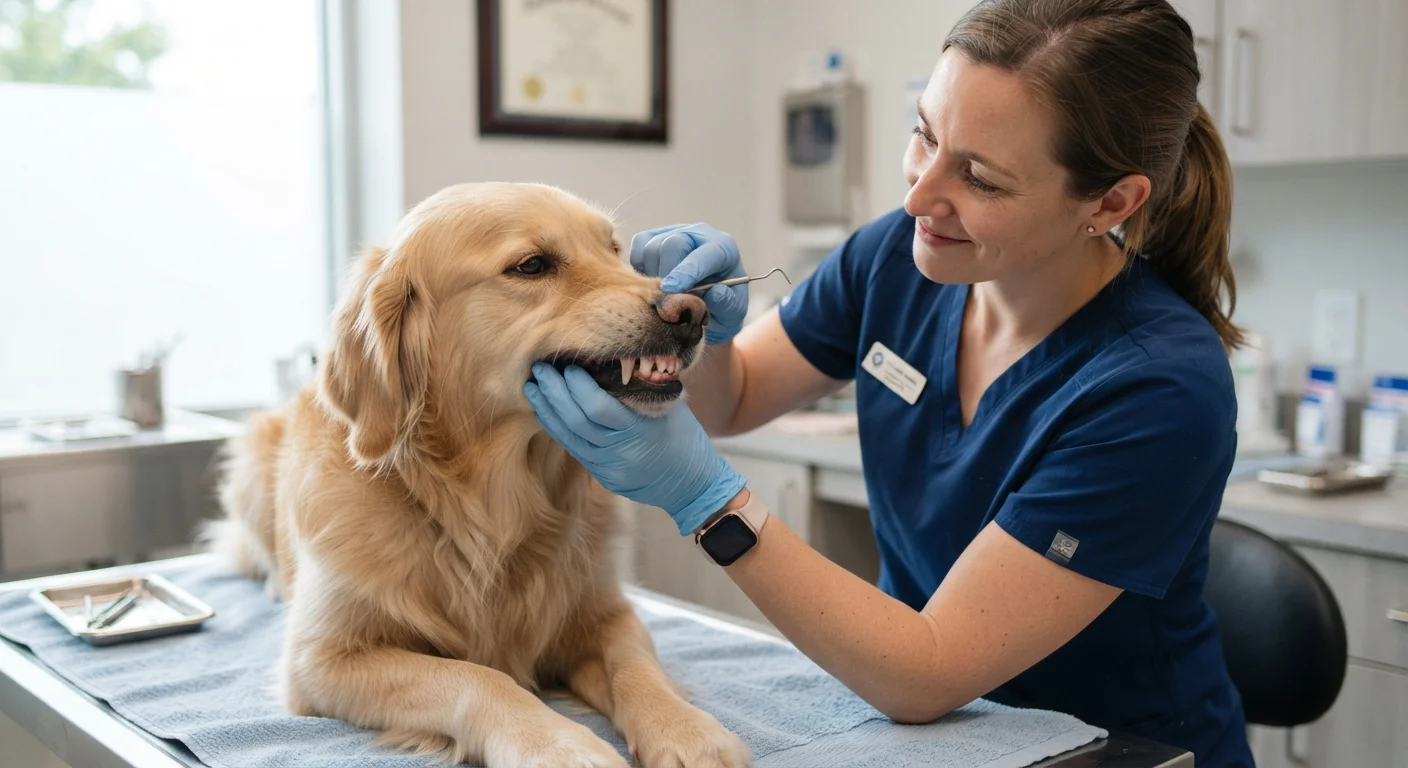
A dental exam should be part of every annual wellness visit. Ask your veterinarian to show you the current state of your dog's teeth and gums, what stage of disease - if any - is present, and when a professional cleaning is recommended. Many owners are surprised to learn that a cleaning is already overdue.
For senior dogs, the calculus of dental risk and anesthetic safety requires individual assessment. Older dogs with well-managed health conditions can typically undergo anesthesia safely when pre-operative bloodwork and a physical exam are performed. Deferring a necessary cleaning because of age-related anesthesia concern often results in allowing painful disease to progress unchecked. See our guidance on feeding an older dog for broader context on how aging changes a dog's health priorities.
If your dog shows behavioral changes - reluctance to eat hard food, pawing at the mouth, dropping food, or a new preference for one side of the mouth - bring these observations to your vet promptly. These can be early signals of oral pain. Our article on when normal dog behavior warrants a vet visit explores how easy it is to normalize signs that actually deserve attention.
This article is for general educational purposes only and is not a substitute for professional veterinary advice. Always consult a licensed veterinarian for guidance specific to your dog's health and dental care needs.