
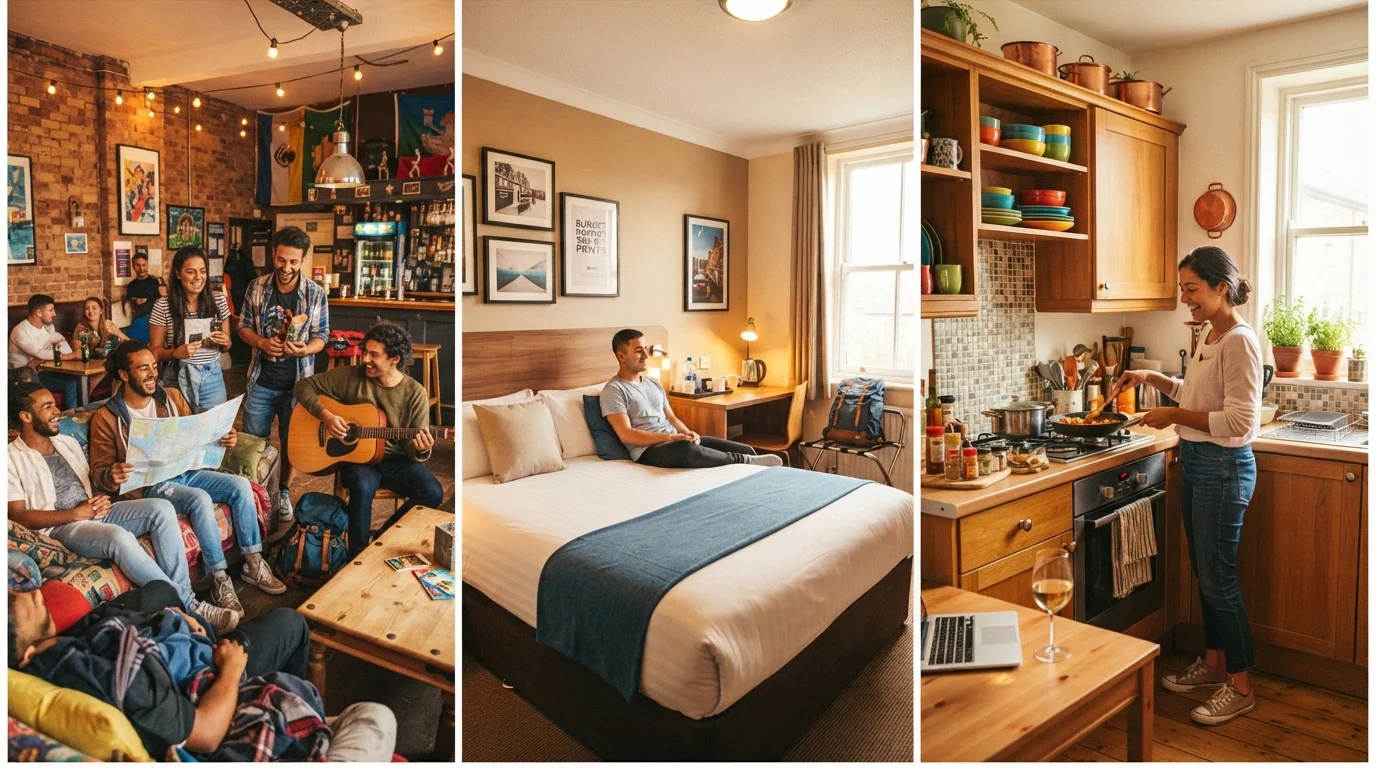
Why the Nightly Rate Is Only the Starting Point
When comparing accommodations, most travelers anchor to the listed nightly price - and that's exactly where the math starts to mislead. A $28 hostel dorm bed, a $75 budget hotel room, and a $110-per-night short-term rental look worlds apart at first glance. But once you layer in fees, amenities, food costs, and group size, the real numbers rearrange themselves fast.
Before your next booking, it helps to think in terms of total trip cost per person rather than nightly rate per room. That shift in framing is where the smart budget decisions get made. For a full framework on approaching accommodation as part of a wider travel spend, see our guide to building a realistic travel budget.
| Hostel (Dorm) | Budget Hotel | Short-Term Rental | |
|---|---|---|---|
| Typical US nightly cost | $25-$55/person | $65-$130/room | $80-$250+/property |
| Private bathroom | Rarely (shared) | Yes | Usually yes |
| Kitchen access | Shared kitchen common | No | Full kitchen typical |
| Best for group size | Solo travelers | 1-2 people | 3+ people or families |
| Common hidden fees | Lockers, linens, breakfast | Parking, resort fees | Cleaning, service fees |
| Booking flexibility | Moderate | High | Lower (strict cancellation) |
| Social atmosphere | High | Low | None (private) |
Hostels: Cheap Nights With Some Asterisks
Hostel dorm beds in the US generally range from roughly $25 to $55 per night depending on the city and season, while private hostel rooms can run $70-$120 - overlapping significantly with budget hotels. The social atmosphere, shared kitchens, and built-in community are genuine perks that money doesn't fully capture.
But the fine print matters. Many hostels charge separately for:
- Locker rentals ($2-$5/day)
- Towel or linen hire ($3-$5 per stay)
- Breakfast (often $5-$10, despite being marketed as available on-site)
- Luggage storage before or after check-in
The shared kitchen is one of hostels' biggest financial advantages - cooking even a few meals yourself can offset the entire nightly cost difference. Light sleepers or privacy-seekers may find dorm environments disruptive, which can push them toward private rooms and eliminate the savings advantage entirely.
Use the Shared Kitchen to Your Advantage
If you're staying in a hostel with a shared kitchen, even cooking two meals per day - a simple breakfast and a pasta dinner - can save $30-$50 compared to eating out every meal. Plan ahead by picking up groceries shortly after check-in. Many hostels also offer free or low-cost communal meals that aren't always advertised at booking.
Budget Hotels: Predictable but Watch the Extras
Budget hotel chains in the US typically price private rooms between $65 and $130 per night, though rates spike sharply in major cities and during peak seasons. What you gain is privacy, a private bathroom, reliable Wi-Fi, and no need to negotiate communal space. What you often lose is a kitchen.
No kitchen means three meals a day come from restaurants, cafes, or takeout - a cost that compounds quickly. A traveler spending $15-$25 per meal is adding $45-$75 daily in food costs on top of the room rate. Budget hotels may also tack on resort fees (common in Las Vegas and Miami), parking fees ($15-$40/night in urban areas), and pet fees. Always check the total at checkout, not just the advertised rate.
For short stops on longer road trips, budget hotels often make practical sense - no minimum stay, easy cancellation, and a clean private space without the complexity of rental platforms. See how this fits into road trip planning in our breakdown of US road trip costs.
Short-Term Rentals: The Math Changes With Group Size and Stay Length
Short-term rental platforms list properties that can range from a spare bedroom for $60/night to a full apartment or house at $150-$300+. On the surface, this looks expensive. The calculus flips when you factor in two things: group size and cooking access.
A $180/night rental split among four travelers costs $45 per person - competitive with or cheaper than four hostel dorm beds. Add in a kitchen and the ability to prepare breakfast and dinner in-house, and the total savings over a week can be substantial.
The catch: cleaning fees. A flat $80-$150 cleaning fee hits hard on a two-night stay but spreads to a reasonable $11-$21/night on a week-long booking. Always calculate the full checkout total - including service fees, which can add 12-18% to the listed price - before assuming a rental is the deal it appears to be.
Before committing to any option, running through a pre-trip budget checklist can help surface these hidden costs before they appear on your final bill.
12-18%
Typical short-term rental service fee
Platform service fees on short-term rental bookings commonly add 12-18% on top of the listed nightly rate, according to general industry reporting on major rental platforms.
$80-$150
Average short-term rental cleaning fee
Cleaning fees on US short-term rentals vary widely by property size and market; spreading a flat fee across more nights reduces its per-night impact significantly.
Making the Right Call for Your Trip
The accommodation that costs least depends entirely on your circumstances. A few questions worth asking before you book:
- How many nights? Cleaning fees favor rentals on longer stays; budget hotels win on one- or two-night stops.
- How many people? Groups dilute rental costs; solo travelers get more value from hostels.
- Do you need a kitchen? If yes, the rental or hostel (with shared kitchen) pays dividends. If no, a hotel's simplicity may be worth the trade-off.
- How important is flexibility? Hotels and some hostels allow last-minute booking and cancellation; many rentals do not.
For travelers combining multiple accommodation styles - say, hostels in cities and a rental for a longer beach stay - consider how each fits into the broader budget travel strategy for the whole trip. The goal isn't finding the cheapest nightly rate. It's spending the right amount for the experience you actually want.