
Why Most Travel Budgets Fall Short
The majority of travelers underestimate trip costs - not because they're careless, but because they budget in categories they can see (flights, hotels) while ignoring the ones that accumulate quietly (airport transfers, tipping culture, currency conversion fees, and those three unplanned dinners). The result is a trip that felt affordable in planning but hits harder than expected on the credit card statement.
Understanding the most predictable failure points - overreliance on generic daily-cost averages, forgetting taxes and fees, and lumping "everything else" into one vague number - is the first step toward building something that actually holds. The patterns behind budget overruns are consistent and learnable. For a wider framework on managing travel spending, the Budget Travel Tips hub covers everything from destination selection to daily spending discipline.
What you will need
Before diving into the steps, gather the tools below - having them ready will make the process faster and more accurate.
Spreadsheet or budgeting app
Organize cost categories, enter estimates, and track running totals in one place.
Flight search aggregator
Look up realistic fare ranges for your route and dates without committing to a purchase.
Accommodation listing sites
Browse current nightly rates across lodging types for your destination.
Destination travel forums or subreddits
Find recent, firsthand cost reports from travelers who visited your destination recently.
Currency converter
Convert local prices into USD so all budget figures sit in the same currency.
How to Build Your Budget Step by Step
Anchor your budget to a savings target, not a wish
Before researching a single flight price, establish how much money you can realistically set aside for this trip. Review your monthly income and fixed expenses, then identify a monthly savings amount you can sustain until your travel date. Multiply that by the number of months remaining. That figure is your hard ceiling - everything else must fit underneath it.
This step separates travelers who arrive home with debt from those who don't. Starting with what's available forces every subsequent decision to be grounded in reality.
Research flights with real route data
Open a flight search tool and look up your specific origin-to-destination route across a range of dates. Note the low, mid, and high fare options - don't cherry-pick the cheapest outlier. Record the midpoint fare as your planning figure. Factor in baggage fees separately, since many fares exclude checked luggage.
If your dates are flexible, compare fares across a two- to three-week window. Even minor date shifts can produce meaningful differences. Remember: round-trip fares aren't always cheaper than two one-way tickets, so check both.
Estimate lodging costs per night, not per trip
Browse current listings for your destination - not last year's averages - and record realistic nightly rates for the accommodation type you'd actually use. Compare hostels, budget hotels, and short-term rentals side by side; the full cost breakdown for each lodging type goes beyond nightly rate to include cleaning fees, taxes, and location trade-offs.
Multiply your chosen nightly estimate by the number of nights. Add local taxes and any mandatory fees (resort fees, city taxes) that listings often display only at checkout.
Build a daily food and drink estimate
Research what a typical meal costs at your destination - a sit-down lunch, a street snack, a coffee. Use recent travel forum posts, not general travel guides, for the most current figures. Then assign yourself a daily food budget based on how you actually eat: if you cook some meals, factor in grocery costs; if you dine out every meal, use restaurant prices.
Multiply your daily food estimate by the number of days, then add 15% for drinks, tips, and the occasional splurge dinner you hadn't planned.
Map out local and airport transportation costs
Identify every transport leg your trip requires: airport arrival transfer, day-to-day city movement, any intercity trains or buses, and your departure transfer. Research current costs for each. Airport transport alone is a frequent budget blind spot - different ground transport options at major airports vary dramatically in cost depending on time of day and group size.
For daily city transport, estimate whether you'll use metro passes, rideshare, bike rentals, or walking. Add those figures line by line rather than guessing a lump sum.
Budget for activities, entrance fees, and experiences
List the specific activities you want to do - museum entries, guided tours, day trips, cultural experiences - and look up current admission prices for each. Don't estimate this category as a vague lump sum; that's where budgets habitually go wrong. Prioritize your list if needed and assign a realistic cost to each item.
Include one or two unplanned activity days in your estimate. Spontaneous decisions at destinations cost real money and are part of the actual travel experience.
Add a contingency buffer and total everything
Sum all five categories: flights, lodging, food, transport, and activities. Then add 10-15% of that total as a contingency buffer. This covers medical co-pays, delayed transport, a lost item, or simply a day when nothing goes according to plan. It is not a slush fund for extras - treat it as genuine emergency headroom.
Compare your total against the savings ceiling you established in Step 1. If they don't align, adjust the trip - duration, destination, or lodging type - rather than hoping costs will somehow come in lower. For a structured pre-booking review, the pre-trip budget planning checklist walks through the final verification step by step.
Track Your Estimates in Writing
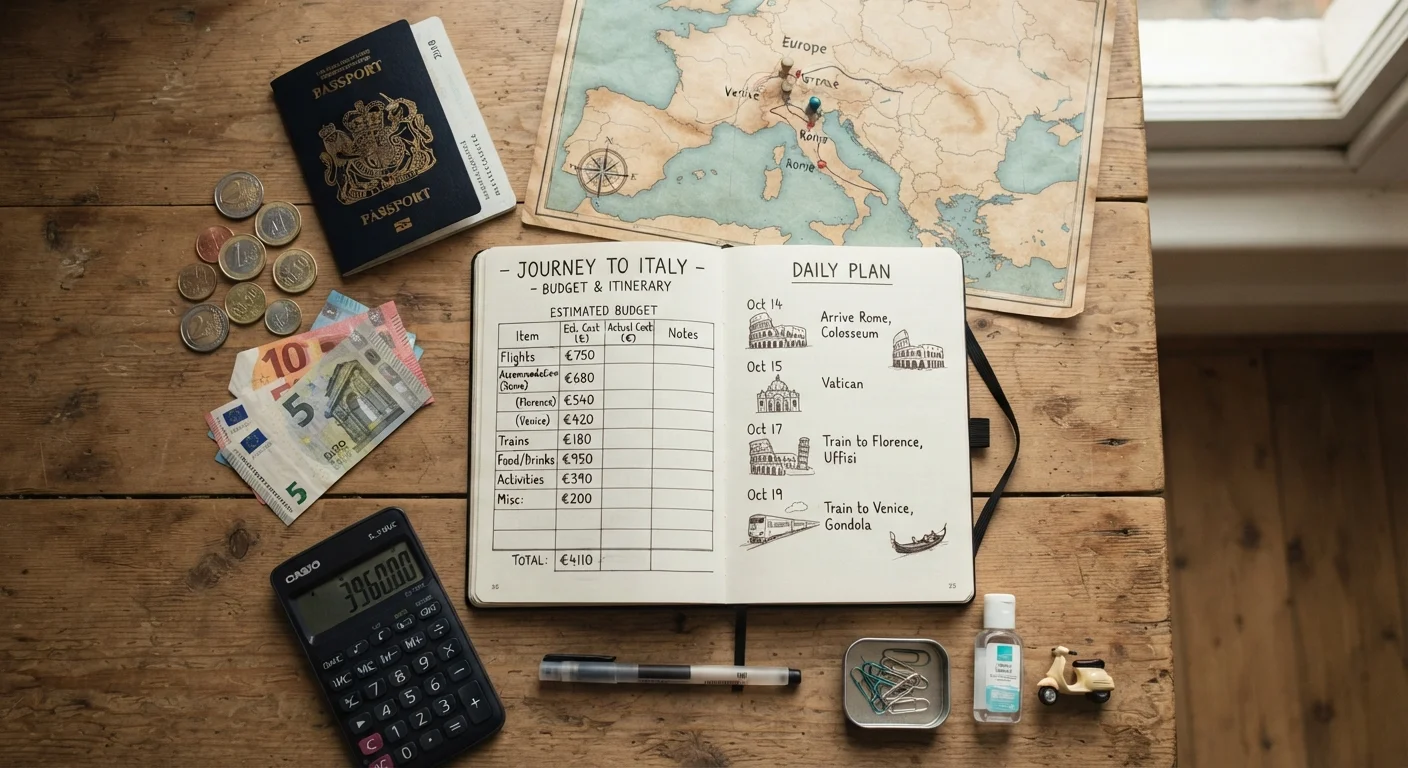
A mental budget is not a budget - it's optimism. Record every category and every figure in a spreadsheet or note. Seeing all costs in one place makes it much easier to spot imbalances and adjust before you've booked anything. Review your figures at least once after a day's break; fresh eyes often catch overlooked costs.
One often-overlooked variable is how your travel pace affects total cost. Slow travel - staying longer in fewer places - consistently produces lower daily costs by reducing transit, accommodation turnover, and the constant expense of orienting yourself somewhere new. If your budget is tight, a single well-chosen destination for ten days will almost always cost less than five cities in the same window.
For those also navigating international currency logistics, understanding how exchange fees work is worth a separate look. Common currency exchange myths can add real, avoidable costs to your trip if left unexamined. Once your budget is complete, use the complete budget travel guide to connect your planning with on-the-ground execution.
Outdated Averages Will Mislead You
Travel cost guides published more than 12-18 months ago can significantly understate current prices in popular destinations, particularly for lodging and food. Always cross-reference any figure you find with current listings or recent firsthand reports before using it in your budget. Inflation and tourism demand shift local prices faster than most published guides are updated.