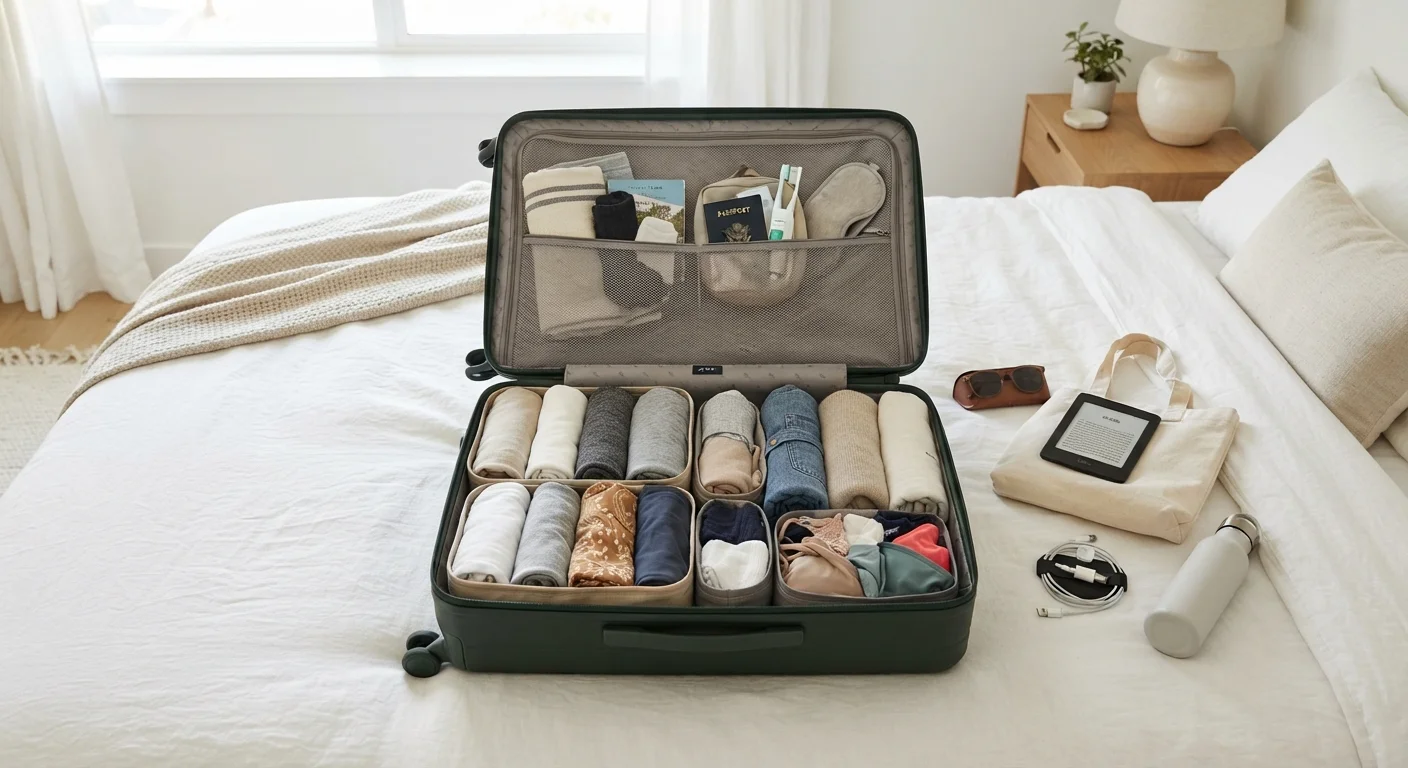
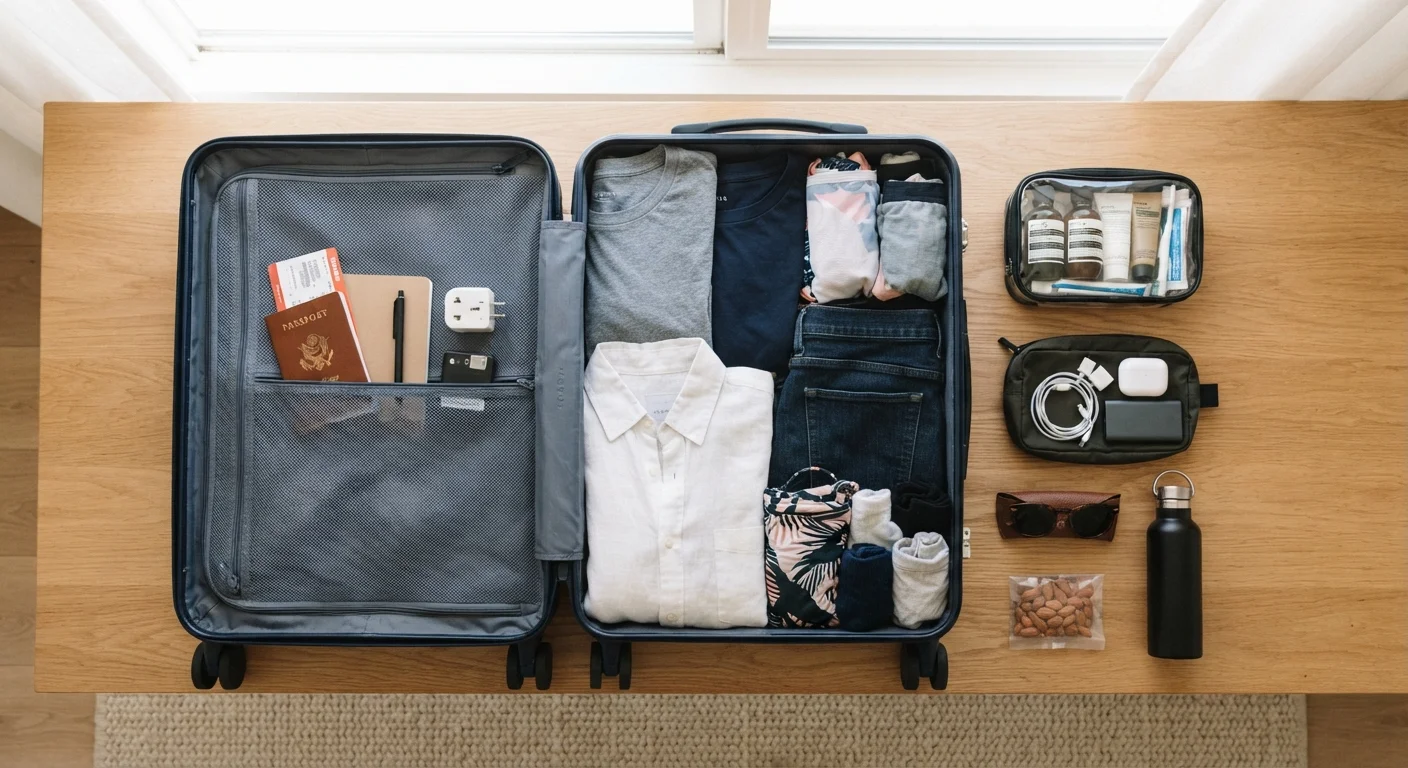
What Carry-On-Only Travel Actually Means
Traveling with only a carry-on means fitting everything you need - clothing, toiletries, electronics, and all - into a single bag that meets your airline's overhead-bin size requirements. Most US carriers cap carry-on dimensions around 22 x 14 x 9 inches, though rules vary by airline and aircraft type. Always verify with your specific carrier before packing.
This approach has grown in popularity as checked baggage fees have climbed. Many domestic and budget international carriers now charge $30-$40 per checked bag each way, meaning a round trip with one bag could cost $60-$80 before you've even left the airport. For frequent travelers, those numbers add up fast. The appeal of carry-on-only travel is real - but so are the compromises. Understanding both sides helps you decide when it's the right call and when it isn't.
For a broader framework on how this fits into low-cost trips, see the complete guide to budget travel.
The Real Advantages of Going Carry-On Only
The benefits of skipping checked baggage go beyond just saving money at the ticket counter.
Avoids checked baggage fees on most carriers
Checked bag fees typically run $30-$40 per bag per direction on domestic US flights. A round trip for two travelers can easily cost $120-$160 in fees alone - money that stays in your pocket with carry-on-only travel.
Eliminates wait time at baggage claim
Skipping baggage claim can save 30-45 minutes at arrival, letting you reach your hotel, rental car, or ground transport faster - a genuine quality-of-life improvement on any trip.
Removes the risk of lost or delayed luggage
Airlines occasionally misroute or delay checked bags. Keeping everything in the cabin means your belongings arrive when you do, every time.
Encourages intentional, lighter packing
The constraint forces thoughtful editing - travelers who pack light often report feeling less burdened and more flexible on the road, especially when navigating transit, stairs, or cobblestone streets.
Easier to move quickly between destinations
Carry-on-only travelers can make last-minute flight changes, use smaller regional airports, and move through busy hubs with significantly less friction.
$30-$40
Typical checked bag fee per direction
Most major US carriers charge between $30 and $40 per checked bag each way, according to publicly posted airline fee schedules.
30-45 min
Average time saved by skipping baggage claim
Industry estimates suggest domestic baggage claim waits average 30 to 45 minutes, varying by airport size and time of day.
Speed is one of the most underrated advantages. Without waiting at baggage claim - which can easily add 30-45 minutes to any arrival - you move from gate to ground transportation faster. On tight itineraries or trips involving multiple city stops, that time genuinely matters.
There's also the peace-of-mind factor: your bag is with you the entire flight. Checked luggage does occasionally get delayed, misdirected, or lost - an experience that can derail the first day of a trip. Carry-on-only eliminates that risk entirely.
The Honest Disadvantages You Should Weigh
Carry-on-only isn't without real friction, and it's worth being clear-eyed about the constraints before committing.
Strict limits on clothing volume and variety
Fitting clothes for 10-plus days into a carry-on requires accepting a limited wardrobe. Travelers heading to mixed-climate destinations or packing for multiple dress codes often find this genuinely restrictive.
Liquids and toiletries are tightly restricted
TSA's 3-1-1 rule limits liquids to containers of 3.4 oz or less in a single quart-sized bag. Full-size shampoos, sunscreens, and skincare products must be checked, shipped ahead, or bought at the destination.
Budget carriers may charge for overhead bin access
Some low-cost international airlines - particularly in Europe - treat overhead bin space as a paid upgrade. Travelers assuming carry-on is always free can be surprised at the gate.
No room for bulky or specialized gear
Ski equipment, hiking boots, scuba gear, formal wear, or large camera rigs simply don't fit in most carry-ons. These trip types almost always require a checked bag.
Overhead bin space isn't guaranteed
On full flights, bins can fill before later boarding groups reach their seats. Gate agents may check your carry-on at no charge - but it defeats the purpose of the strategy.
Packing for longer trips - think two weeks or more - in a single carry-on requires ruthless editing. Every item has to earn its place, which means accepting a limited wardrobe and planning outfit combinations deliberately. That level of discipline is genuinely hard for many travelers, particularly those heading to destinations with variable weather or formal events.
There are also practical limits that catch travelers off guard. Full-size toiletries must be checked or shipped ahead. International budget carriers - especially in Europe - often charge separately for overhead bin access, meaning a carry-on isn't always free. And on crowded flights, overhead bin space sometimes fills before boarding is complete, forcing gate-checked bags anyway.
Airline Carry-On Rules Vary - Always Verify
There is no single universal carry-on size standard across US and international carriers. Budget airlines in particular sometimes enforce stricter dimensions or weight limits than legacy carriers. Before you pack, check your specific airline's carry-on policy on their official website. This is especially important on international itineraries where you may fly multiple carriers with different rules on a single trip.
When Carry-On Only Makes the Most Sense
Certain trip profiles are naturally well-suited to this approach. Short trips of three to seven days in warm climates are the sweet spot - fewer layers, minimal bulge from outerwear, and predictable packing needs. City travel, where laundry services are accessible and you're not hauling gear across rough terrain, also pairs well with the carry-on method.
Slow travel itineraries - staying in one place for a week rather than hopping between five cities - actually reduce how much you feel the packing constraint, because you have time to do laundry and settle in. Learn more about why slow travel often costs less and how it changes the calculus on packing.
Conversely, ski trips, beach vacations with snorkel gear, extended international travel, or trips requiring professional attire are cases where a checked bag may simply be worth the fee. Don't force the strategy when the trip doesn't fit it.
Getting your packing approach dialed in before you try carry-on-only travel is essential. The packing strategies that work across every trip type offers a practical place to start building that skill.