Why Tire Pressure Matters More Than Most Drivers Realize
Tire pressure is the one maintenance item that affects nearly every aspect of how your vehicle performs - safety, fuel efficiency, and tire longevity - yet it's also among the most commonly neglected. Studies from the National Highway Traffic Safety Administration (NHTSA) have linked underinflated tires to thousands of crashes annually, including those caused by tire failure at highway speeds.
The good news: checking and correcting tire pressure takes about five minutes and requires only an inexpensive gauge. It's among the highest-value habits in routine car maintenance - and one any driver can handle without mechanical experience.
~1-2 PSI
Pressure lost per month naturally
Tires lose air gradually through normal permeation, making monthly checks a practical necessity.
Up to 3%
Fuel economy improvement from correct inflation
According to the U.S. Department of Energy, properly inflated tires can meaningfully reduce fuel costs over time.
1 PSI
Pressure drop per 10°F temperature decrease
Seasonal temperature swings - particularly in fall and winter - can push tires below safe operating pressure quickly.
How Incorrect Tire Pressure Compromises Safety
Tires are designed to perform within a specific pressure range. Deviate from it in either direction, and handling degrades in ways that may not be obvious until you need to make a sudden maneuver.
Underinflated Tires
When a tire is underinflated, its sidewalls flex excessively under the vehicle's weight. This generates heat - the primary cause of tire blowouts. An underinflated tire also has a larger, distorted contact patch that increases rolling resistance and can cause the vehicle to pull to one side. Braking distances increase because the tire cannot transfer braking force as efficiently.
Overinflated Tires
An overinflated tire is too rigid. Its contact patch shrinks, meaning less rubber is actually gripping the road at any given moment. This reduces traction, particularly in wet or slippery conditions, and makes the vehicle more prone to bouncing over road irregularities. Emergency steering responses become less predictable.
Check Pressure Before Every Long Trip
Before any road trip, check all four tires plus the spare if accessible. Temperature changes along a long route can further affect pressure, and starting with correct inflation gives you a safer margin throughout the journey.
The Fuel Economy and Tire Wear Connection
The U.S. Department of Energy estimates that keeping tires properly inflated can improve gas mileage by up to 3% compared to driving on underinflated tires. At scale - across millions of vehicles - that represents a meaningful reduction in fuel consumption and driving costs.
Tire wear patterns are equally telling. Underinflated tires wear excessively on both outer edges, while overinflated tires wear down the center tread faster. Either pattern significantly shortens the life of a tire that might otherwise last 50,000 miles or more. Maintaining correct pressure helps tires wear evenly across the full tread width, maximizing their usable life.
How to Check and Adjust Tire Pressure Correctly
The right target PSI for your vehicle is printed on a sticker inside the driver's door jamb - not on the tire sidewall. The sidewall number is the tire's maximum allowable pressure, a safety ceiling, not a target. Front and rear tires sometimes have different recommended pressures, so check both.
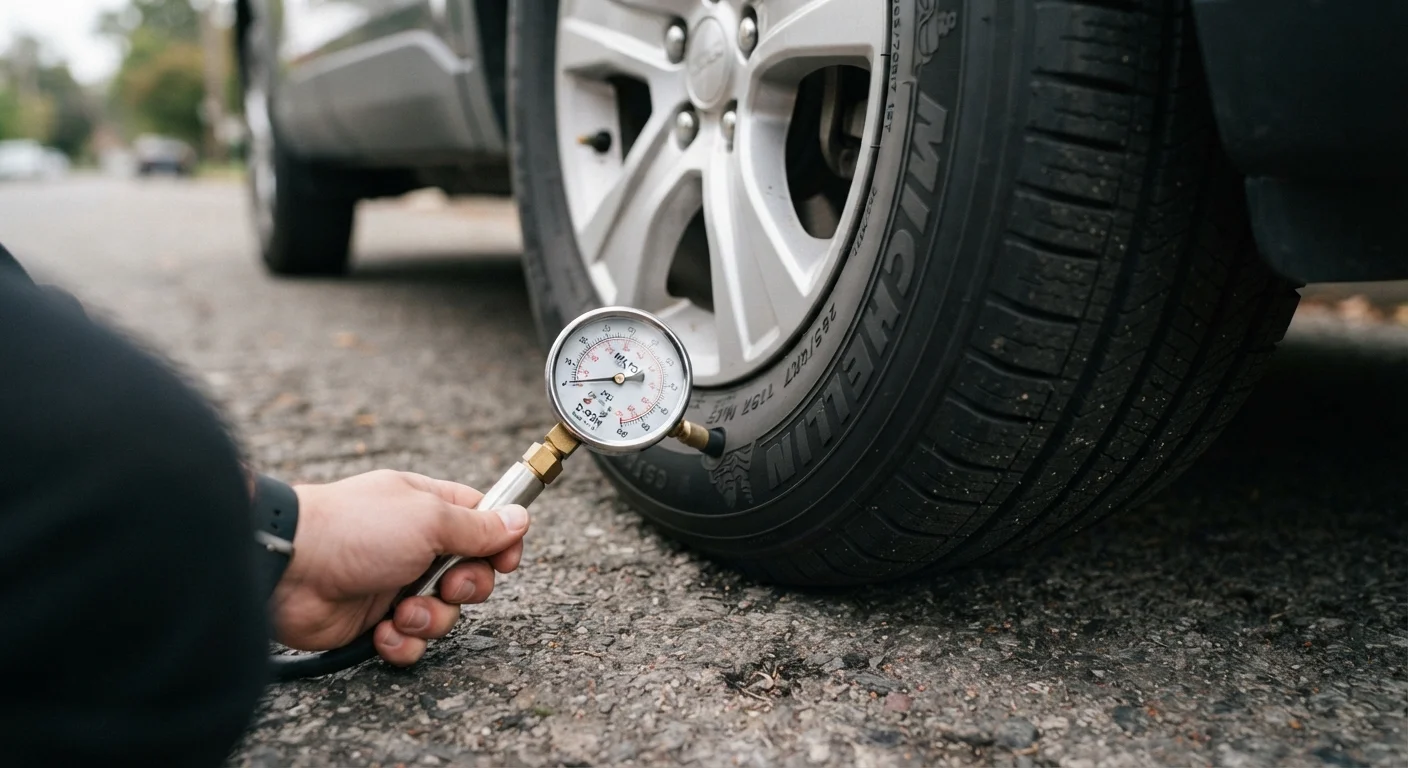
Always measure pressure when tires are cold - before driving or after the car has sat for at least three hours. A digital or dial gauge gives more reliable readings than a stick-type gauge. If pressure is low, add air in short bursts and recheck. If it's high, use the small pin in the center of the valve stem to release air gradually.
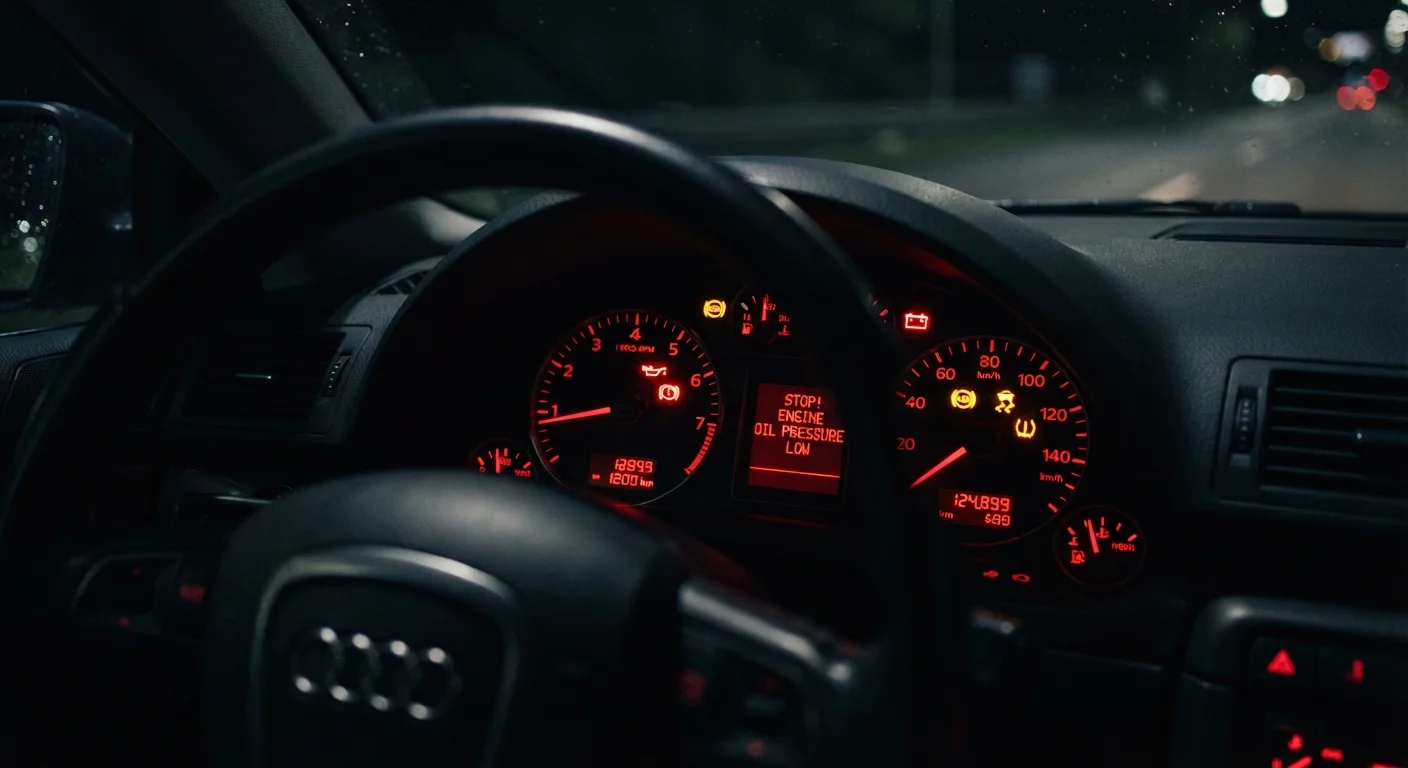
Your vehicle's Tire Pressure Monitoring System (TPMS) is a useful safety net, but it only activates when pressure is roughly 25% below recommended levels - a significant deficit. Don't wait for the light. For a full explanation of what TPMS and other warning lights mean, see Your Car's Warning Lights, Decoded.
Seasonal Pressure Checks Are Essential
Tire pressure drops approximately 1 PSI for every 10°F decrease in ambient temperature. When fall transitions to winter, tires that were fine in September may be noticeably underinflated by November without a single slow leak. Build a habit of checking pressure at the start of each season at minimum.