Why Warning Lights Matter
Your car's dashboard warning lights aren't decoration - they're a built-in alert system designed to flag problems before they become expensive or dangerous. Yet many drivers confess to driving for weeks with an unfamiliar light glowing, unsure whether to panic or ignore it entirely.
The key distinction most drivers miss: color tells you urgency. Red lights signal immediate action required - stop safely as soon as possible. Amber or yellow lights typically mean a non-emergency issue that still needs prompt attention. Blue and green lights are simply informational (high beams on, turn signal active). Understanding this color logic alone can prevent a minor maintenance issue from turning into a roadside emergency.
For a broader foundation on vehicle ownership basics, see everything new drivers should know about car maintenance.
| Red light urgency | Requires immediate or same-day action |
| Amber/yellow light urgency | Schedule service within days to a week |
| OBD-II standard adopted | Required on all US cars from model year 1996 (U.S. EPA mandate) |
| TPMS required by law | Mandatory on all new US passenger vehicles since 2008 (TREAD Act, NHTSA) |
| Flashing vs. steady check engine | Flashing = active misfire, act promptly; Steady = get it diagnosed soon |
| Oil pressure light response | Stop driving - continued operation risks severe engine damage |
The Most Common Warning Lights, Explained
Here's what the lights you're most likely to encounter actually mean - and what to do when they appear.
OBD-II
On-Board Diagnostics II - a standardized system in vehicles built after 1996 that monitors engine and emissions systems. A scanner tool can read diagnostic trouble codes (DTCs) stored when a warning light activates.
Malfunction Indicator Lamp (MIL)
The technical term for the check engine light. It illuminates when the vehicle's onboard computer detects a fault in the engine, transmission, or emissions system.
TPMS
Tire Pressure Monitoring System - a sensor-based system that alerts the driver when one or more tires falls significantly below the recommended air pressure.
ABS
Anti-lock Braking System - a safety feature that prevents wheels from locking up during hard braking, helping the driver maintain steering control. An ABS warning light signals a fault in this system.
Catalytic Converter
An emissions control device in the exhaust system that converts harmful pollutants into less toxic gases. A flashing check engine light can indicate misfires that overheat and damage this component.
Diagnostic Trouble Code (DTC)
A standardized code stored by the vehicle's computer when a system fault is detected. Mechanics use OBD-II scanners to read these codes and identify the source of a warning light.
Check Engine (Malfunction Indicator Lamp): This amber engine-shaped icon is the most misunderstood light on any dashboard. It can signal anything from a loose gas cap to a failing catalytic converter. A steady light means get it diagnosed soon; a flashing check engine light indicates an active misfire that can damage the catalytic converter - reduce speed and seek service promptly. Don't ignore it, but don't abandon your car on the highway either.
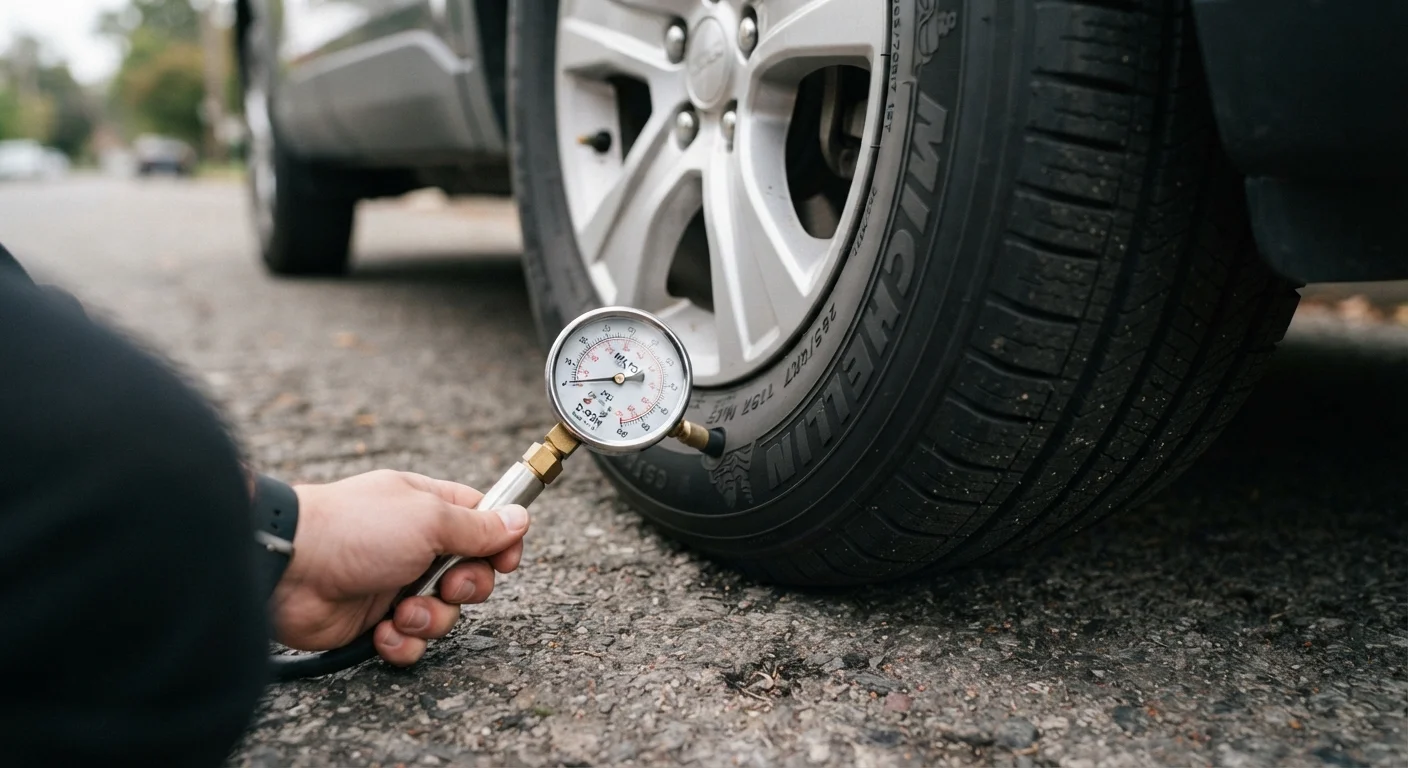
Tire Pressure Monitoring System (TPMS): Looks like a flat tire cross-section with an exclamation point. This light activates when one or more tires drops roughly 25% below the recommended PSI. Check all four tires (and your spare if accessible) with a gauge. Driving on significantly underinflated tires affects handling and fuel economy. For a deeper look at PSI and its effects, see how tire pressure affects safety and fuel economy.
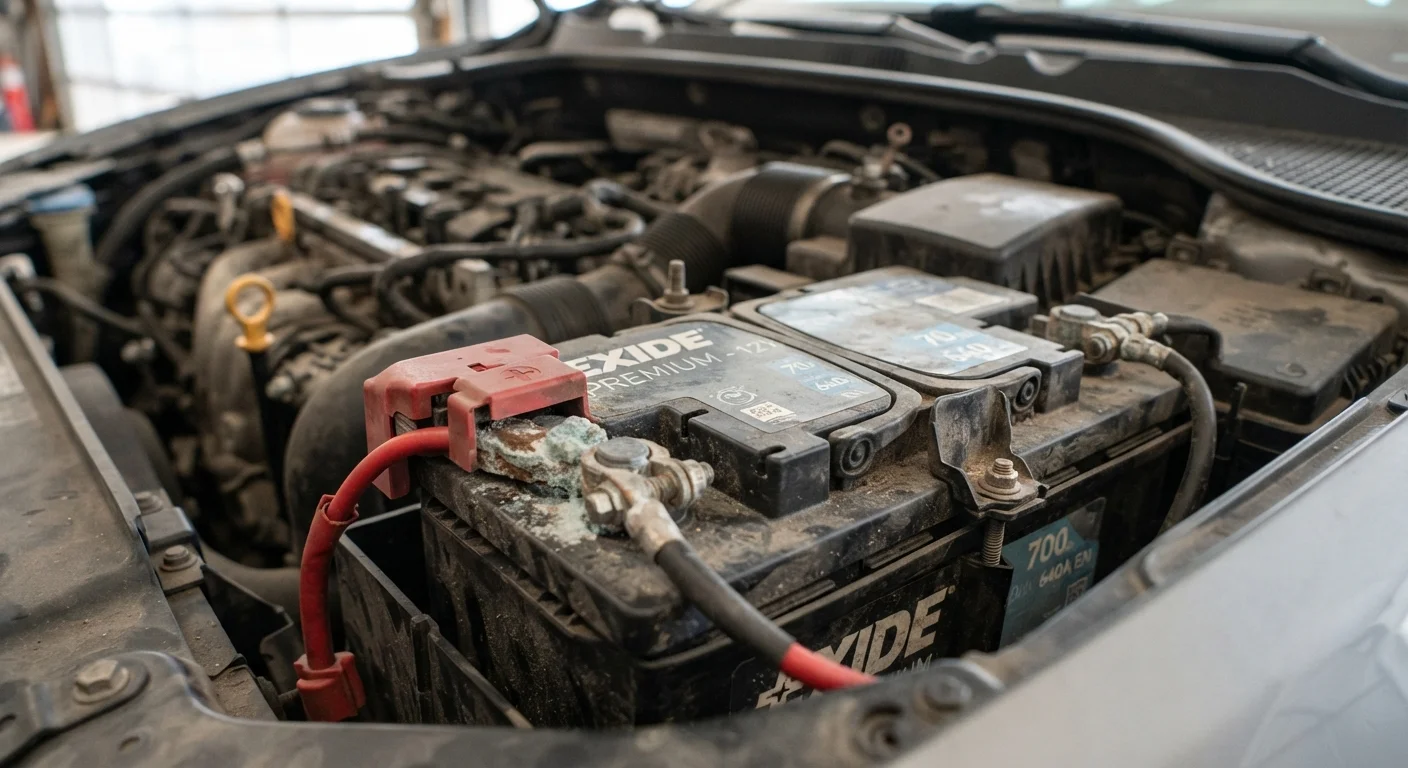
Battery Warning: A red battery icon means the charging system isn't maintaining voltage - this could point to a failing alternator, a worn battery, or a loose connection. If this light appears while driving, reduce electrical load (turn off AC, heated seats) and head to a shop. A related set of symptoms often appears before this light ever activates - learn the early warning signs of a failing battery.
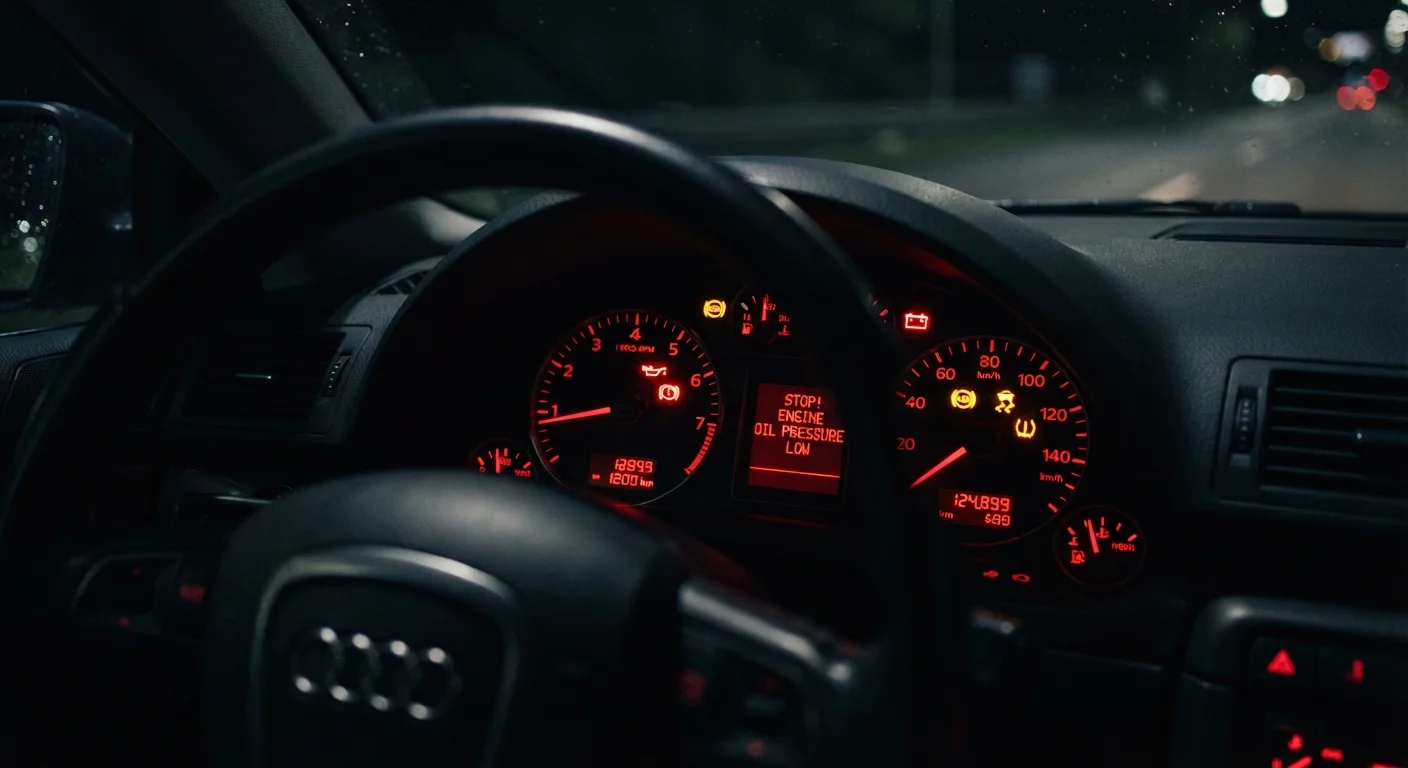
Oil Pressure Warning: A red oil can icon is one of the most serious lights your car can show. Low oil pressure means engine components aren't being lubricated - continued driving can cause catastrophic engine damage within minutes. Pull over safely, shut off the engine, and check your oil level before proceeding.
Temperature Warning: A red thermometer in liquid means your engine is overheating. Stop driving as soon as it's safe. Do not open the radiator cap when hot. Allow the engine to cool fully before inspecting coolant levels.
ABS Warning: The amber ABS light signals a fault in your Anti-lock Braking System. Your standard brakes still work, but the system that prevents wheel lockup during hard stops may not engage correctly - exercise extra caution in wet or slippery conditions and schedule service soon.
Traction Control / Stability Control: A briefly flashing traction control light (a car with squiggly lines) is normal on slippery roads - it means the system is actively working. A steady light indicates the system is off or has a fault.
When to Act Immediately vs. Schedule Service
Not every light demands you pull over immediately, but none should be permanently ignored. As a general guide:
- Pull over now: Oil pressure, engine temperature, brake system (red), battery warning while driving
- Schedule service within days: Check engine (steady), ABS, TPMS, traction control fault
- Monitor and address soon: Low fuel, service due reminders, washer fluid
Warning Light Symbols Vary by Manufacturer
While many warning lights follow broadly standardized icons, some symbols differ between automakers and model years. A light that looks like a genie lamp on one vehicle might appear as an oil can on another. Always cross-reference your owner's manual for the definitive meaning of any unfamiliar symbol on your specific vehicle. If you've misplaced your manual, most automakers make digital versions available through their official websites.
Your owner's manual includes a complete, vehicle-specific guide to every warning light - including symbols that vary by manufacturer. Consulting it is always your most accurate first step. If you haven't read yours, this guide to reading your owner's manual explains what to look for and where to find it.
When in doubt, a certified mechanic can retrieve stored diagnostic trouble codes (DTCs) using an OBD-II scanner - a quick, typically inexpensive diagnostic step that identifies exactly which system triggered the light.