
Why Battery Warning Signs Matter
A dead battery is one of the most common reasons drivers find themselves stranded - and one of the most preventable. Unlike a blown tire or a sudden mechanical failure, battery decline is gradual. It sends signals well before the final failure, giving attentive drivers a reasonable window to act. The challenge is knowing what to look for.
Batteries weaken through a combination of age, temperature cycles, and the natural wear of repeated charge-and-discharge use. Understanding the warning signs doesn't require any mechanical expertise - just knowing what's normal for your car and what feels different. The six signs below cover the most reliable indicators that your battery is approaching the end of its useful life.
Cold Weather Accelerates Battery Strain
Cold temperatures significantly reduce a battery's ability to deliver current - a battery that seems adequate in summer may fail its first hard winter test. If you live in a region with harsh winters, consider having your battery tested each fall. This is also a good reason to include battery checks in any pre-winter maintenance routine.
Six Warning Signs Your Battery Is Failing
Slow or labored engine cranking
When you turn the key or press the start button, a healthy battery delivers a quick, confident engine start. If you notice the engine cranking slowly - almost like it's struggling to turn over - that sluggishness is a direct symptom of reduced battery output. The battery powers the starter motor, and as capacity fades, it simply can't deliver the same surge of current it once could.
This symptom tends to be most noticeable on cold mornings, when the battery is already working harder against lower temperatures. Don't dismiss a slow crank as a fluke - treat it as an early alert worth investigating.
A slow crank is the battery's clearest distress signal - don't ignore it.
Dimming headlights or interior lights
Your vehicle's electrical system - lights, climate control, infotainment - draws power from both the battery and the alternator. When the battery weakens, voltage output drops, and you may notice headlights appear dimmer than usual, especially at idle. Interior dome lights may also look noticeably faded compared to how bright they once were.
A quick test: switch on your headlights while the engine is off. If they appear weak, the battery is likely struggling. Once you start the engine, if the lights brighten considerably, that points toward a battery that can barely hold a resting charge on its own.
Dimming headlights at idle are a low-voltage clue your battery is fading.
Frequent need for jump-starts
An occasional jump-start after accidentally leaving lights on is a normal mishap. But if you find yourself needing jumps repeatedly over a short period - even without any obvious drain - the battery has likely lost the ability to hold a proper charge. Each jump-start cycle on an already-degraded battery depletes it further.
At this stage, the battery isn't just weak - it's near the end of its functional life. Continuing to jump-start a dying battery creates a dependency cycle that can also put stress on your alternator over time.
Repeated jump-starts signal a battery that can no longer hold a reliable charge.
Visible corrosion on battery terminals
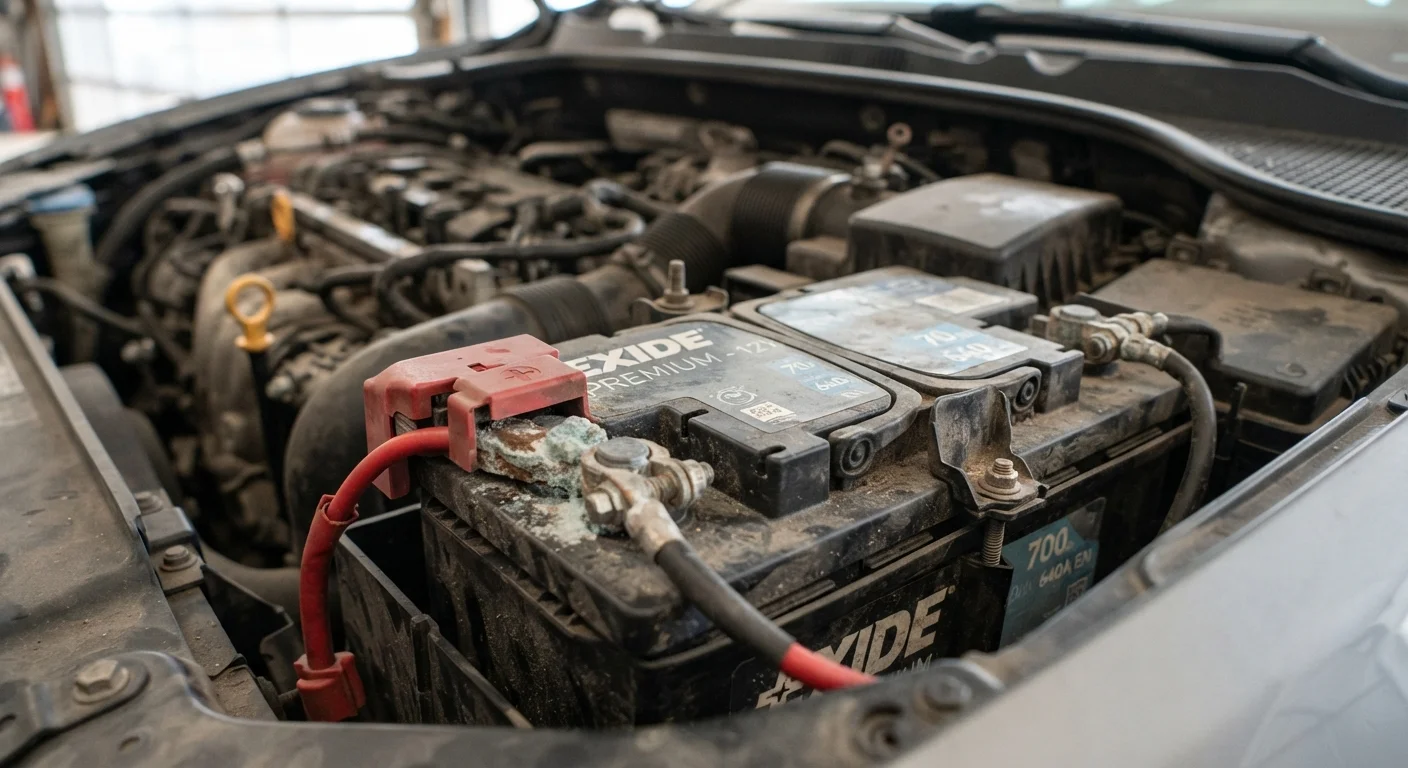
Take a look under the hood at the battery terminals - the metal posts where cables connect. A white, bluish, or grayish powdery buildup is a sign of corrosion caused by hydrogen gas escaping from battery acid reacting with surrounding metals. This corrosion increases electrical resistance, effectively strangling the current flow between the battery and the rest of the vehicle.
Minor corrosion can sometimes be cleaned carefully, but heavy buildup often indicates the battery casing is venting more than it should - a sign of an aging or overcharged battery. If you're unsure whether cleaning or replacement is needed, a qualified mechanic can assess the terminal condition and test battery health.
Terminal corrosion raises electrical resistance and accelerates overall battery decline.
Battery warning light on the dashboard
Most vehicles display a battery-shaped warning icon on the dashboard when the charging system detects a problem. This light can indicate a weak battery, a failing alternator, a loose belt, or a wiring issue - all of which affect how the battery charges while the engine runs.
Don't assume the light will resolve itself. A dashboard warning that stays on after startup warrants attention. Understanding what your dashboard warning lights mean can help you prioritize how urgently you need to act. When the battery light is on, having the charging system tested at a qualified shop is a practical first step.
A persistent battery warning light means the charging system needs professional attention.
Age beyond three to five years
Car batteries don't last forever - most conventional lead-acid batteries have a typical service life of three to five years, though this varies based on climate, driving patterns, and battery type. Drivers in hot climates often see shorter lifespans because heat accelerates internal corrosion and fluid evaporation inside the battery.
If your battery is approaching or past the four-year mark, proactive testing is a smart move - even if you haven't noticed any obvious symptoms yet. Many auto parts stores offer complimentary battery load tests that can indicate remaining capacity. Addressing battery health before a failure happens is far less disruptive than being stranded. Seasonal vehicle checkups are an ideal time to add battery testing to your routine.
Most batteries decline significantly after four years, regardless of visible symptoms.
Test Before a Long Drive
Before any extended trip, make battery health part of your pre-departure checklist. A weakened battery that holds up for short commutes may not survive the sustained electrical demands of a long highway drive. See our pre-trip safety walkthrough for a complete checklist of what to inspect before hitting the road.
What to Do When You Spot These Signs
If you recognize one or more of these warning signs, the most practical next step is a professional battery load test. This test measures how well the battery performs under real electrical demand - far more revealing than just checking the resting voltage with a basic multimeter. Many service shops and roadside assistance programs offer this test as a standard diagnostic.
Replacing a battery before it fails completely is nearly always less costly and less disruptive than dealing with a no-start situation far from home. If you're planning any extended travel, adding a battery check to your road trip vehicle prep is a straightforward way to reduce the risk of an avoidable breakdown.
When a replacement is necessary, a qualified mechanic can confirm the correct battery specifications for your vehicle and ensure proper installation - particularly important for modern vehicles with complex electrical systems that may require a reset procedure after battery replacement.