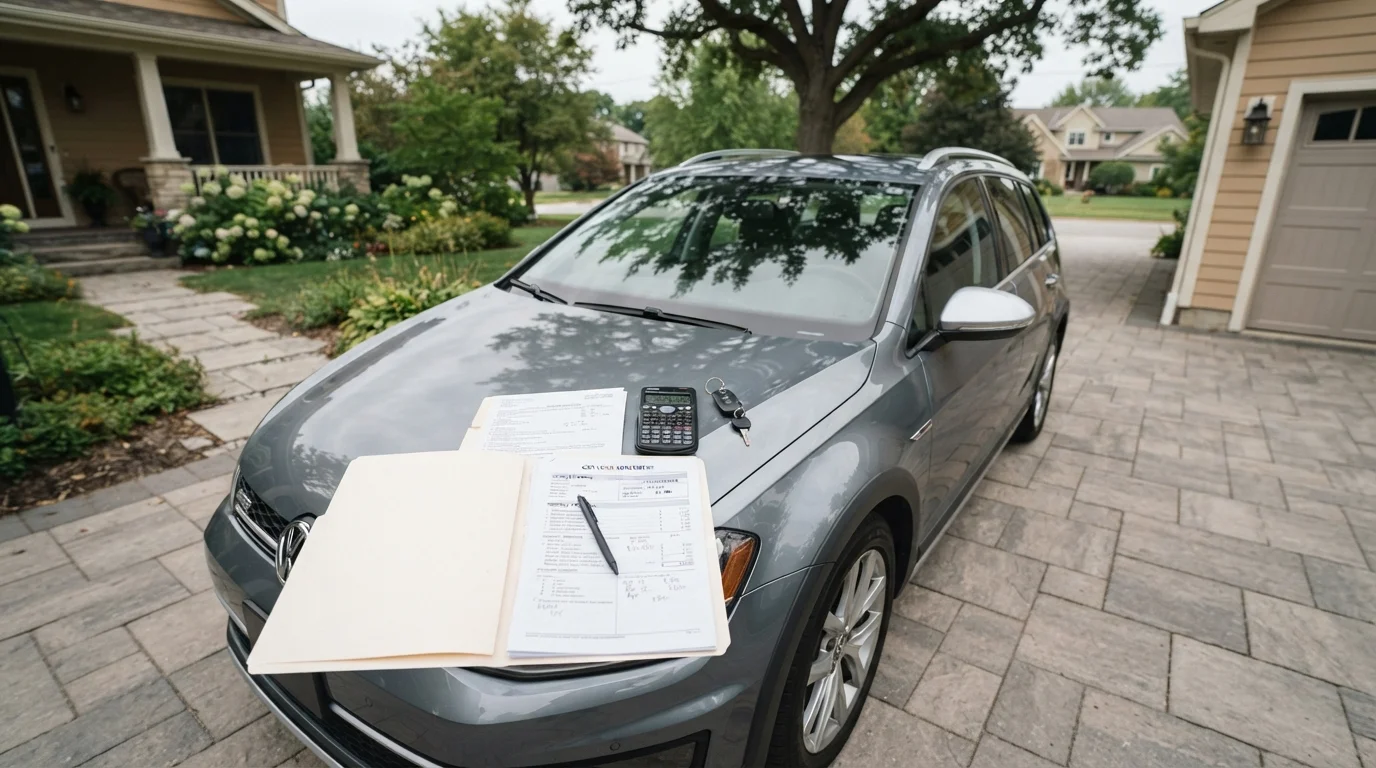

What Leasing Actually Means
When you lease a vehicle, you're paying for the right to use it for a set term - typically 24 to 36 months - rather than purchasing it. Your monthly payment covers the vehicle's depreciation during the lease period, plus interest (called the money factor) and fees. At the end of the term, you return the car to the dealer.
This is a fundamentally different financial arrangement than taking out an auto loan. With a loan, every payment builds toward ownership. With a lease, you're essentially renting - with stricter rules attached. Understanding that distinction is the starting point for evaluating whether leasing fits your situation. For a broader comparison of these structures, see Financing vs. Leasing vs. Buying Outright.
The Money Factor Explained
The money factor is the interest rate equivalent in a lease, expressed as a small decimal (e.g., 0.00125). To convert it to an approximate annual percentage rate, multiply by 2,400. A money factor of 0.00125 equals roughly a 3% APR. Dealers are not always required to disclose this figure upfront, so it's worth asking for it directly and comparing it against prevailing market rates before signing.
The Real Advantages of Leasing
Leasing has genuine appeal, and it's not just marketing. For certain drivers, it offers meaningful practical and financial benefits.
Lower monthly payments than financing the same vehicle
Because you're paying only for depreciation during the lease term rather than the full vehicle price, monthly lease payments are typically lower than loan payments for the same car - sometimes meaningfully so.
Drive a newer vehicle more frequently
A standard two- to three-year lease cycle means you're regularly in a vehicle with the latest safety technology, fuel efficiency improvements, and updated features - without managing a trade-in or private sale.
Manufacturer warranty typically covers the lease term
Most new-vehicle factory warranties align with common lease lengths, meaning major mechanical repairs are generally covered, reducing out-of-pocket maintenance exposure.
Lower or no down payment compared to purchasing
Many leases require little upfront cash, which can preserve capital for other financial priorities - though rolling costs into a lease isn't without its own trade-offs.
No trade-in hassle at end of term
Simply return the vehicle at lease-end. You avoid the negotiation, paperwork, and uncertainty of selling or trading in a used vehicle.
~30%
Share of new vehicle transactions that are leases
Lease share of new vehicle transactions has historically hovered around 25-30% in the US, reflecting steady but selective demand, according to industry tracking data.
2-3 yrs
Typical lease term length
Most consumer leases run 24 to 36 months, designed to align with manufacturer warranty periods and model refresh cycles.
The Trade-Offs You Need to Know
The downsides of leasing are just as real, and they're often underemphasized in the sales process. Several of these drawbacks have a compounding effect over time.
No equity or ownership built over time
Every lease payment is a sunk cost. Unlike a financed purchase, you have nothing to show for years of payments - no asset, no trade-in value, no resale proceeds.
Mileage limits can result in steep fees
Leases typically cap annual mileage at 10,000-15,000 miles. Exceeding those limits triggers per-mile overage charges that can add up to hundreds or thousands of dollars at lease return.
Early termination is costly and complicated
Breaking a lease before the term ends - due to job loss, relocation, or lifestyle change - typically involves substantial early termination fees, often equivalent to several remaining payments.
Wear-and-tear charges at return
Lessors define acceptable wear, and anything beyond that standard - scratches, tire wear, minor dings - results in charges assessed when you return the vehicle.
Perpetual payments with no end in sight
Rolling from lease to lease means you're always making a car payment. A purchased vehicle, once paid off, frees up that monthly cash flow entirely.
Restrictions on customization and use
You cannot modify a leased vehicle, and some leases restrict use across state or national borders. The car must be returned in original, unmodified condition.
Excess mileage fees - commonly $0.15 to $0.30 per mile over the limit - can result in hundreds or even thousands of dollars owed at lease return. Combined with charges for wear deemed excessive by the lessor, end-of-lease costs can significantly erode the payment savings you enjoyed during the term. For a fuller picture of what vehicle ownership costs across every dimension, see The True Cost of Owning a Car Beyond the Sticker Price.
Who Leasing Is - and Isn't - Right For
Leasing suits a specific profile: a driver who stays under 12,000-15,000 miles per year, maintains the vehicle carefully, values driving a newer model with current safety and tech features, and benefits from the lower monthly payment for cash-flow reasons. Business owners who can deduct lease payments as a business expense sometimes find leasing advantageous from a tax standpoint - a qualified accountant can clarify what applies to your situation.
Leasing is a poor fit if you drive heavily, want to modify your vehicle, frequently face life changes that could require exiting a contract early, or prefer building long-term value through ownership. If you're comparing lease payments to loan payments, factor in that a financed vehicle eventually becomes an asset you own free and clear. The Auto Loan Basics guide explains the key loan terms worth understanding before making that comparison.
This article is for general informational purposes only and does not constitute financial or legal advice. Consult a qualified financial professional for guidance specific to your situation.