
How Auto Loans Actually Work
An auto loan is a secured installment loan - meaning the vehicle itself serves as collateral. A lender (a bank, credit union, or finance company) pays the dealer on your behalf, and you repay the lender over a fixed period in equal monthly installments that include both principal and interest.
Because the car is collateral, the lender holds the vehicle's title until the loan is paid in full. If payments stop, the lender has the legal right to repossess the vehicle. This secured structure is why auto loan rates are typically lower than unsecured personal loans, but it also means the stakes of defaulting are immediate and tangible.
For a broader look at how financing compares to leasing or buying outright, see Financing vs. Leasing vs. Buying Outright - it lays out the practical trade-offs of each path.
Key Loan Terms You Need to Know
Understanding the language of auto loans is essential before you can evaluate any offer clearly. These are the terms that most directly affect what you pay.
Principal
The original amount of money you borrow. Interest is charged on the outstanding principal balance as you repay the loan.
APR (Annual Percentage Rate)
The yearly cost of borrowing expressed as a percentage, incorporating the interest rate plus certain lender fees. It allows a more apples-to-apples comparison between loan offers than the interest rate alone.
Loan Term
The length of time you have to repay the loan, typically expressed in months (e.g., 48 or 60 months). It directly affects both your monthly payment and how much total interest you pay.
Amortization
The process of spreading loan repayment across scheduled payments. Early payments go mostly toward interest; as the balance falls, more of each payment reduces the principal.
Down Payment
The amount of money you pay upfront at the time of purchase. A higher down payment reduces the amount you need to borrow.
Collateral
An asset pledged to secure a loan. In an auto loan, the vehicle itself is the collateral - the lender can reclaim it if payments aren't made.
GAP Insurance
A type of coverage that pays the difference between what you owe on your loan and what your car is worth if it's totaled or stolen, protecting you from owing money on a car you no longer have.
For a deeper explanation of how APR and amortization interact across any type of debt, the Interest Rate Basics guide is a useful reference.
How Your Credit Score Affects Your Loan
Your credit score is one of the most significant variables a lender uses to set your interest rate. Borrowers with higher scores typically qualify for lower rates; those with lower scores face higher rates that can meaningfully increase total loan cost.
Lenders generally group applicants into tiers. While exact thresholds vary by lender, a score above 700 typically qualifies for more competitive rates, while scores below 600 often result in significantly higher APRs - or the need for a co-signer. Even a difference of a few percentage points in APR can translate to hundreds of dollars in additional interest over a 60-month loan.
Get Pre-Approved Before You Shop
Securing a loan pre-approval from a bank or credit union before visiting a dealership gives you a concrete rate to use as a comparison point. It also separates the negotiation of the vehicle price from the financing discussion, which can make both conversations cleaner and more transparent.
If your credit profile needs work before you apply, reviewing common personal finance terms can help you better understand the factors that influence your score and borrowing power.
Down Payments, Loan Term Trade-offs, and Total Cost
Two of the most controllable variables in an auto loan are your down payment and the loan term. Both directly affect what you pay each month and what you pay in total.
Down payment: A larger upfront payment reduces the amount you finance, which lowers monthly payments and cuts the total interest you'll pay. It also creates a buffer against depreciation - new vehicles can lose 15-20% of their value in the first year, and a small down payment can leave you owing more than the car is worth.
Loan term: Shorter terms (36-48 months) come with higher monthly payments but substantially less total interest. Longer terms (60-84 months) spread payments out but increase total cost. A 72-month loan at the same rate as a 48-month loan will cost more overall, even if the monthly amount feels manageable.
Don't Focus Only on Monthly Payments
Dealers and lenders sometimes emphasize monthly payment amounts rather than total loan cost, because lower payments on longer-term loans can feel manageable even when total interest is significantly higher. Always calculate the full repayment amount - monthly payment multiplied by number of months, plus any fees - before comparing offers.
The real measure of a loan's affordability is not the monthly payment alone - it's the total amount repaid. Always multiply your monthly payment by the number of months, then add any fees, to get a true comparison point between offers.
To understand how auto financing fits into the full picture of what a vehicle actually costs you over time, see the real cost of car ownership.
What to Watch for Before You Sign
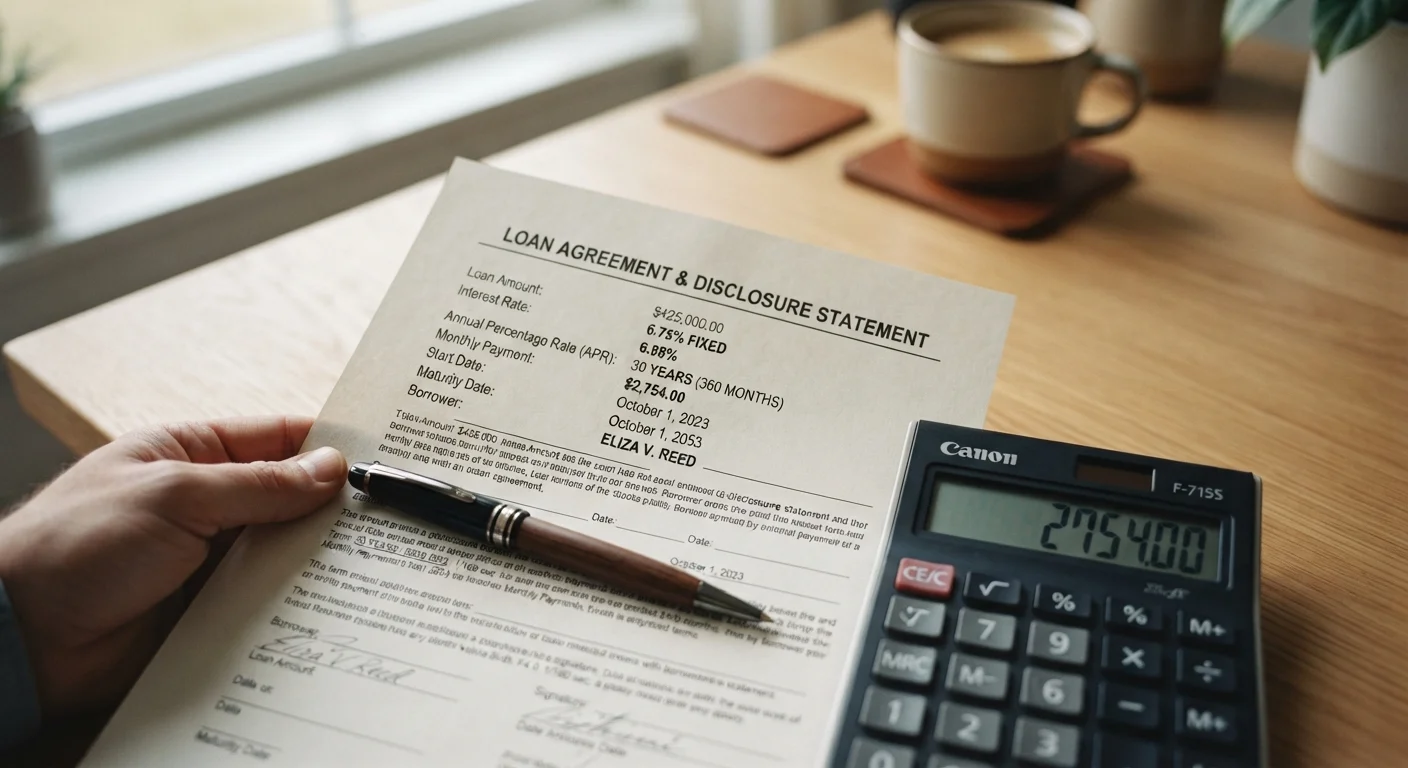
Reading a loan agreement carefully before signing is not optional - it's where the real terms live. A few areas deserve close attention.
- Prepayment penalties: Some loans charge a fee if you pay off the balance early. If you plan to pay ahead of schedule, confirm there's no penalty.
- Add-on products: Dealers may bundle extended warranties, GAP insurance, or credit insurance into the loan. These may have value in certain situations, but adding them to the financed amount means you pay interest on them too.
- GAP coverage: If your car is totaled or stolen, standard auto insurance pays only the vehicle's current market value - not what you owe. GAP (Guaranteed Asset Protection) insurance covers the difference if you owe more than that. It can be worth considering on longer-term loans with small down payments, but it's wise to compare pricing from your auto insurer rather than only through the dealer.
- Rate markups: When financing through a dealership, the dealer may mark up the rate above what the lender requires. Getting pre-approved by a bank or credit union beforehand gives you an independent benchmark to compare against.
If you're weighing whether a loan is the right structure at all, leasing a car presents a balanced look at the alternative.
This article provides general financial education only and is not personalized financial or legal advice. Consult a qualified financial professional before making decisions based on your individual circumstances.