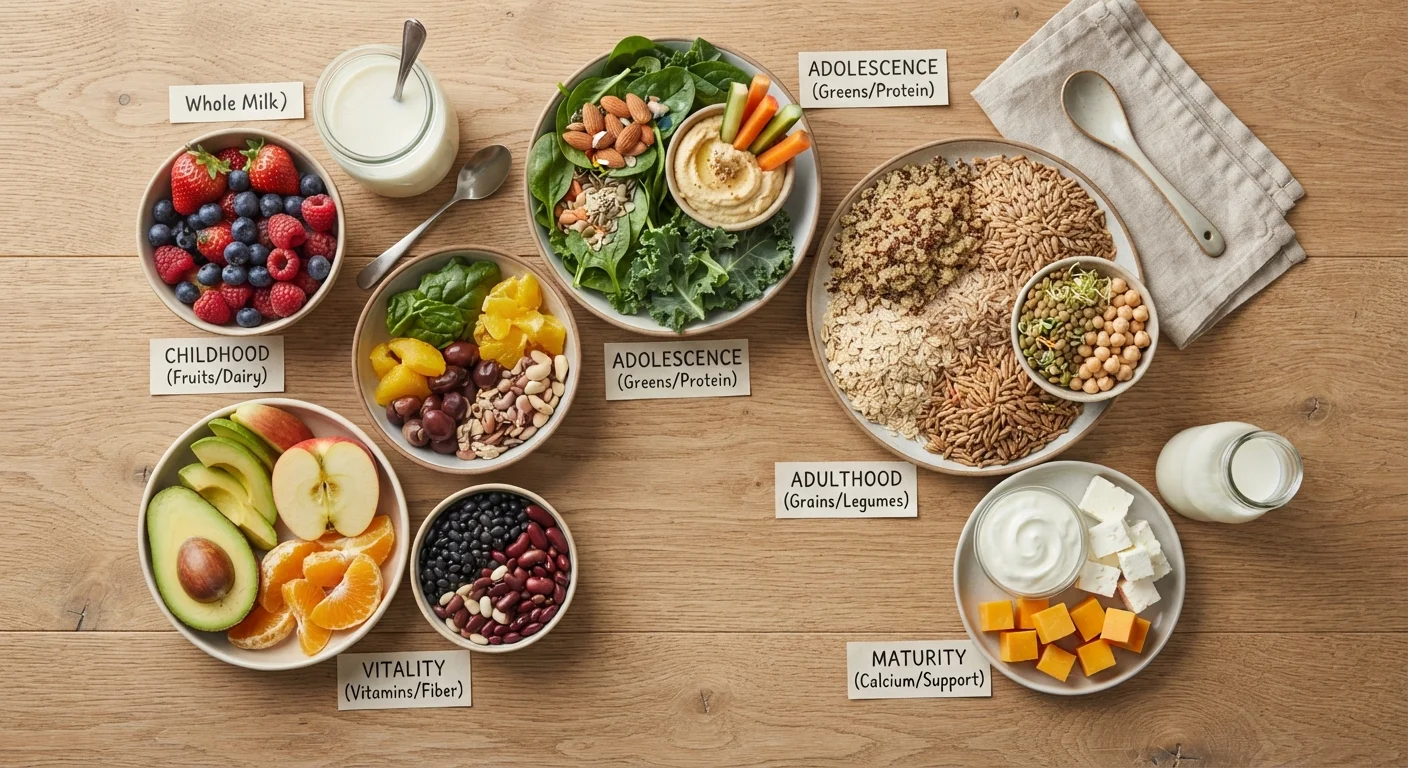

Why Patterns Matter More Than Individual Foods
Nutrition science has spent decades isolating single nutrients - fat, sugar, fiber, antioxidants - only to find that real-world health outcomes are shaped by how foods combine and recur across weeks, months, and years. Researchers studying large populations consistently find that overall dietary patterns, not individual foods or nutrients, are the strongest predictors of chronic disease risk and longevity.
This shift in framing matters practically. It means that one indulgent meal changes little, and that one so-called superfood changes little too. What accumulates is the pattern: what you eat most of the time, in what proportions, and how processed it is. For readers trying to cut through conflicting headlines, this is genuinely clarifying - rather than optimizing endlessly for individual choices, the goal is to build a recognizable overall structure. See our look at nutrition claims science doesn't fully support for context on why single-food thinking so often misleads.
“The emphasis should be on dietary patterns rather than on individual foods or nutrients. No single food will make or break your health - what matters is the overall quality and consistency of what you eat over time.”
— Walter Willett, Professor of Epidemiology and Nutrition, Harvard T.H. Chan School of Public Health
The Core Features of Evidence-Backed Eating Patterns
Several distinct dietary traditions - Mediterranean, DASH, traditional Okinawan, and others - differ in their specifics but share a recognizable set of structural features. The research literature consistently highlights these common denominators:
Build most meals around vegetables, legumes, and whole grains
These food groups supply dietary fiber, vitamins, minerals, and phytocompounds linked to reduced risks of cardiovascular disease, type 2 diabetes, and certain cancers. Their high fiber content also supports gut microbiome diversity, which is an active area of health research. Populations with the lowest rates of diet-related chronic disease overwhelmingly eat plant-forward diets as a baseline.
Choose minimally processed foods over ultra-processed alternatives
Ultra-processed foods (industrially manufactured items with long ingredient lists including additives, colorings, and flavor enhancers) are consistently associated with higher all-cause mortality, obesity, and cardiometabolic risk in large cohort studies. The mechanisms are still being studied, but displacement of whole foods and engineered palatability driving excess intake are leading hypotheses.
Use unsaturated fats as your primary dietary fat source
Decades of research link replacing saturated fats with unsaturated fats - particularly from olive oil, nuts, seeds, and fatty fish - to improved blood lipid profiles and reduced cardiovascular risk. The Mediterranean dietary pattern, which uses olive oil liberally, is among the most robustly studied in clinical trials.
Limit added sugars and sugar-sweetened beverages
High added-sugar intake is linked to increased triglycerides, dental disease, weight gain, and metabolic dysfunction. Sugar-sweetened beverages are particularly studied because they deliver calories without promoting satiety. Major health organizations globally recommend keeping added sugar well below 10% of total daily energy intake.
Eat fish - especially fatty fish - regularly
Fatty fish such as salmon, sardines, and mackerel are rich in long-chain omega-3 fatty acids (EPA and DHA), which are associated with reduced cardiovascular disease risk and support for brain health. Fish intake also appears in virtually every well-studied longevity-associated dietary pattern.
~30%
Lower cardiovascular mortality in Mediterranean diet adherents
The PREDIMED trial, a large randomized study published in the New England Journal of Medicine, found roughly 30% lower rates of major cardiovascular events among high-risk adults following a Mediterranean-style diet compared to a low-fat control diet.
57%
Share of US calories from ultra-processed foods
A study published in BMJ Open estimated that ultra-processed foods account for more than half of total daily caloric intake among US adults, based on national dietary survey data.
Quick Shifts Worth Making Today
Large dietary changes rarely stick. Research on behavior change suggests that modest, specific adjustments compounded over time are more durable than dramatic overhauls. The following actions reflect that principle - each targets a well-supported feature of healthful eating patterns without requiring a complete dietary identity shift.
For a structured way to assess where your current habits stand, the weekly eating audit offers a useful starting framework. And if you're curious how nutritional priorities shift as you age, see our overview of nutrition across life stages.
Dietary Patterns Interact With Physical Activity
Nutrition research rarely examines diet in isolation from other health behaviors. Regular physical activity amplifies many of the benefits associated with healthful eating - and vice versa. If you're working to improve your overall health, diet and movement are most effective as complementary habits. Our evidence-informed fitness habits guide covers the activity side of this equation.
This article is for general informational and educational purposes only and is not a substitute for personalized medical or nutritional advice. Consult a qualified healthcare professional or registered dietitian before making significant changes to your diet, especially if you have an existing health condition.