
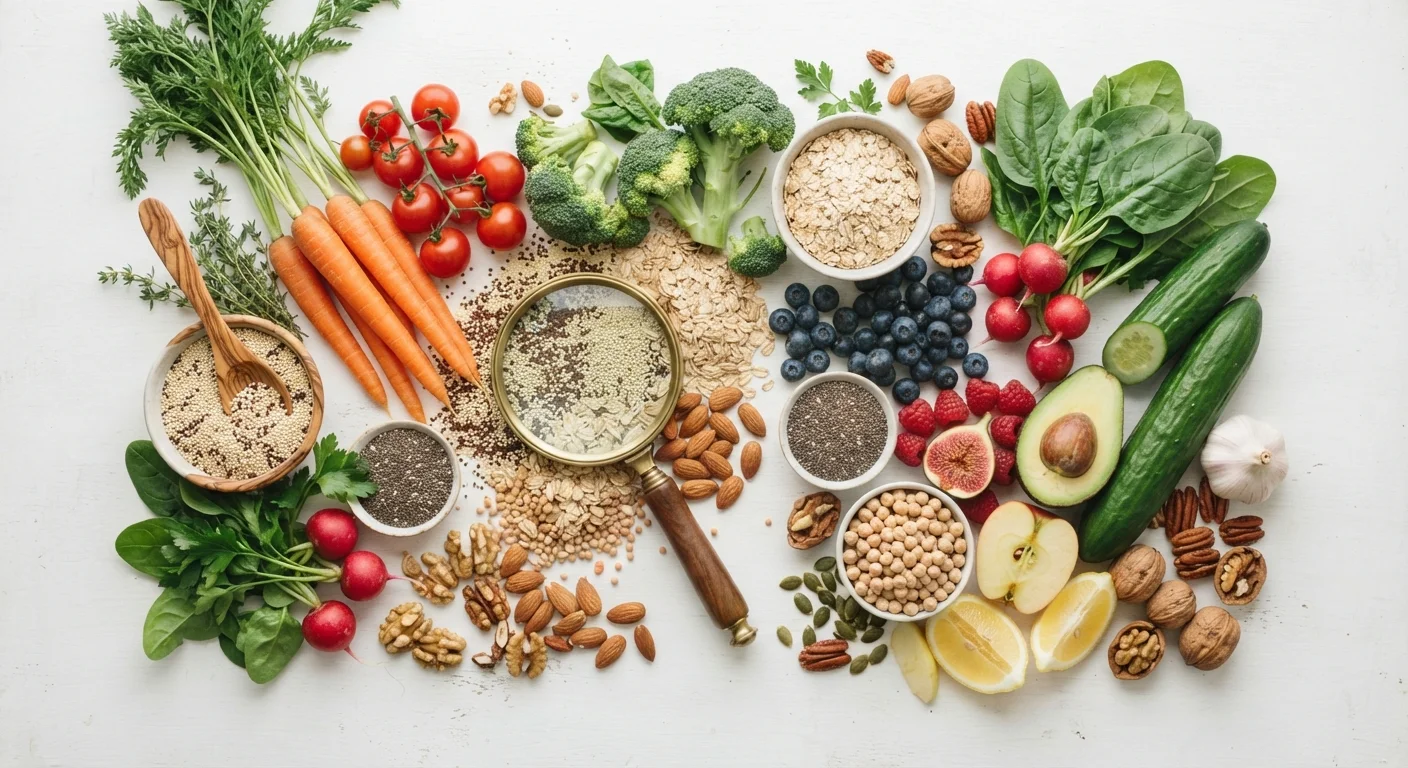
Why Nutrition Myths Spread So Easily
Nutrition science is genuinely complex, and that complexity creates fertile ground for oversimplification. A single observational study, a celebrity endorsement, or a well-timed marketing campaign can push a dietary claim into mainstream belief long before rigorous evidence catches up - or contradicts it entirely.
Understanding where these myths come from helps readers evaluate new claims more critically. As a starting point, it's worth knowing that overall dietary patterns, not individual foods or nutrients, are what decades of research most consistently associates with long-term health outcomes.
Myth
Certain 'superfoods' can dramatically improve your health or prevent disease on their own.
Fact
No single food has been shown to prevent or treat disease in isolation. Health outcomes are shaped by overall dietary patterns, not individual ingredients.
The term 'superfood' is a marketing label, not a scientific category. While foods like blueberries, kale, and salmon do contain valuable nutrients, the research supporting outsized health claims for any single item is generally weak or based on preliminary lab or animal studies that don't translate cleanly to humans. Nutrition science consistently points toward the overall pattern of eating as the meaningful variable - not whether you consumed a particular berry that week.
Myth
Juice cleanses and detox diets flush harmful toxins from your body.
Fact
The human body has its own highly effective detoxification systems - primarily the liver and kidneys - that continuously process and eliminate waste products.
Proponents of detox diets rarely specify which toxins are being removed or provide measurable evidence that their protocols achieve this. The liver metabolizes compounds and the kidneys filter blood continuously without requiring periodic 'resets.' While reducing alcohol, ultra-processed foods, and excess sugar does reduce the burden on these organs, that benefit comes from the underlying dietary quality - not from any cleansing mechanism unique to juice fasts or detox kits.
Myth
Eating dietary fat makes you gain body fat.
Fact
Body fat accumulation is primarily driven by a sustained caloric surplus, not fat consumption specifically. Healthy fats are an essential macronutrient.
This myth gained traction during the low-fat diet era of the 1980s and 1990s. Gram for gram, fat is more calorie-dense than carbohydrates or protein, but that doesn't mean it is uniquely fattening. Research on dietary fat has become considerably more nuanced: unsaturated fats found in foods like olive oil, avocados, and nuts are associated with favorable cardiovascular markers. For a clearer look at how fat types differ, see this overview of saturated versus unsaturated fats and what science currently says about each.
Myth
Natural sugars - like those in honey or fruit juice - are fundamentally healthier than added sugars.
Fact
Once digested, fructose and glucose behave similarly in the body regardless of whether they came from a 'natural' source. Whole fruit is different from fruit juice.
The distinction that matters most is not natural versus added, but rather the food matrix the sugar arrives in. Whole fruit contains fiber, water, vitamins, and phytonutrients that slow absorption and contribute to satiety. Fruit juice and honey deliver concentrated sugar without that fiber buffer. Honey and agave syrup marketed as 'healthier' sweeteners still raise blood glucose and contribute calories in comparable ways to table sugar. Moderate consumption within an overall balanced diet is the relevant consideration.
Myth
Everyone needs to take dietary supplements to meet their nutritional needs.
Fact
Most adults who eat a varied, balanced diet can meet their nutrient needs through food. Supplementation is appropriate in specific, identified deficiencies or life stages.
The supplement industry is large and heavily marketed, but evidence that supplementation improves outcomes in people without deficiencies is often limited. For example, large trials of antioxidant supplements have failed to replicate the benefits associated with antioxidant-rich diets - suggesting the whole-food context matters. There are legitimate exceptions: vitamin D deficiency is common in many populations, folate is recommended during pregnancy, and vitamin B12 is important for those following plant-based diets. A healthcare provider can assess whether supplementation is appropriate based on individual circumstances.
What the Evidence Actually Shows
Correcting nutrition myths doesn't mean the picture becomes simple. Some claims contain a kernel of truth wrapped in exaggeration. Others are almost entirely unfounded. The key is distinguishing between what the science robustly supports, what remains preliminary, and what has largely been invented by the wellness industry.
~80%
Americans take at least one dietary supplement
According to the National Institutes of Health Office of Dietary Supplements, roughly 80% of U.S. adults report using some form of dietary supplement, though most lack a diagnosed deficiency warranting one.
$50B+
Annual U.S. supplement industry revenue
The U.S. dietary supplement market generates over $50 billion annually, reflecting the scale of commercial influence on public nutrition beliefs.
<5%
U.S. adults meeting fiber recommendations
Research suggests fewer than 5% of Americans meet recommended daily fiber intake, despite fiber being one of the most consistently supported dietary factors for long-term health - see <a href="/health-wellness/nutrition-diet/the-fiber-gap-why-most-americans-fall-short-and-what-foods-can-help">the fiber gap explained</a>.
If you're finding it difficult to separate evidence-based guidance from noise, you're not alone - and a registered dietitian can help translate current research into practical, individualized guidance. It's also worth being alert to common habits that quietly offset good dietary intentions, even when the big-picture choices seem sound.
Be Skeptical of Elimination-Based Claims
Many popular nutrition trends center on eliminating an entire food group - carbohydrates, gluten, dairy, or lectins - for people without a clinical reason to do so. Unnecessary elimination diets can create nutritional gaps, complicate social eating, and may not deliver the promised benefits. If you are considering a significant dietary restriction, speak with a registered dietitian first to ensure your nutritional needs are still being met.
This article is for general informational and educational purposes only and does not constitute medical or dietary advice. Consult a qualified healthcare professional or registered dietitian before making significant changes to your diet.