Why Nutritional Needs Are Not Static
The human body is not the same organism at 5, 35, or 75. Growth, hormonal shifts, changes in metabolism, muscle mass, and organ function all alter how the body processes and uses nutrients. Nutrition science reflects this: official dietary reference intakes - established by bodies such as the National Academies of Sciences, Engineering, and Medicine - are organized by age group and, where relevant, sex, precisely because the same blanket recommendations would serve no stage of life particularly well.
Understanding these shifts is not about following rigid rules. It's about recognizing that the food choices supporting a thriving 10-year-old differ meaningfully from those that reduce chronic disease risk in a 65-year-old. For a plain-language foundation before diving in, see our introduction to core nutrition concepts.
Dietary Reference Intakes Are Population Averages
The recommended intake values published by health authorities represent estimates for healthy population groups - they are not precise prescriptions for any individual. Factors including genetics, health conditions, medications, and activity level can shift an individual's actual needs substantially above or below these figures. Use general recommendations as orientation, not as personal clinical targets.
Childhood and Adolescence: Growth-Driven Demands
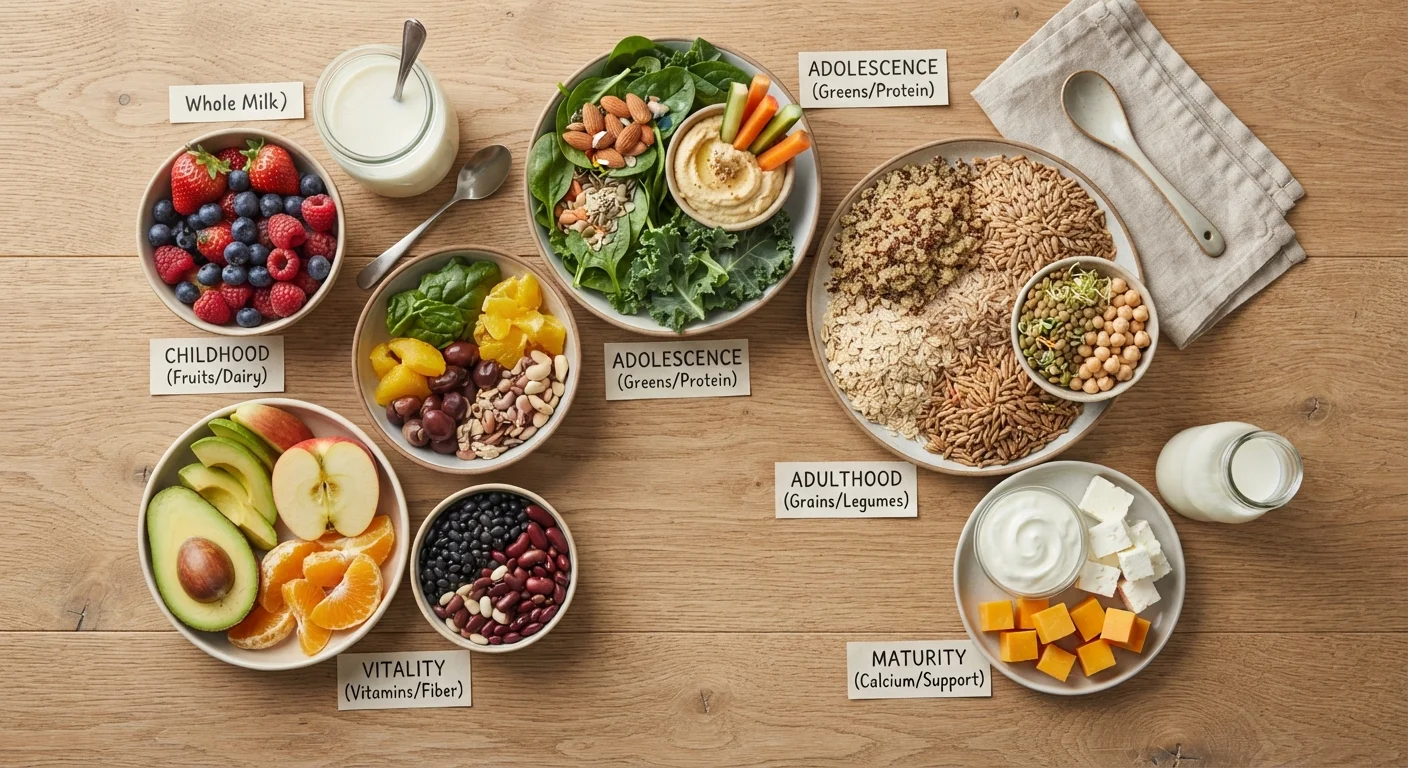
During childhood and the adolescent years, the body is in a sustained state of construction. Bones lengthen, muscles develop, and organs mature - all processes that require an abundant and consistent supply of specific nutrients.
Key nutrients during growth years
- Calcium and vitamin D: Bone density is largely established during childhood and adolescence. Adequate calcium - from dairy, fortified plant milks, leafy greens, and legumes - combined with sufficient vitamin D supports this window of bone-building that cannot fully be recaptured later.
- Iron: Rapid growth increases blood volume, and adolescent females face additional iron demands once menstruation begins. Iron deficiency is among the most common nutritional shortfalls in this age group globally.
- Protein: Supports the growth of muscle, tissue, and immune function. Needs are relatively high per kilogram of body weight compared to adults.
- Zinc: Supports immune development and plays a role in physical growth and sexual maturation.
Calorie needs are substantial relative to body size during active growth phases, though they vary considerably based on activity level, body size, and pubertal stage. Rather than precise targets, emphasis belongs on nutrient-dense foods - whole grains, legumes, fruits, vegetables, lean proteins, and dairy or fortified alternatives - that deliver these nutrients efficiently.
Focus on consistent inclusion of iron-rich foods paired with a source of vitamin C at the same meal - this combination meaningfully improves non-heme iron absorption from plant sources.
Non-heme iron (from legumes, grains, and leafy vegetables) is absorbed far less efficiently than heme iron from meat; ascorbic acid has been shown in controlled studies to enhance that absorption.
For older adults struggling with appetite, prioritize protein and nutrient density at the first meal of the day rather than waiting until appetite may dip further by evening.
Appetite and hunger cues in older adults are less reliable indicators of actual nutrient need; front-loading nutritious foods earlier in the day can help ensure requirements are met even when overall intake is lower.
Early and Middle Adulthood: Maintenance and Prevention
By early adulthood, most structural growth is complete. The nutritional focus shifts from building to maintaining - supporting energy demands, reproductive health where relevant, and reducing the long-term risk of chronic conditions such as cardiovascular disease, type 2 diabetes, and certain cancers.
Total calorie needs plateau and, for many people, begin a gradual decline through middle age as resting metabolism slows slightly. Staying physically active meaningfully offsets some of this shift; for context on how activity and nutrition interact over time, see our article on fitness habits across life stages.
Priorities in adulthood
- Fiber: Supports digestive health, cardiovascular function, and blood glucose regulation. Most US adults fall well short of recommended intakes.
- Folate: Particularly important for people of reproductive age who may become pregnant, given its well-established role in neural tube development.
- Omega-3 fatty acids: Associated in research with cardiovascular and cognitive health; found in fatty fish, walnuts, and flaxseed.
- Limiting excess sodium, added sugars, and saturated fat: Decades of research consistently link diets high in these to elevated chronic disease risk.
Overall dietary patterns, rather than individual superfoods, show the strongest associations with long-term health in the research literature.
Fad Diets Can Mask Nutritional Gaps
Highly restrictive dietary approaches - including those that eliminate entire food groups without medical supervision - carry a meaningful risk of creating or worsening micronutrient deficiencies. This risk is especially pronounced during periods of high demand: adolescence, pregnancy, and older adulthood. If you or someone in your care is considering a significant dietary change, a consultation with a registered dietitian can help identify potential gaps before they become problems.
Older Adulthood: Shifting Priorities and Common Gaps
Adults over 65 face a nutritional paradox: calorie needs often decrease as lean muscle mass declines and physical activity may reduce - yet the need for several key micronutrients stays the same or rises. This makes food quality more important than ever, because there is less caloric room for low-nutrient choices.
~1 in 10
Older adults estimated to have B12 deficiency
Research published in nutrition epidemiology literature suggests vitamin B12 deficiency is substantially more prevalent in adults over 65 than in younger populations.
< 10%
US adults meeting fiber recommendations
According to USDA dietary data analyses, the vast majority of American adults - across age groups - consume less dietary fiber than current guidelines recommend.
40-50%
Estimated US adults with insufficient vitamin D status
National Health and Nutrition Examination Survey (NHANES) data have consistently found large proportions of the US population with suboptimal vitamin D levels.
Where older adults commonly fall short
- Protein: Emerging research suggests older adults may benefit from somewhat higher protein intake than younger adults to help slow age-related muscle loss (sarcopenia). Spreading protein intake across meals rather than concentrating it appears to support muscle protein synthesis more effectively.
- Vitamin D and calcium: Skin becomes less efficient at synthesizing vitamin D from sunlight with age, and absorption of both nutrients can decline. Bone health remains a meaningful concern, particularly for postmenopausal women.
- Vitamin B12: Gastric acid production often decreases with age, impairing the absorption of B12 from food. This makes the crystalline form found in fortified foods or supplements more readily absorbed - a distinction worth discussing with a healthcare provider.
- Hydration: The sense of thirst becomes less reliable with age, raising the risk of dehydration, which can affect cognition, kidney function, and medication effectiveness.
Medication use is also far more common in this population, and many medications interact with nutrients - affecting absorption, metabolism, or excretion. A registered dietitian or pharmacist can help identify these interactions for individuals managing multiple prescriptions.
Social and practical factors also matter: reduced appetite, limited mobility, social isolation, and fixed incomes can all compromise dietary quality. These are health considerations, not simply lifestyle preferences. For a broader view of how wellbeing shifts across decades, see our overview of mental wellness across the lifespan.
Unintentional Weight Loss in Older Adults Warrants Medical Attention
In older adults, unintentional weight loss - even gradual - can signal underlying health conditions, medication side effects, or inadequate nutrient intake rather than simply aging. It should not be dismissed or attributed to aging without evaluation. If you notice significant unexplained weight loss in yourself or an older family member, consult a healthcare provider promptly. Self-directed dietary changes are not a substitute for that evaluation.
Across Every Stage: What Consistently Matters
Despite the real differences across life stages, a few principles hold across the entire human lifespan:
- Dietary variety remains the most practical strategy for covering micronutrient bases without needing to track every nutrient individually.
- Minimally processed foods generally deliver more fiber, vitamins, and minerals per calorie than their highly processed counterparts.
- Adequate hydration supports every physiological process from childhood through late life.
- Regular eating patterns - without extreme restriction - support stable energy, mood, and metabolic function at any age.
For a closer look at the specific vitamins and minerals referenced throughout this article, our micronutrient reference guide offers a concise overview of functions, food sources, and deficiency signs.
Individual variation is real and significant. Health status, genetics, medications, activity level, and life circumstances all influence what any given person actually needs. The frameworks here describe population-level patterns, not personal prescriptions.
This article is for general informational and educational purposes only and is not a substitute for professional medical or dietary advice. Always consult a qualified healthcare provider or registered dietitian for guidance tailored to your individual health needs and circumstances.