
What Are Micronutrients?
Micronutrients are vitamins and minerals the body needs in relatively small amounts - but their impact on health is anything but small. Unlike macronutrients such as carbohydrates, protein, and fat, micronutrients provide no calories. Instead, they serve as essential co-factors in hundreds of biological processes, from energy metabolism and immune defense to bone formation and nerve signaling.
Vitamins are organic compounds - meaning they contain carbon and can be broken down by heat, air, or acid. They are divided into two broad categories: fat-soluble (A, D, E, and K), which are stored in body fat and the liver, and water-soluble (C and the B vitamins), which are not stored in significant amounts and must be replenished regularly through food.
Minerals are inorganic elements sourced from the environment and absorbed through food and water. They range from macrominerals - needed in larger amounts, such as calcium, magnesium, and potassium - to trace minerals like iron, zinc, and selenium, required in very small quantities.
For a broader grounding in nutritional science, see our plain-language introduction to healthy eating fundamentals.
Micronutrients
Vitamins and minerals required by the body in small amounts to support essential biological functions. They provide no calories but are indispensable for health.
Fat-soluble vitamins
Vitamins A, D, E, and K, which dissolve in fat and can be stored in body tissue. Because they accumulate, excessive intake - particularly from supplements - can reach toxic levels.
Water-soluble vitamins
Vitamin C and the eight B vitamins, which dissolve in water and are not stored in significant amounts. Excess is generally excreted in urine, but this does not make high-dose supplementation risk-free.
Trace minerals
Minerals the body requires in very small quantities, such as iron, zinc, selenium, and iodine. Small amounts are essential; much larger amounts may be harmful.
Deficiency
A state in which the body does not have enough of a specific nutrient to perform its normal functions. Deficiencies range from mild and symptom-free to severe and clinically significant.
Bioavailability
The proportion of a nutrient that the body actually absorbs and uses from food or supplements. It varies by food source, preparation method, and individual factors.
Key Vitamins: Functions, Sources, and Deficiency Signs
The table below summarizes the most nutritionally significant vitamins recognized by mainstream nutrition science. It is intended as a reference, not a diagnostic tool. Always consult a qualified healthcare professional if you have concerns about your own nutritional status.
| Number of essential vitamins | 13 (Recognized by mainstream nutrition science (4 fat-soluble, 9 water-soluble)) |
| Essential dietary minerals | ~20 (Includes macrominerals and trace minerals per established dietary reference frameworks) |
| Most common deficiency globally | Iron deficiency (World Health Organization) |
| Vitamin D synthesis source | UVB sunlight exposure (Skin synthesis varies by latitude, season, skin tone, and sun exposure) |
| B12 absorption concern | Particularly relevant for plant-based diets (B12 is found almost exclusively in animal-derived foods; fortified foods or supplements are advised) |
| Fat-soluble vitamin toxicity risk | Higher than water-soluble (Stored in body tissue; excessive supplementation of A and D is associated with adverse effects) |
| Vitamin | Primary Role | Common Food Sources | Deficiency Signs |
|---|---|---|---|
| A | Vision, immune function, cell growth | Liver, dairy, eggs, orange/yellow vegetables | Night blindness, dry skin, increased infection risk |
| D | Calcium absorption, bone health, immune modulation | Fatty fish, fortified dairy, sunlight synthesis | Bone pain, muscle weakness, fatigue |
| E | Antioxidant protection, immune support | Nuts, seeds, vegetable oils, leafy greens | Nerve damage, muscle weakness (rare in healthy adults) |
| K | Blood clotting, bone metabolism | Leafy greens, fermented foods, some vegetable oils | Excessive bleeding, poor wound healing |
| C | Collagen synthesis, antioxidant, iron absorption | Citrus fruits, bell peppers, strawberries, broccoli | Fatigue, gum problems, slow wound healing (scurvy at severe stages) |
| B12 | Nerve function, red blood cell production, DNA synthesis | Meat, fish, dairy, eggs, fortified plant foods | Fatigue, numbness, neurological changes |
| Folate (B9) | DNA synthesis, cell division, fetal neural development | Legumes, leafy greens, fortified grains | Megaloblastic anemia, neural tube defects in pregnancy |
| B6 | Protein metabolism, neurotransmitter synthesis | Poultry, fish, potatoes, bananas | Dermatitis, confusion, weakened immunity |
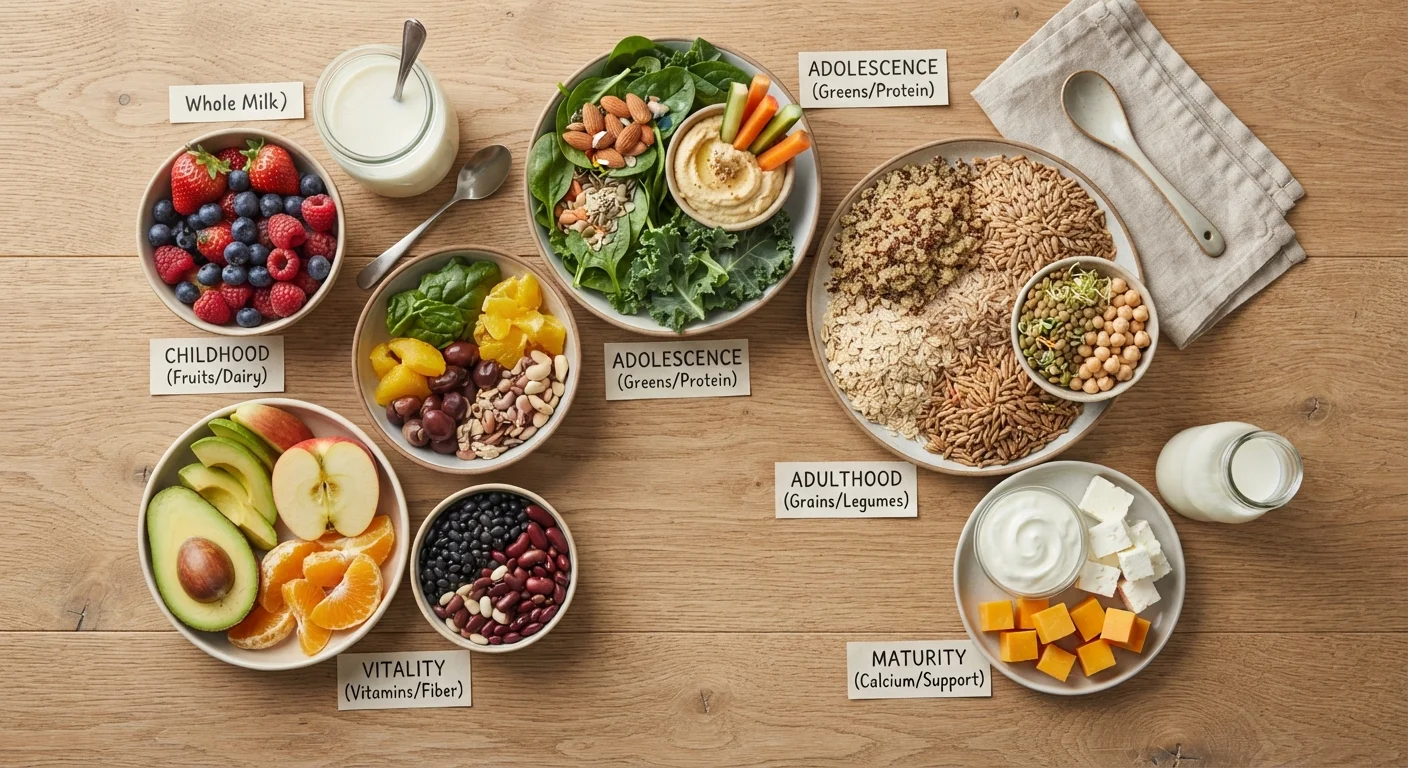
Needs shift meaningfully across life stages. Our reference on how nutrient requirements change from childhood to older adulthood provides helpful context for different population groups.
Key Minerals: What They Do and Where to Find Them
Minerals interact closely with one another - calcium and magnesium share absorption pathways, and vitamin C enhances non-heme iron absorption from plant foods. This interplay is one reason nutrition researchers generally emphasize dietary patterns over isolated supplementation.
Supplements Are Not a Substitute for Food
Whole foods provide nutrients alongside fiber, phytochemicals, and other compounds that interact in ways isolated supplements cannot replicate. Most nutrition researchers and public health organizations recommend meeting micronutrient needs through a varied diet as the primary strategy. Supplementation may be appropriate in specific circumstances - such as pregnancy, confirmed deficiency, or restricted dietary patterns - but this should be assessed individually with a healthcare professional.
| Mineral | Primary Role | Common Food Sources | Deficiency Signs |
|---|---|---|---|
| Calcium | Bone and tooth structure, muscle contraction, nerve signaling | Dairy, fortified plant milks, sardines, leafy greens | Muscle cramps, bone loss over time |
| Iron | Oxygen transport (hemoglobin), energy metabolism | Red meat, legumes, tofu, fortified cereals | Fatigue, pallor, reduced concentration (iron-deficiency anemia) |
| Magnesium | Enzyme function, muscle and nerve activity, blood sugar regulation | Nuts, seeds, whole grains, leafy greens, dark chocolate | Muscle cramps, irritability, irregular heartbeat |
| Zinc | Immune function, wound healing, taste and smell perception | Shellfish, meat, legumes, seeds, whole grains | Slow healing, reduced taste/smell, hair loss |
| Potassium | Fluid balance, nerve transmission, blood pressure regulation | Bananas, potatoes, legumes, dairy, leafy greens | Muscle weakness, cramps, heart rhythm irregularities |
| Selenium | Antioxidant enzyme activity, thyroid hormone metabolism | Brazil nuts, seafood, organ meats, whole grains | Muscle pain, weakened immune response (rare in varied diets) |
Understanding food labels can help you assess mineral content in packaged foods. Our companion article on decoding nutrition labels walks through daily values and how to use them meaningfully.
This article is for general informational purposes only and does not constitute medical or dietary advice. Consult a registered dietitian or qualified healthcare professional before making changes to your diet or considering supplementation.