Why Good Intentions Aren't Always Enough
Most people who care about their diet genuinely try to eat well. They choose salads over fries, buy groceries with labels that sound reassuring, and skip the dessert menu more often than not. Yet despite these efforts, patterns often emerge that quietly erode those gains - not from laziness or ignorance, but from honest misunderstandings about how nutrition works in practice.
This article focuses on those gaps: the subtle, repeated habits that can offset an otherwise healthy diet. Spotting them isn't about perfection - it's about making your effort actually count. If you're still building your foundational knowledge, start with the basics before diving deeper.
Misjudging portion sizes, especially for calorie-dense foods like nuts, oils, cheese, and grains.
Why it happens: Packaged serving sizes are often smaller than what people instinctively pour or plate, and visual estimation is reliably inaccurate for energy-dense foods.
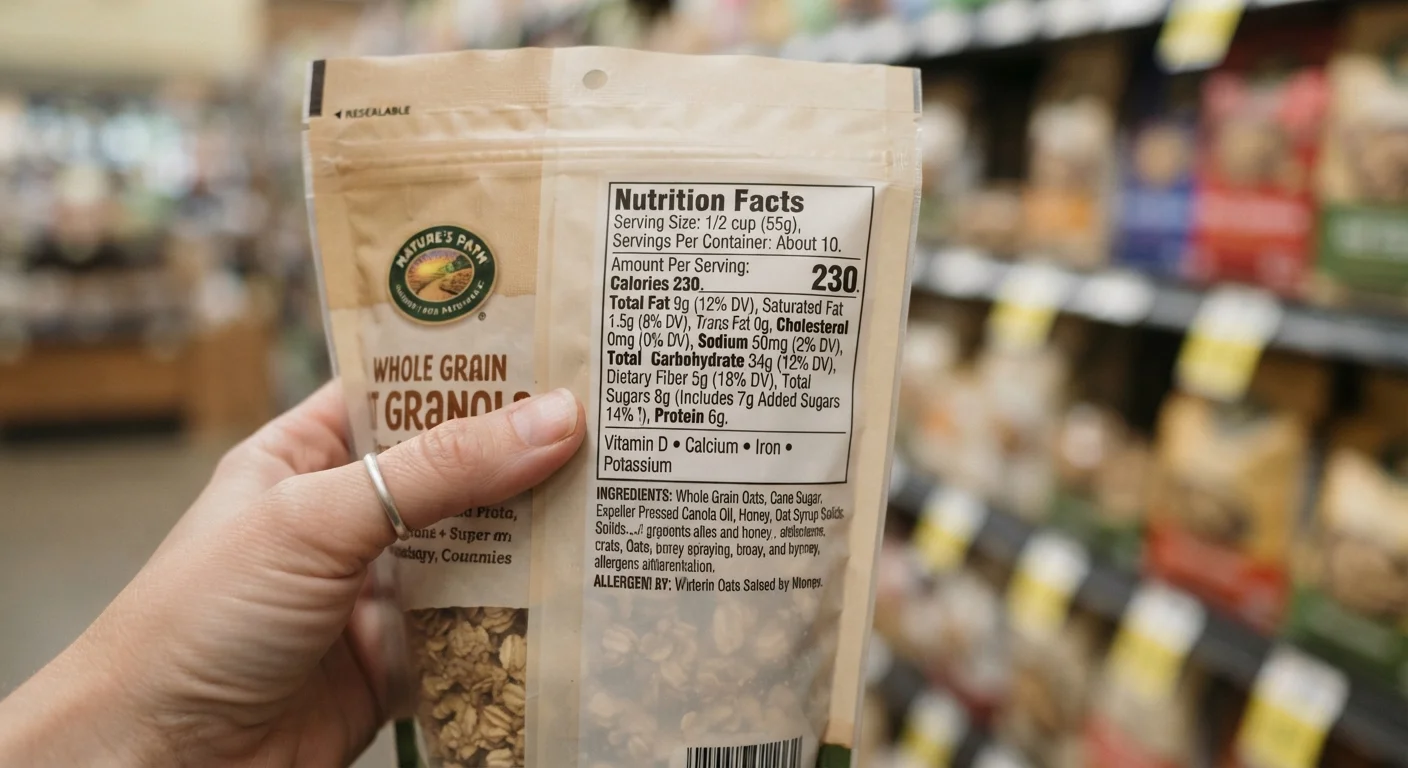
Relying on 'health halo' labels - such as organic, natural, or gluten-free - as proxies for overall nutritional quality.
Why it happens: Marketing language is designed to be persuasive, and single positive attributes (like being organic) are easy to generalize into broader health assumptions.
Drinking significant calories through juice, sweetened coffee drinks, sports beverages, or smoothies without accounting for them.
Why it happens: Liquids are generally less satiating than solid foods and are rarely thought of as a 'meal,' so they're easy to overlook when tracking overall intake.
Skipping meals - particularly breakfast - under the assumption that eating less frequently always supports a healthier diet.
Why it happens: Skipping feels like discipline, and short-term calorie reduction is intuitive. But research suggests irregular meal timing can intensify hunger hormones and lead to larger, less deliberate eating later in the day.
Consuming far less dietary fiber than the body needs, even while eating plenty of fruits and vegetables.
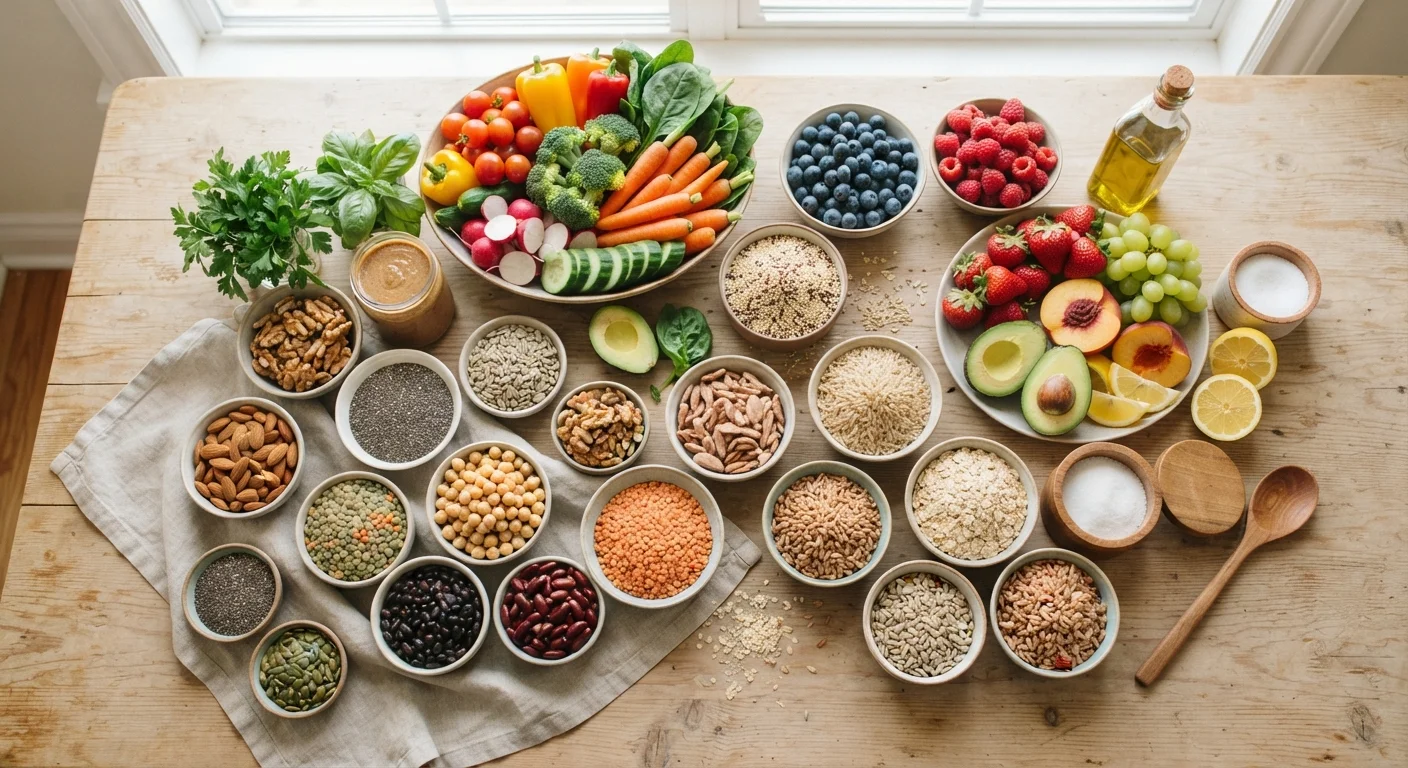
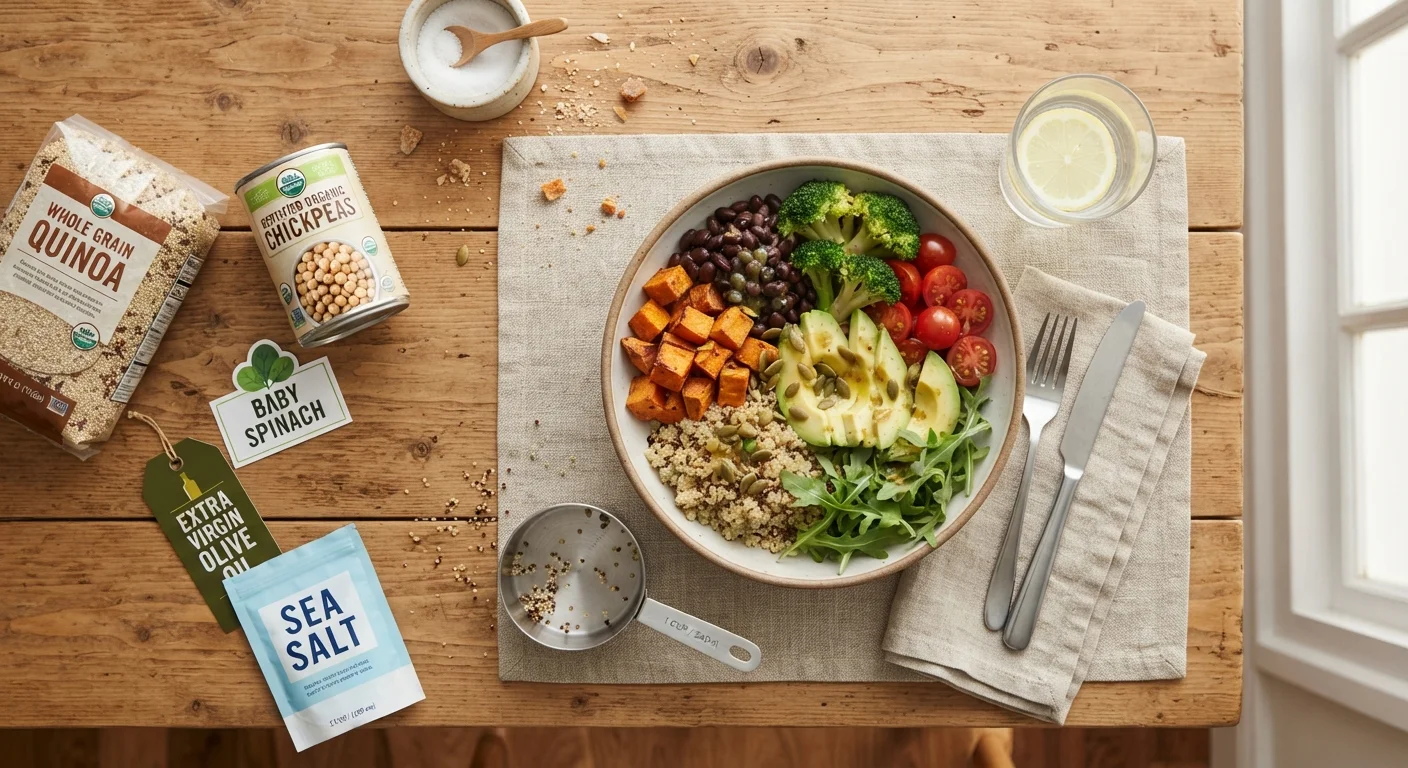
Why it happens: Many people don't know their target fiber intake, and some high-fiber foods - legumes, whole grains, seeds - are underrepresented in typical American diets despite being nutritionally valuable.
Treating a 'healthy' meal as permission to offset it with less nutritious choices later - sometimes called the licensing effect.
Why it happens: Eating virtuously creates a psychological sense of credit, which can unconsciously lower vigilance for the rest of the day.
The Statistics Behind Common Dietary Missteps
Research consistently shows that even nutrition-conscious adults misestimate what they eat. Studies using doubly labeled water - a gold-standard measurement technique - have found that people routinely underreport calorie intake by 20 to 50 percent, often without any intent to deceive. The errors are largely perceptual, not motivational.
~50%
Fiber intake vs. recommended levels
National dietary survey data consistently shows average American fiber consumption falls around half the recommended daily amount for adults.
20-50%
Calorie intake underreporting
Studies using doubly labeled water methodology have found that people - including nutrition-conscious adults - underreport calorie intake by this margin on average.
~35%
Calories from ultra-processed foods
Research published in nutrition epidemiology journals estimates that ultra-processed foods account for roughly a third of total daily calorie intake in U.S. adults.
Understanding these patterns helps explain why dietary improvements sometimes stall. Knowing what to look for on a label is a genuine skill; our guide on reading a nutrition label without getting lost breaks down exactly how to do it.
Patterns Worth Reconsidering
Some dietary habits that seem neutral - or even virtuous - carry hidden costs. Drinking a large glass of 100% orange juice feels like a healthy choice, but a single 16-oz serving can contain as much sugar as several pieces of fruit, with a fraction of the fiber that slows its absorption. Similarly, trail mix and nut butters are nutritionally dense foods, but their caloric density means portion size matters far more than the health reputation of the food itself.
Caloric Density Can Catch You Off Guard
Nutritionally valuable foods like olive oil, avocado, nuts, and nut butter are calorie-dense - meaning small volumes contain substantial energy. This doesn't make them foods to avoid; it makes portion awareness especially important. A tablespoon of olive oil and a quarter-cup of almonds are both consistent with a healthy diet; several generous pours and handfuls across a day add up quickly without any sense of overindulging.
The "health halo" effect is well-documented in behavioral nutrition research: when a food is labeled organic, gluten-free, or natural, people tend to underestimate its calorie content and eat more of it. These labels describe specific attributes - not overall nutritional quality. Many popular nutrition claims don't hold up to scrutiny, and understanding that distinction is genuinely protective.
Fiber is another area where even well-intentioned diets frequently fall short. Most Americans consume roughly half the recommended daily amount. Fiber supports digestive health, blood sugar regulation, and satiety - and its absence is easy to overlook. See why the fiber gap matters and which foods can help for a practical breakdown.
It's also worth noting that these same dietary blind spots can intersect with mental wellness. Patterns that erode mental wellbeing often overlap with disrupted eating rhythms, making it useful to consider both together.
Diet Changes Deserve Professional Guidance
If you have a chronic health condition, follow a medically supervised diet, or are considering significant dietary changes, consult a registered dietitian or your healthcare provider before making adjustments. General nutrition information applies broadly - it cannot account for individual medical needs, medication interactions, or conditions that alter nutritional requirements.
If you'd like a structured way to examine your current habits, a practical weekly eating audit offers a non-judgmental checklist for spotting patterns worth adjusting.
This article is for general informational and educational purposes only and is not a substitute for professional medical or dietary advice. Consult a registered dietitian or qualified healthcare provider for guidance specific to your health needs.