Why Paint Finish Matters as Much as Color
Most homeowners spend considerable time choosing a paint color and little time thinking about sheen. Yet the finish level - how much light a painted surface reflects - affects how a room feels, how dirt shows up, and how long the paint job stays looking fresh. A flat paint in a hallway and a glossy paint in a bedroom can both be mistakes that only become obvious after the paint dries.
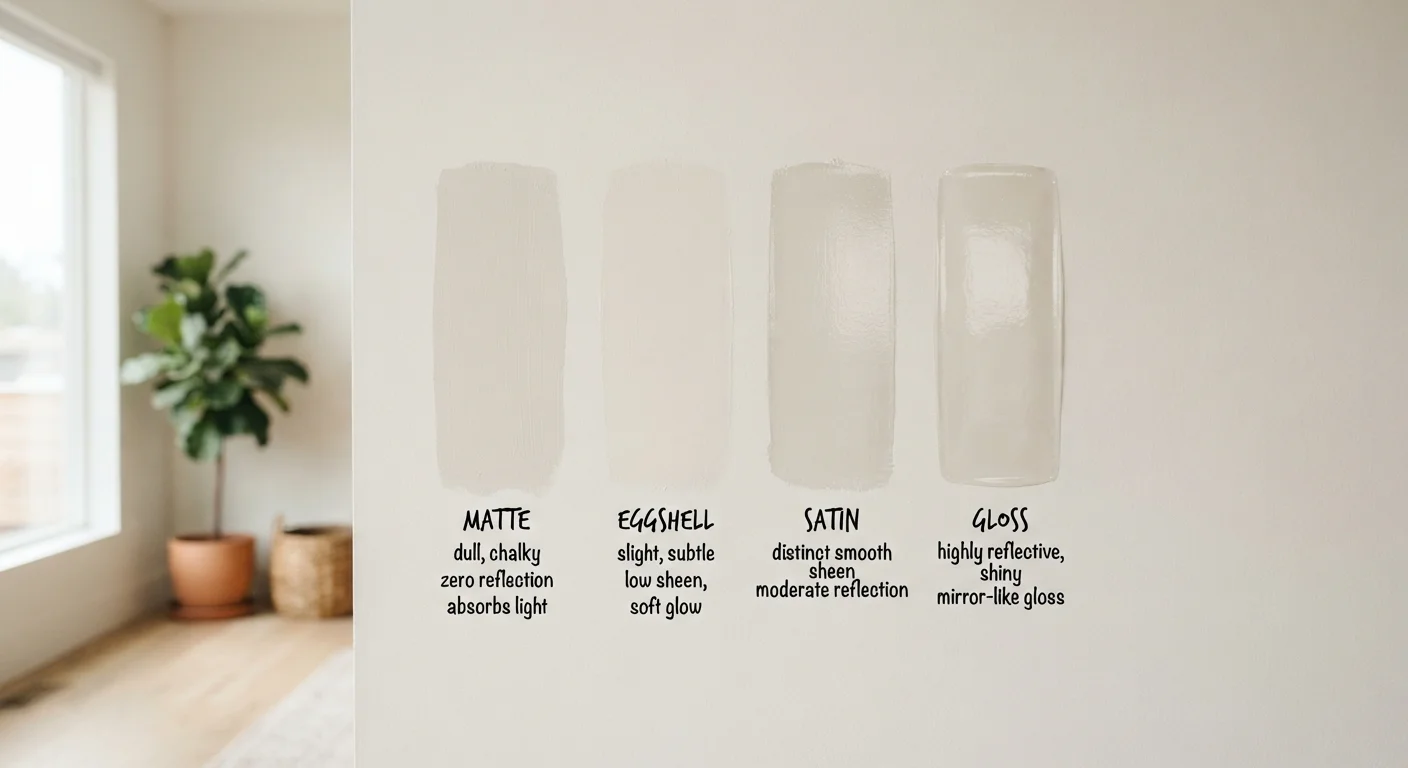
The four finishes you'll most commonly encounter - matte, eggshell, satin, and gloss - each sit at a different point on a reflectivity scale. Understanding what makes each one distinct helps you avoid the common misconception that any finish works anywhere. Before you pick up a roller, it's worth knowing what you're working with. For a broader look at paint-related misconceptions, see our article on home improvement myths that lead homeowners astray.
Breaking Down Each Finish Type
Matte (Flat)
Matte finishes contain the least binders and reflect almost no light, creating a soft, non-reflective look that reads as velvety or chalky. This quality makes it excellent at concealing surface imperfections - small dents, old patch repairs, and texture variation all disappear under a well-applied flat coat. The trade-off: matte paint absorbs moisture, which means vigorous cleaning can lift the finish or leave shiny scuff marks.
Eggshell
Named for its subtle luster (similar to the surface of an egg), eggshell reflects a small amount of light - enough to give a room depth without creating glare. It's considerably more washable than flat paint and resists mild scuffs. It still shows surface imperfections more than matte but less than higher sheens, making it a practical upgrade for most living spaces.
Satin
Satin has a smooth, pearl-like sheen that holds up well under repeated cleaning and handles humidity better than eggshell or matte. It's a go-to choice for spaces that collect grease, moisture, or fingerprints. The higher reflectivity does mean that uneven roller strokes or poorly prepared walls will be more visible once the paint cures.
Gloss (Semi-Gloss and High-Gloss)
Gloss finishes are the most durable and the easiest to wipe down - grease, crayon, and grime clean off with minimal effort. Semi-gloss is the standard choice for trim, molding, and doors. High-gloss is even more reflective and harder, typically reserved for cabinets or accent surfaces where a lacquer-like look is intentional. Both will spotlight any surface flaw, so thorough prep work is non-negotiable.
| Matte | Eggshell | Satin | Gloss | |
|---|---|---|---|---|
| Sheen level | None / flat | Very low | Medium pearl | High reflective |
| Hides wall flaws | Excellent | Good | Fair | Poor |
| Washability | Low | Moderate | Good | Excellent |
| Moisture resistance | Poor | Low-moderate | Good | Excellent |
| Best rooms | Ceilings, bedrooms | Living, dining rooms | Kitchen, bath, hallways | Trim, doors, cabinets |
| Prep sensitivity | Forgiving | Moderate | Noticeable flaws | Very unforgiving |
| Durability | Lower | Moderate | Good | Highest |
Matching Finish to Room: A Practical Guide
Think of each room by its traffic level and moisture exposure, then work backward to the finish.
- Ceilings: Almost always flat or matte. Ceilings rarely need cleaning, and any sheen overhead creates distracting light reflection.
- Bedrooms: Matte or eggshell. Low traffic and minimal moisture make these rooms ideal for softer finishes.
- Living and dining rooms: Eggshell is the common recommendation - enough durability for occasional cleaning, a pleasant look under varied lighting.
- Kitchens and bathrooms: Satin or semi-gloss. Grease, steam, and repeated wiping call for a finish that won't deteriorate under moisture.
- Hallways and kids' rooms: Satin holds up to scuffs and handprints without requiring repainting as frequently as flat finishes.
- Trim, doors, and cabinets: Semi-gloss or high-gloss for durability and a crisp, defined look that contrasts the wall finish.
Test a Sample Before Committing
Paint a 12-by-12-inch sample patch of each finish you're considering and observe it at different times of day under both natural and artificial light. What looks right on the store swatch can read very differently once applied to your specific walls, especially in rooms with strong directional lighting.
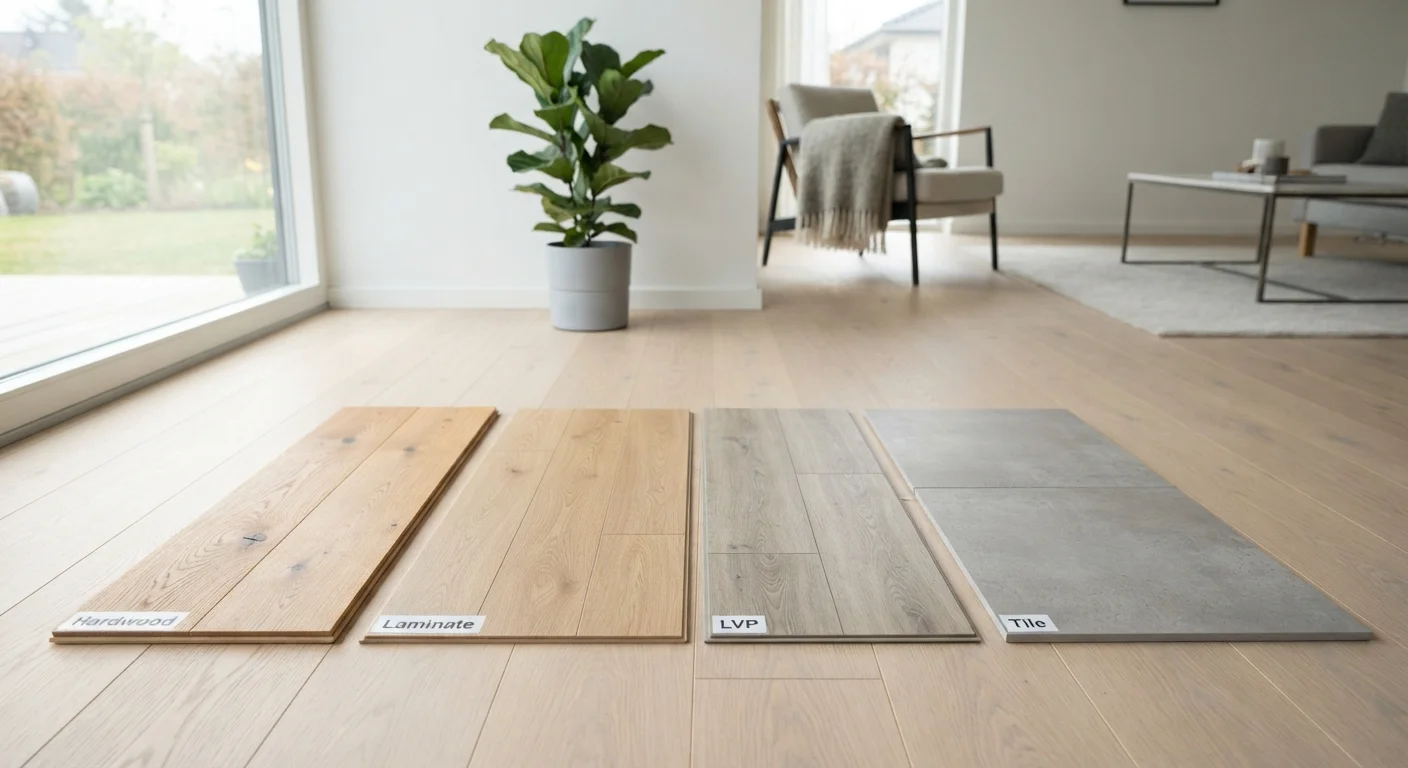
For a sense of how surface material affects your overall interior decisions, the same functional thinking applies to flooring - see how flooring materials compare side by side for a similar breakdown.
Surface Prep: The Step Most People Skip
Finish selection only pays off if the surface underneath is ready. Higher-sheen paints demand more thorough prep because they reflect light across the wall and reveal every bump, crack, and brushstroke. Before applying any finish:
- Clean the wall - grease, dust, and residue prevent adhesion. A damp cloth or mild cleaner removes most surface dirt.
- Fill imperfections - use lightweight spackling compound on small holes and cracks, then sand smooth once dry.
- Sand glossy surfaces - if you're painting over an existing gloss finish, lightly sand the surface so the new paint has something to grip.
- Prime when needed - new drywall, dark colors going light, or stained walls typically benefit from a coat of primer before the finish coat.
Skipping prep is the most common reason a paint job looks poor within the first year, regardless of how good the paint itself is. A properly prepared wall makes even a basic paint job look professional.
Don't Assume 'More Sheen Means More Durable'
A common mistake is choosing gloss paint for high-traffic walls expecting it to hold up better. Gloss on flat walls tends to show scuffs and fingerprints more dramatically, and any chips or scratches stand out sharply. Save higher sheens for trim and surfaces where the extra durability and easy cleaning genuinely matter.