Why Small Bathrooms Feel the Way They Do
A cramped bathroom rarely suffers from just one problem. It's usually a combination of dim lighting, visual clutter, dark surfaces, and fixtures that draw the eye downward rather than upward. The good news is that most of these issues are fixable without tearing out tile or moving plumbing.
The upgrades below focus on changes that alter perception - how big the room feels, how welcoming it looks, and how efficiently it works day to day. None of them require a contractor, though a few involve minor plumbing disconnects that handy homeowners can manage with basic tools. If you're ever uncertain about electrical or plumbing work, consulting a licensed professional is always the right call.
For broader home organization ideas, our Home Organization hub covers smart strategies room by room.
Upgrade the Vanity Lighting First
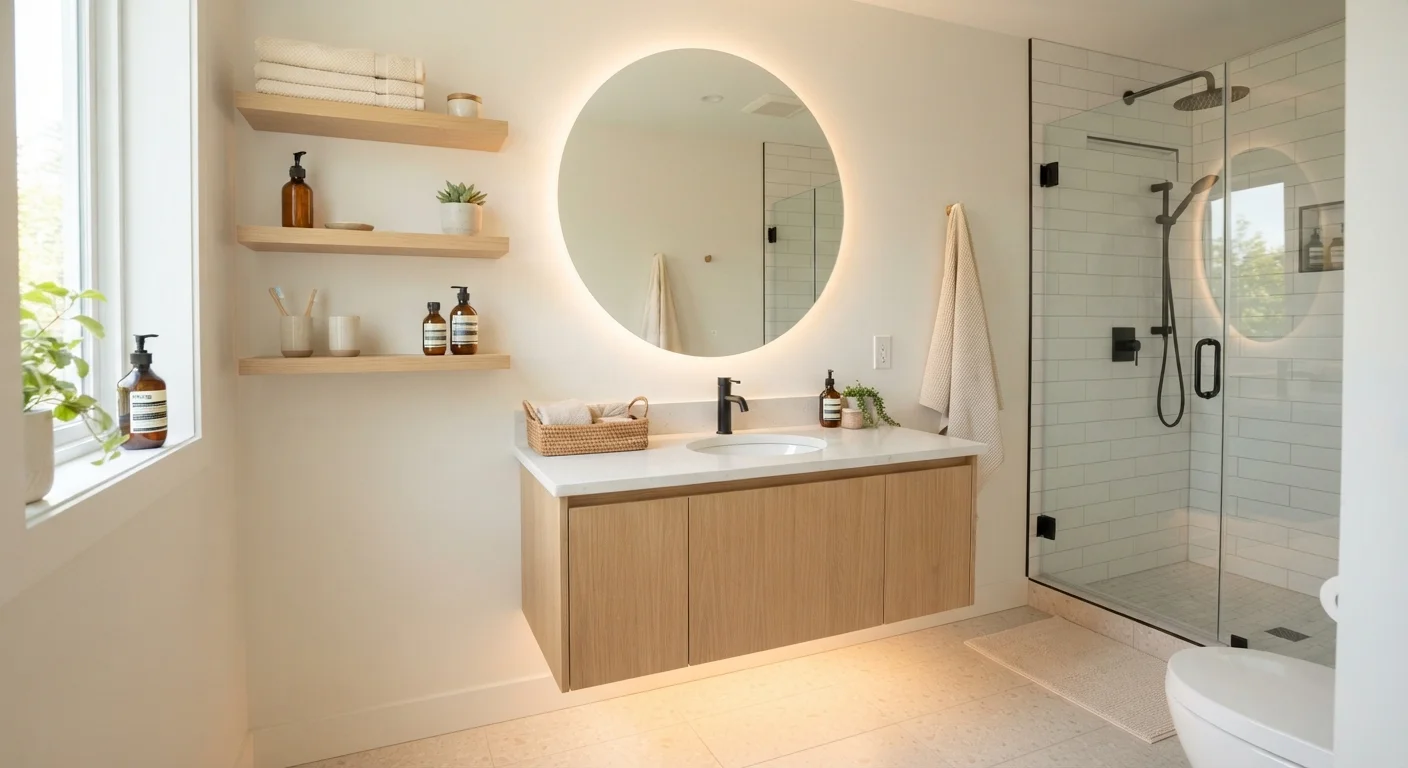
Builder-grade vanity bars with globe bulbs cast unflattering shadows and make small bathrooms feel cave-like. Replacing the fixture with a bar that positions bulbs at face level - or switching to a backlit mirror - provides even, diffuse light that makes the room feel larger and more finished.
Look for fixtures rated for damp locations (marked on the packaging) and choose bulbs in the 2700K-3000K color temperature range for warm, flattering light. If your existing wiring runs to a standard junction box, swapping the fixture is typically a straightforward job. However, any work that involves adding circuits or relocating a junction box should be handled by a licensed electrician.
Even light at face level eliminates shadows that make small bathrooms feel smaller.
Hang the Largest Mirror You Can Fit
A mirror that spans most of the wall above the vanity doesn't just serve a functional purpose - it visually doubles the perceived depth of the room by reflecting light from the opposite wall. This single change is one of the highest-impact upgrades available in a small bathroom.
Full-width frameless mirrors, or mirrors with thin metal frames, read as architectural rather than decorative, which helps them blend rather than compete. If you're hanging anything heavier than about 20 pounds, anchor into wall studs or use appropriate hollow-wall anchors rated for the weight.
A wall-spanning mirror is one of the highest-impact upgrades in a small bathroom.
Add Vertical Storage to Reclaim Floor Space
Storage piled on the floor - freestanding shelving units, baskets, extra rolls - creates visual noise at the lowest point of the room, which makes the space feel compressed. Moving storage upward - through wall-mounted shelves, over-toilet units, or a recessed niche in the shower wall - frees the floor and draws the eye upward.
Open shelving works well for items you reach for daily, while closed cabinets are better for anything that looks visually busy. Our small-space storage guide covers the underlying principles that apply across every compact room in the home.
Moving storage off the floor frees visual breathing room and makes ceilings feel taller.
Replace the Faucet and Hardware
A dated or builder-grade faucet signals that the room hasn't been updated, even if everything else is clean and functional. Swapping it for a single-handle or widespread faucet with a finish that ties to other fixtures - towel bars, toilet paper holders, cabinet pulls - creates visual cohesion that makes the whole room look intentional.
Most faucet replacements are manageable DIY projects: shut off the supply valves under the sink, disconnect the supply lines and drain, and follow the manufacturer's instructions for the new unit. If supply valves are stuck, corroded, or absent, call a plumber rather than forcing them.
Matching faucet and hardware finishes create cohesion that signals a deliberate design choice.
Rethink the Color and Surface Palette
Dark walls absorb light; light walls reflect it. In a small bathroom, painting walls a light neutral - or even a soft white - is one of the least expensive changes with one of the clearest effects. If the current tile is dark or busy, a light wall color can offset it without replacement.
Consistency also matters. Matching the grout color to the tile reduces the visual grid effect that makes a surface look segmented and smaller. Painting existing tile is possible with the right bonding primer and tile-specific paint, though the finish is less durable than original glaze and may need refreshing over time.
Light, consistent colors reduce visual noise and help a small bathroom feel open.
Swap the Shower Curtain or Door
A solid, dark shower curtain blocks light and cuts the room in half visually. Replacing it with a clear or lightly frosted liner - or upgrading to a frameless glass panel - keeps the sightlines open across the entire room. Even a light-colored fabric curtain hung from ceiling height (rather than standard 72 inches) draws the eye upward and makes ceilings feel taller.
Frameless shower door installations typically require precise measurements and drilling into tile, which is manageable for experienced DIYers with the right bits. If the existing door frame is damaged or the surrounding tile is cracked, address those issues first before installing anything new.
Clear or frosted shower enclosures keep sightlines open and make small bathrooms feel unified.
Putting It All Together
You don't need to tackle every item at once. Start with the change that addresses your biggest frustration - usually lighting or storage - and build from there. Even one or two of these upgrades made back-to-back can shift how you experience the room every morning.
Start With One Change at a Time
Attempting multiple upgrades simultaneously in a small bathroom can lead to mismatched finishes or decisions you regret. Complete one change, live with it for a week, then decide what to tackle next. This approach also spreads costs out over time, making the overall project easier to manage without rushing.
If clutter is the underlying culprit making your bathroom feel smaller than it is, the strategies in our guide on decluttering a home without getting overwhelmed apply directly. And if you're thinking about more ambitious changes elsewhere in the house, it's worth understanding what open-plan renovations actually involve before committing to a larger scope.
Small bathrooms reward intentional decision-making. When every square foot counts, the right upgrade - placed thoughtfully - does more work than a renovation twice the size.