Why Small Spaces Demand a Different Approach
Organizing a small home isn't simply a scaled-down version of organizing a large one. Every square foot carries more weight. A single junk drawer that's barely noticeable in a 2,500-square-foot house can dominate a studio apartment. The principles that work in compact spaces are less about containment and more about intentionality - deciding what earns a place in the home before figuring out where it goes.
If you're new to thinking systematically about your home, our beginner's guide to home organization walks through the foundational concepts before diving into space-specific strategies. The article below builds on those foundations with practices tailored specifically to limited square footage.
Using Vertical Space and Furniture Wisely
Most people think horizontally when they plan storage - countertops, shelves at eye level, floor space. In a compact home, that instinct leaves the most valuable real estate untouched: the wall space between the top of your furniture and the ceiling. Tall shelving units, wall-mounted cabinetry, and over-door organizers can dramatically increase usable storage without expanding your footprint.
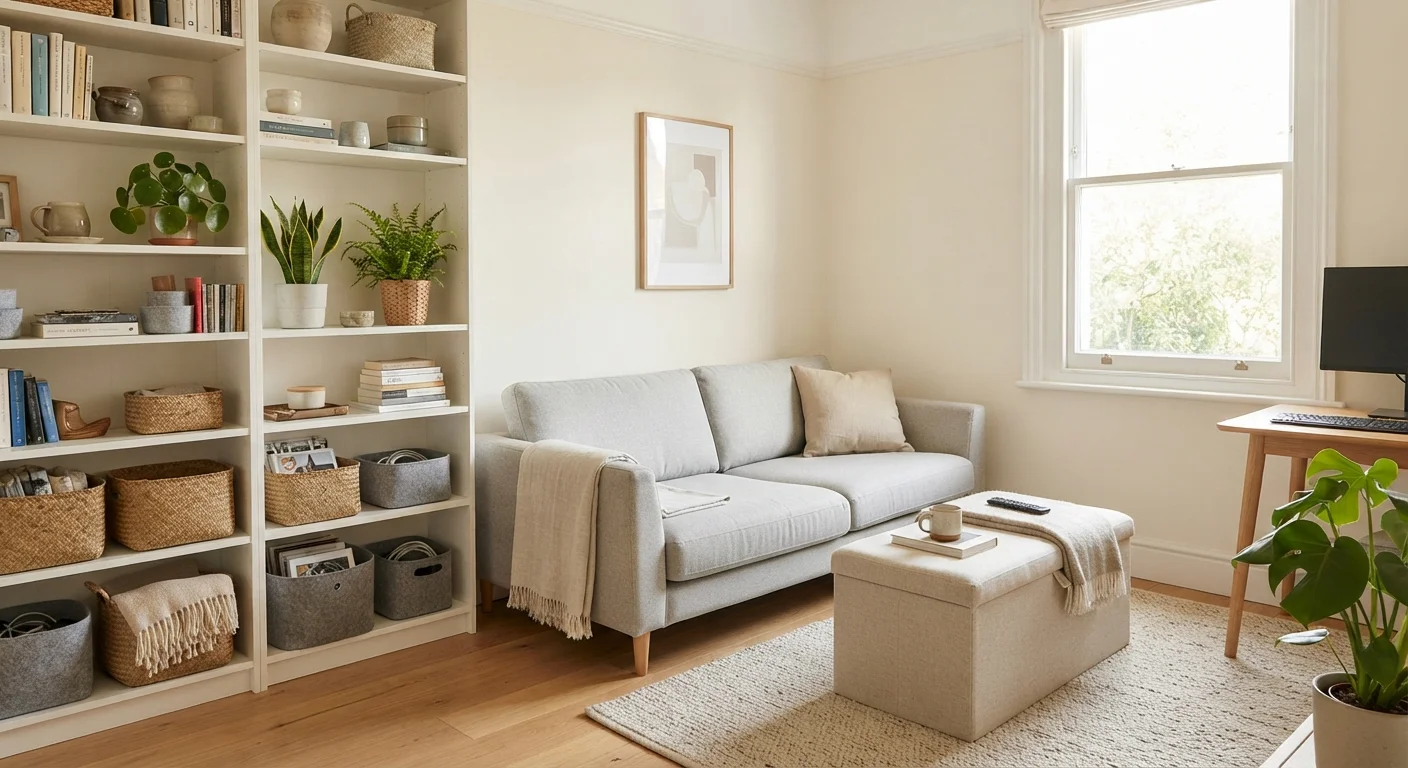
Furniture selection matters just as much. A storage ottoman serves as seating, a coffee table, and a linen chest. A bed frame with built-in drawers replaces a separate dresser. A fold-down wall desk disappears when not in use. For a deeper look at how to balance open and concealed storage options, see our guide on open shelving vs. closed cabinets.
Understanding when to go vertical versus spreading out horizontally is a skill in itself - our comparison of vertical and horizontal storage strategies covers which approach suits each room type.
Reducing Volume Before Adding Storage
It's tempting to solve a small-space problem by purchasing more bins, baskets, and organizers. But adding storage without reducing volume usually just means more neatly contained clutter. The most effective first step is almost always an honest assessment of what you actually use and need.
Storage Products Won't Solve a Volume Problem
Bins, baskets, and drawer dividers are useful tools - but only after you've reduced what you own to a manageable level. Purchasing organizers before decluttering often results in neatly labeled containers full of things you don't actually need. Think of storage products as the final step, not the first.
A useful benchmark: if you haven't used or needed something in the past 12 months and it holds no genuine sentimental value, it's worth reconsidering its place in a compact home. Regular seasonal reviews help prevent accumulation from creeping back. Our seasonal decluttering guide offers a practical framework for rotating what you keep throughout the year. If the whole process feels daunting, decluttering without getting overwhelmed breaks it into manageable steps.
Creating Zones in Multi-Purpose Rooms
When a single room serves as living space, workspace, and guest room, visual and functional chaos can set in quickly. Zoning - the practice of designating specific areas for specific activities - brings order without requiring physical dividers or extra rooms.
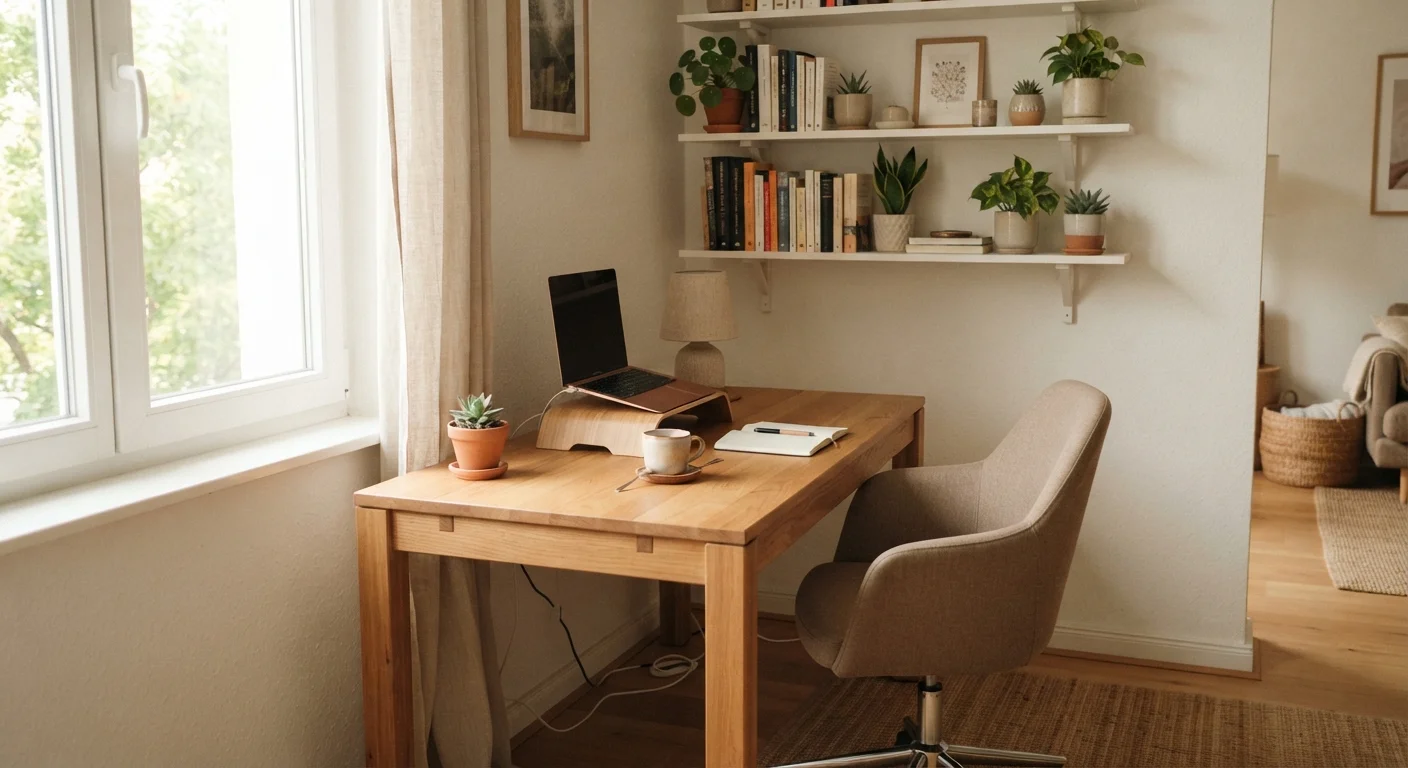
Simple zone markers include area rugs, lighting changes, and furniture orientation. A desk placed perpendicular to a wall with a floor lamp behind it communicates "work zone" without a wall. A reading chair in a corner with a small side table creates a defined retreat within a shared space. Our guide to organizing a home office applies this zoning logic specifically to work-from-home setups.
1 in 10
US households rent off-site storage
According to the Self Storage Association, roughly one in ten American households rents a storage unit - often because home storage systems haven't been optimized first.
~600 sq ft
Average size of a US studio apartment
Studios and one-bedroom apartments under 800 square feet are among the most common dwelling types in urban US markets, making compact organization principles widely applicable.
Room-by-room audits are one of the most practical tools for identifying where zoning and storage gaps exist. The room-by-room organization checklist provides a structured way to assess every area of your home systematically.
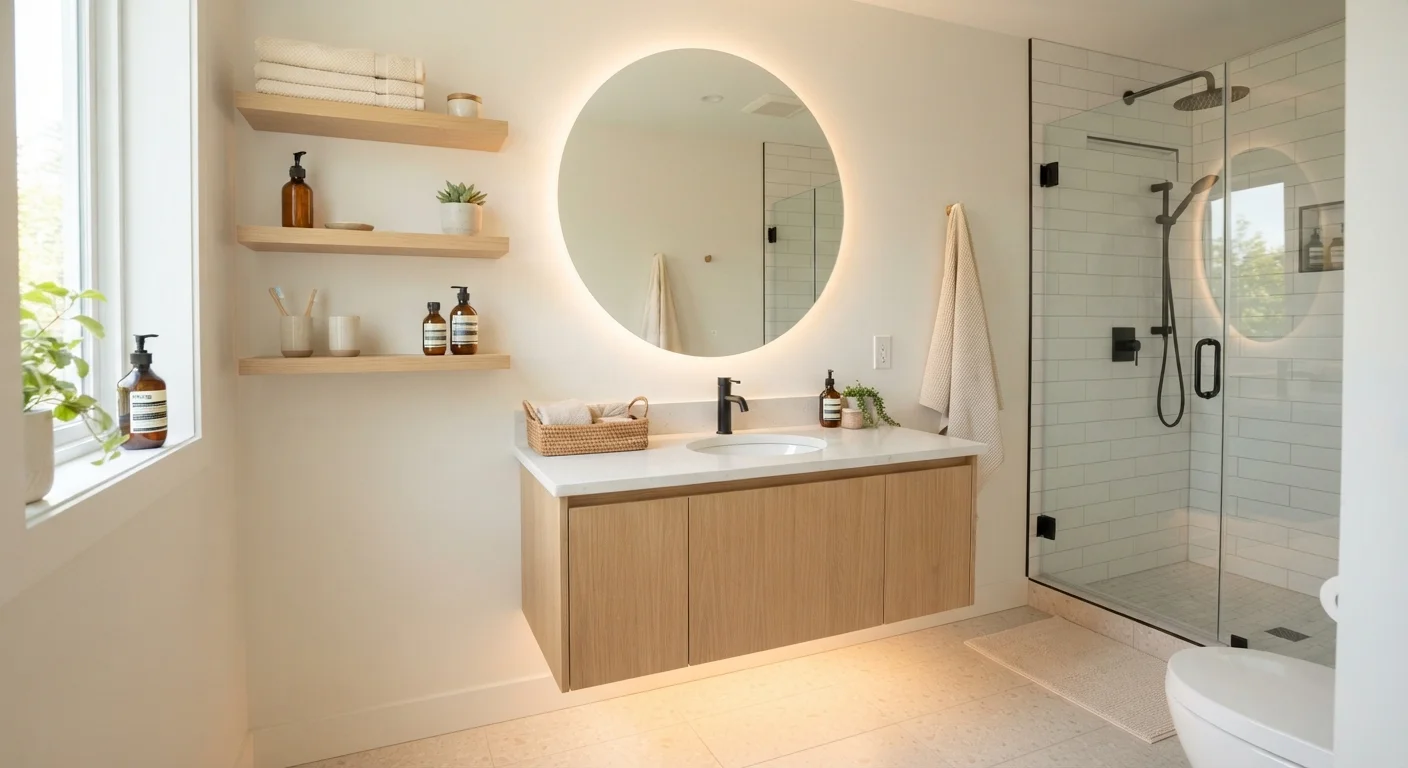
Even small, often-overlooked rooms benefit from these principles. Strategic changes to layout and storage - without any major renovation - can transform how a space functions. Our article on small bathroom upgrades shows how this applies to one of the most challenging compact spaces. And if your kitchen storage is the bottleneck, pantry organization principles covers what actually holds up over time.
Label Storage Containers, Even Obvious Ones
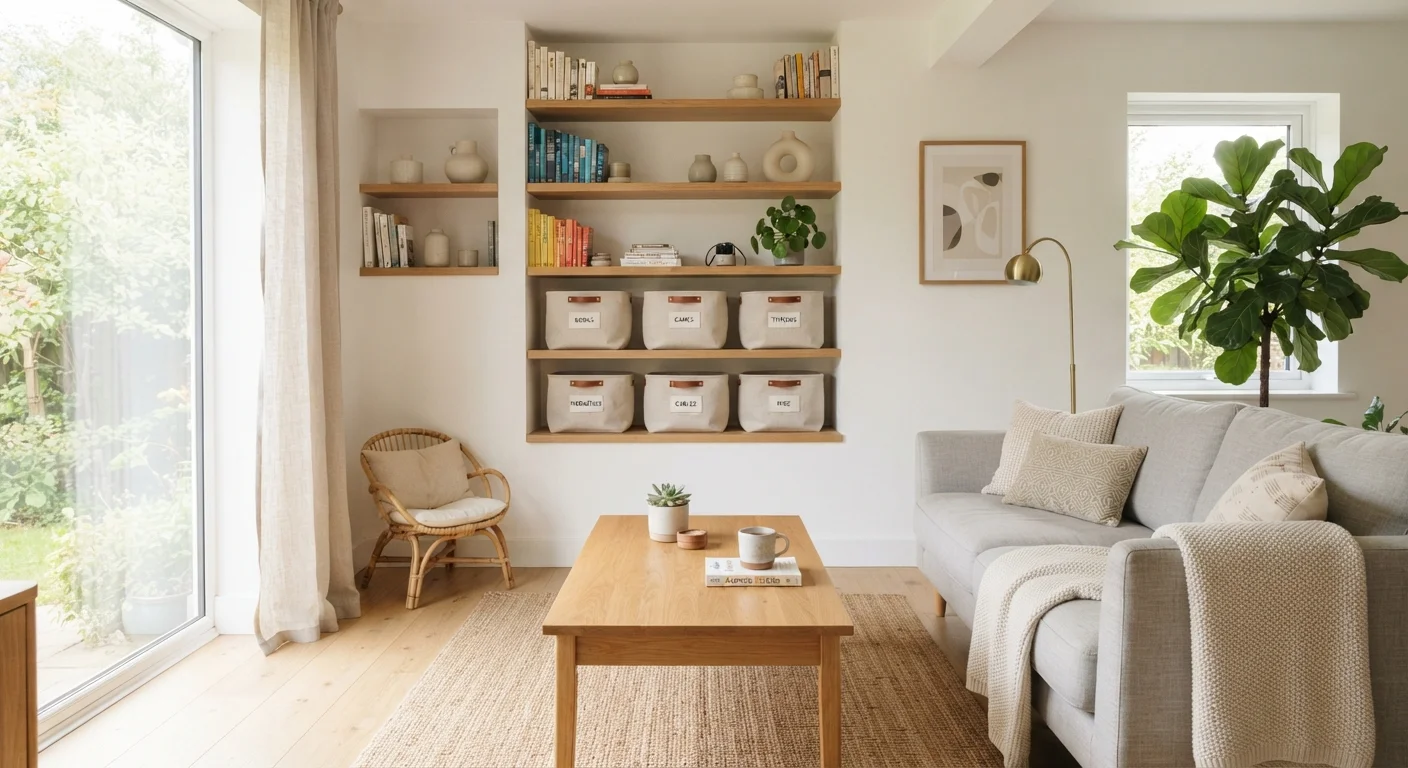
Labeling isn't just for large households or shared spaces. In a small home where storage is compressed and containers may be stacked or tucked away, labels eliminate the need to open and search through multiple boxes. This small habit significantly reduces the daily friction of finding things - and putting them back correctly.