
Why Garage Organization Starts With a Plan
The garage is one of the most underutilized - and most overwhelming - spaces in a typical US home. Without a deliberate system, tools, seasonal gear, and miscellaneous items pile up until the space barely functions. The solution isn't buying more storage; it's planning how the space is used before anything goes on a shelf.
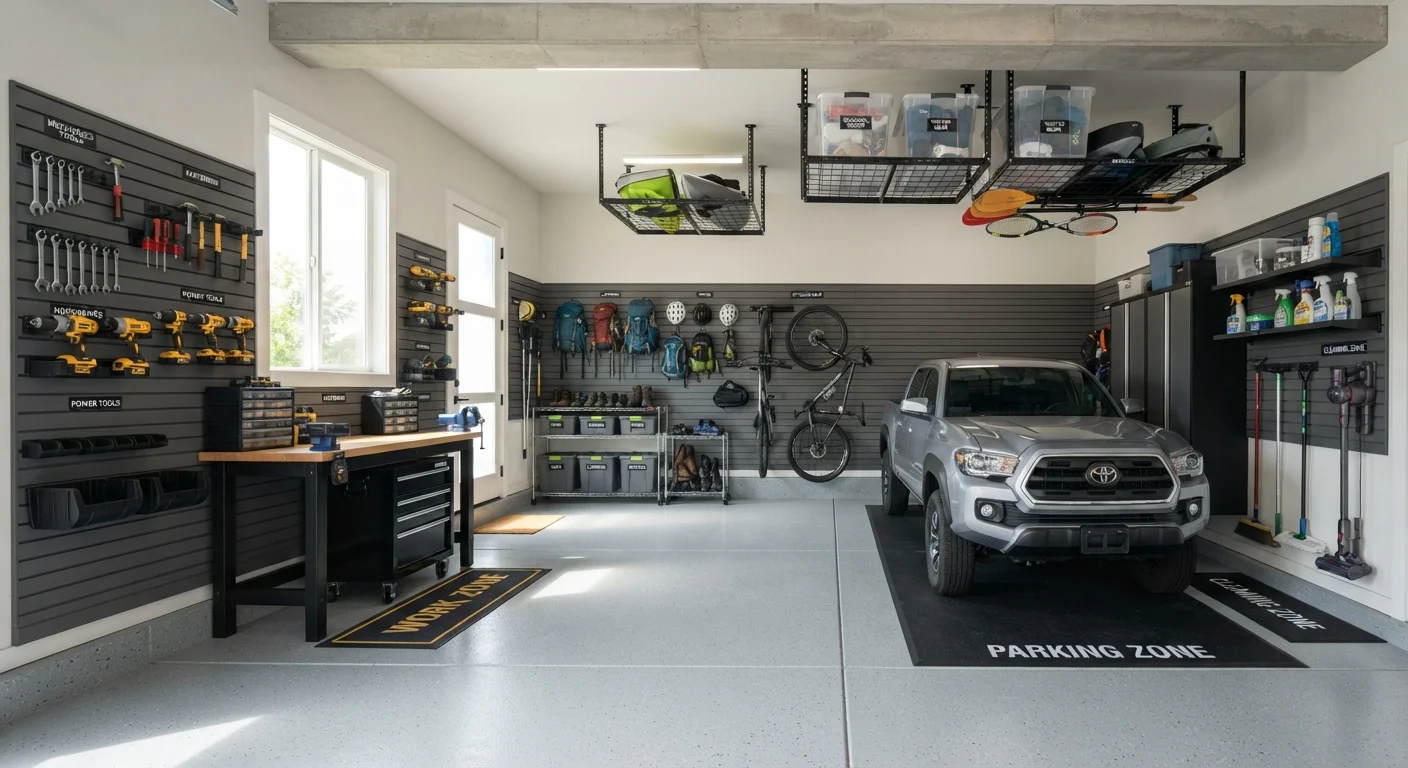
Start by identifying what the garage must do. For most households, it serves multiple overlapping roles: vehicle parking, tool storage, sports equipment hub, and seasonal overflow. Mapping those roles onto physical zones is the foundation of any lasting system. This approach mirrors the room-by-room logic covered in our home organization checklist, applied specifically to the garage context.
| Average US garage size | 400-440 sq ft (two-car) (US Census Bureau housing data) |
| Primary organization approach | Zone-based layout |
| Most common storage mistake | Storing items on the floor without a system |
| Overhead storage capacity | Varies by joist spacing and bracket rating - verify before loading |
| Recommended reset frequency | Seasonal (4× per year) |
| Hazardous materials storage | Locking cabinet, away from heat sources |
Zoning: Dividing Your Garage Into Functional Areas
Zones are distinct areas assigned to a specific category of items or activity. A clear zone layout reduces decision fatigue - everything has a neighborhood, even if it doesn't yet have a precise spot.
Common Garage Zones
- Vehicle zone: The floor space reserved for cars or bikes. Keeping this clear is the primary functional goal in most garages.
- Workshop zone: A dedicated workbench area for tools, repair tasks, and projects. Ideally positioned near an outlet with good overhead lighting.
- Sports and recreation zone: Bikes, balls, rackets, and seasonal gear stored together for easy grab-and-go access.
- Garden and lawn zone: Soil, fertilizer, hand tools, and power equipment grouped near the garage door for outdoor access.
- Seasonal storage zone: Holiday décor, camping gear, and off-season items that are accessed infrequently. This zone pairs well with the habits described in our seasonal decluttering guide.
Zone
A designated area of the garage assigned to a specific category of items or activity. Zones prevent mixed-use chaos by giving every type of item a predictable neighborhood.
French Cleat
A wall-mounting system made of interlocking angled strips. Shelves, bins, and hooks hang from the cleats and can be repositioned without new holes or hardware.
Slatwall
A wall panel with horizontal grooves that accept compatible hooks, brackets, and bins. Common in garages for its flexibility and clean appearance.
Overhead Rack
A platform suspended from ceiling joists used to store bulky, infrequently accessed items above the active floor area.
Pegboard
A perforated hardboard panel mounted to a wall, allowing hooks and small shelves to be inserted anywhere along the grid. Ideal for hand tools.
Dead Zone
Underused or inaccessible space - such as the far corners of overhead areas or the back of deep shelves - that can be activated with the right storage solution.
Storage Systems: Vertical, Overhead, and Floor-Level
Once zones are defined, the right storage systems fill them in. Garages have a significant advantage over other rooms: walls and ceilings are typically open and buildable. Prioritize vertical and overhead storage to preserve the vehicle zone and primary walkways.
Wall-Mounted Systems
Slatwall panels, pegboards, and French cleat systems all allow flexible, reconfigurable storage. Hooks, bins, and shelving brackets attach directly to the wall surface. These systems work best for frequently accessed items - hand tools, garden hoses, and extension cords.
Overhead Ceiling Storage
Ceiling-mounted platforms or suspended racks work well for bulky, infrequently used items: totes of holiday décor, spare lumber, or kayaks. Verify your ceiling joists can support the intended load before installing any overhead rack. When in doubt, consult a licensed contractor.
Freestanding Shelving Units
Metal wire or solid-panel freestanding shelving is portable and adjustable. Position units along walls rather than in the center of the floor. Heavy items always go on lower shelves to reduce tipping risk.
Cabinets
Locking cabinets are appropriate for hazardous materials - paints, solvents, pesticides - and power tools that should be kept away from children. Closed cabinets also create a cleaner visual line and protect contents from dust.
25%
Of two-car garages that can't fit any cars
According to a U.S. Department of Energy study cited in various housing research summaries, roughly one in four two-car garages are too cluttered for vehicle use.
3x
More usable space gained by going vertical
Organization professionals commonly note that floor-to-ceiling wall systems can effectively triple accessible storage in a standard single-car garage bay.
Labeling, Maintenance, and Long-Term Upkeep
Even the best-designed system degrades without a maintenance habit. Label every bin, shelf, and zone clearly. Use large, legible labels - the garage is not a room people browse slowly. Zone labels on the wall above shelves help everyone in the household return items correctly.
Schedule a brief seasonal reset - roughly four times a year - to purge expired items, return displaced objects to their zones, and assess whether the layout still fits your household's current needs. If your garage doubles as a workshop, connect this habit to the beginner organization framework for a broader reset strategy.
For households in colder climates, note that an uninsulated garage can affect stored items - paints and certain liquids are sensitive to freezing temperatures. Our guide to home insulation covers the basics of garage insulation if that's a concern.
Safety First With Hazardous Items
Garages often store chemicals, fuels, and power tools that require special handling. Flammable liquids should be stored in approved containers away from ignition sources. Pesticides and pool chemicals must never be stored adjacent to each other. If you are unsure about safe storage for a specific product, consult the manufacturer's safety data sheet or your local fire department guidelines.